By Sheriff Mahmud Ismail- Recent signals from Donald Trump’s evolving Africa policy are reverberating in Sierra Leone, where President Julius Maada Bio appears to be aligning closely with Washington amid growing domestic and international scrutiny.
At a recent meeting in Miami, Trump publicly acknowledged Bio, a moment that officials in Freetown interpret as a diplomatic breakthrough. For Bio’s administration, which has reportedly spent heavily on lobbying firms in the United States since his first term, the optics of proximity to Trump carry significant political value, particularly in view of Bio’s checkered second-term mandate following the disputed June 2023 elections.
Critical minerals and strategic concessions
The diplomatic overtures come against the backdrop of Washington’s intensified push for access to Africa’s critical minerals. At a U.S.-hosted Critical Minerals Conference earlier this year, Sierra Leone is understood to have signalled willingness to grant “first right of refusal” to American interests over strategic mineral resources. Though details remain opaque, analysts say such commitments could have long-term implications for national resource sovereignty.
Negotiations are also reportedly advancing around the Kasafoni project. Referenced in ongoing negotiations, the Kasafoni Project, which is emerging as a focal point in U.S.–Sierra Leone negotiations, is understood to be a strategic mineral exploration and extraction concession believed to contain commercially viable deposits linked to the global critical minerals supply chain. While full technical details remain undisclosed, analysts consider it part of a broader push by external partners to secure upstream control over Africa’s emerging mineral assets, raising questions about transparency, valuation, and long-term national benefit.
In parallel, and more concretely, multiple diplomatic and media reports indicate that an agreement has already been reached between the United States and Sierra Leone for the country to accept approximately 2,000 deportees from the U.S., in exchange for an estimated $1.5 million support package. While full documentation of the agreement has not been made public, reporting from international policy trackers and migration-focused outlets referencing U.S. third-country deportation arrangements suggest Sierra Leone is among African states engaged under this framework. The policy aligns with Washington’s broader migration strategy of outsourcing deportation burdens to partner countries. This comes on the back of a total US Travel ban on Sierra Leone.
Image-building and international outreach amid narcotics transhipment hub allegations
Bio’s outreach strategy has extended beyond formal diplomacy. His wife, First Lady Fatima Bio, has recently appeared on major U.S. media platforms, including interviews with Jake Tapper on CNN. Government insiders describe these engagements as part of a broader effort to reshape Sierra Leone’s international image.
This comes as the country faces allegations of becoming a transit hub in West Africa’s expanding narcotics trade. Regional security assessments, including those referenced by European monitoring agencies and West African security briefings, have pointed to increased trafficking flows, with some reports controversially alleging the presence of high-profile fugitives, including figures linked to European law enforcement watchlists.
Domestic pressures and opposition clampdown
Internally, Bio’s government faces mounting criticism over governance and civil liberties. Opposition figures, including members of the All People’s Congress (APC), report increased pressure. The detention of APC Secretary-General Lansana Dumbuya and the repeated denial of bail to activist Zainab Sheriff have drawn concern from rights groups. Critics argue that these developments undermined the Agreement of National Unity brokered after the 2023 elections, which was intended to ease political tensions. There are also allegations of constitutional manoeuvring aimed at extending the ruling Sierra Leone People’s Party’s hold on power beyond established limits.
Economic strain and governance concerns
International financial institutions paint a stark picture of Sierra Leone’s economic and social conditions. The World Bank has consistently described Sierra Leone as facing high poverty levels, weak human capital outcomes, and structural economic fragility, noting that a significant proportion of the population lives below the poverty line with limited access to basic services.
Similarly, the International Monetary Fund has warned of macroeconomic instability, high inflation, fiscal pressures, and governance vulnerabilities, emphasizing the need for stronger transparency and public financial management. Reports from organizations such as Transparency International continue to rank Sierra Leone poorly on corruption perception indices, reinforcing concerns about public sector accountability.
At the household level, these macroeconomic indicators translate into daily hardship: persistent electricity shortages, lack of reliable water supply, under-resourced hospitals with limited drugs and diagnostic capacity, rising food prices, and an expanding crisis of youth unemployment and drug abuse.
ECOWAS ambitions and infrastructure controversy
Contrary to earlier perceptions of routine regional engagement, Bio’s role within the ECOWAS has itself been the subject of scrutiny. Diplomatic sources and regional reporting indicate that Bio actively lobbied for the ECOWAS chairmanship, viewing it as a platform to elevate his international profile.
In connection with this ambition, reports indicate that the government has secured an opaque loan estimated at $1.2 million for the rapid construction of what it describes as an international conference centre, including presidential villas in Lungi, intended to host a future ECOWAS summit. Critics question both the transparency of the financing and the prioritization of such projects amid severe domestic economic constraints.
The Koroma comparison
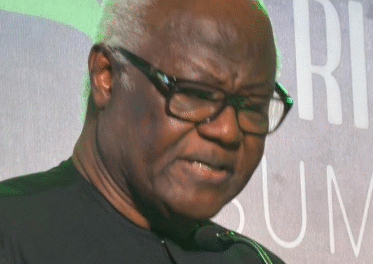
Bio’s pursuit of international recognition is frequently compared to that of his predecessor, Ernest Bai Koroma, whose tenure was marked by strong ties with Western leaders including Tony Blair and Barack Obama. However, analysts note a critical distinction: Koroma’s international standing was widely seen as an outcome of domestic policy delivery and post-conflict stabilization efforts, which subsequently attracted global recognition and partnerships. His leadership roles, including contributions to African Union reform processes, were built on that foundation.
By contrast, critics argue that Bio’s approach appears more externally driven, with significant resources directed toward lobbying and image management in pursuit of validation that, in previous administrations, emerged more organically from governance outcomes. For some observers, this reflects a perceived determination to match or surpass his predecessor’s global profile, an ambition that, while not inherently problematic, is seen as misaligned with pressing domestic priorities.
Strategic implications
For Washington, engagement with Sierra Leone fits within a broader geopolitical contest over Africa’s resources, migration management, and strategic alliances. Trump’s approach, transactional and interest-driven, places tangible demands on partner states. For Bio, the stakes are equally clear: international visibility, political legitimacy, and strategic backing. Yet the sustainability of this approach remains in question.
What next?
The trajectory raises critical questions for Sierra Leone’s opposition and diaspora. Analysts suggest that increased international advocacy, stronger institutional oversight, and coordinated political engagement will be key to ensuring accountability and preventing potential constitutional overreach.
Whether Bio’s strategy yields lasting diplomatic gains or deepens domestic discontent will depend on how these external engagements translate into measurable improvements in the lives of ordinary citizens. For now, the symbolism of a handshake in Miami may resonate abroad. But within Sierra Leone, where many continue to navigate economic hardship and fragile public services, legitimacy may ultimately be determined not in foreign capitals, but at home.