By Samuel Hinga Norman
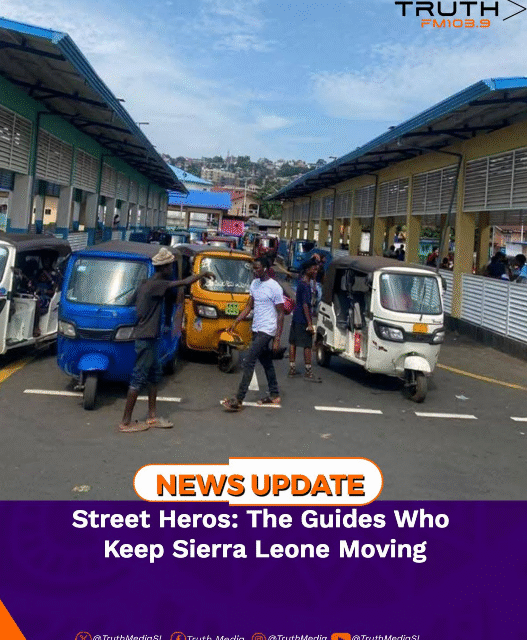
Freetown, 2nd February 2026– It is one of those mornings when everything feels heavier than it should. The sun is already up, unapologetic in its heat, and the park is alive with movement. Engines are roaring, horns are blaring, and voices are competing for attention.
You stand there with a bag digging into your shoulder, its weight growing heavier with every passing minute. You scan faces. You scan vehicles. You listen carefully, trying to catch familiar destinations shouted faster than your ears can process.
You are late, or you are about to be. Perhaps it is work. Perhaps school. Perhaps an appointment that cannot wait. The minutes slip by, and the crowd keeps moving, but you remain rooted to the same spot. How long have you been standing there? Five minutes? Ten? Longer? Sweat begins to form, not just from the heat, but from the anxiety of uncertainty.
What happens if you miss this ride? What happens if no vehicle is heading your way? How do you explain the delay when the city itself refuses to cooperate?
Your load feels heavier now. Not just the bag on your shoulder, but the pressure in your chest. You consider walking away. You think about waiting a little longer. You consider asking, but you do not know who to ask. Then, a voice cuts through the chaos. “Usai yu dey go?”
Before you know it, he is already pointing, half instruction and half assurance. Before you can respond fully, he is speaking to drivers, leaning into windows, exchanging quick words that you cannot quite hear. One vehicle is dismissed. Another slows down. A third is waved closer. Within seconds, he gestures for you to follow.
Just like that, confusion gives way to direction. Stress dissolves into motion. You have not raised your voice. You have not walked from one vehicle to another. You have not broken a single sweat. Someone else has carried the burden of finding your way, and for the first time that morning, you can breathe.
You must have seen them, if not had an encounter with them, at car parks and bus stations, sweating as they offer to help you find the vehicle you want to board. Before you even notice them, they’ve spotted you from kilometers away. Their voices echo through the streets as they shout out in different locations.
These are people whose relevance we often overlook, even though they ease our stress by asking commercial vehicle owners about their destinations on our behalf.
Their worth is uncelebrated, almost dismissed, until you find yourself standing for minutes, if not hours, with loads you wish you hadn’t carried, trying to secure a vehicle heading your way.
These people make our work easier; they lift burdens we never even realized we had. Some might say they are a public nuisance, that we can do without them, that they stink, that they are idlers, or that they should find something “betteh fo do.” Others say, “I won’t give them money because I can find my way without them,” or “I didn’t request their help after all.”
But how can we conclude such things when they always show up, doing the same thing over and over? They do what many consider a menial job, yet with a huge impact. How can you call the act of voluntarily helping others the work of an idler or a nuisance? Their commitment and resilience are unmatched. They keep offering to help even when you resist them; even when you brush them off rudely, even when you shout at them with your silence. Yet, if they see you the next day, they will still offer to help.
Such kindness is worth celebrating. There is a lot we can learn from their trade and their unique skill of persuading people and directing them to the right vehicle.
So the next time you encounter any one of them, even if you can’t give them money, the least you can do is be kind. If they ask you for your destination, tell them. Allow them to be the angels they are. And if you can give them a little something, who knows, perhaps you might be contributing to someone’s next meal. Call them what you want, but to many of us, they are “The Street Heroes” we don’t think we need.