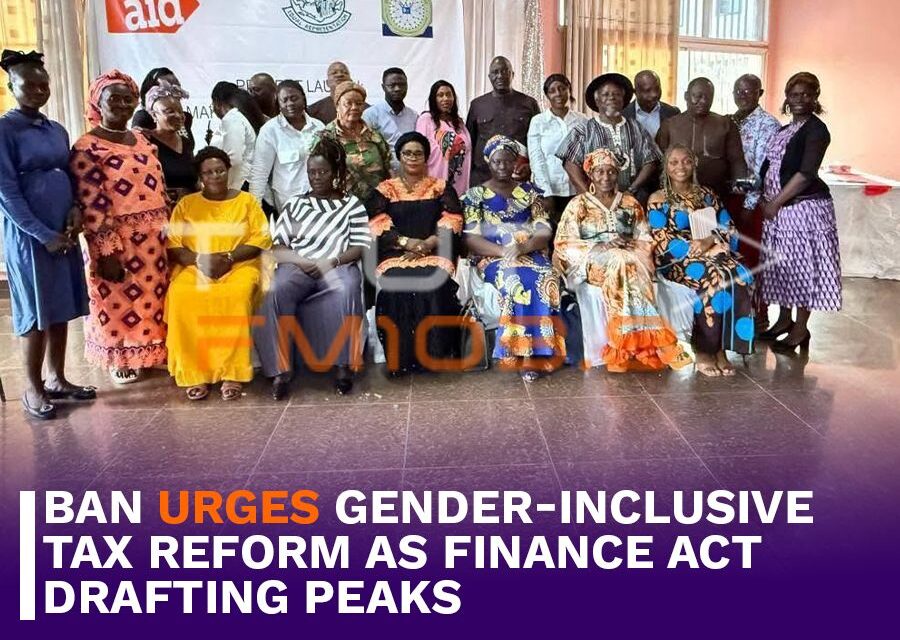
Freetown, 17 November 2025 — As Sierra Leone enters the critical phase of drafting its Finance Act for the upcoming fiscal year, the Budget Advocacy Network (BAN) has issued a strong call for gender-responsive tax reform, warning that failure to act now will entrench economic inequalities for women for another year.
“This is the one moment when reforms can be inserted before inequities become law again for another 12 months,” BAN stated, emphasizing that the Finance Act determines who pays, who benefits, who is protected, and who is left behind.
According to BAN, Sierra Leone’s tax system continues to overlook the unique economic realities faced by women. The organization highlighted several structural gaps including: Indirect taxes disproportionately affect low-income women, unpaid care work remains unrecognized in fiscal policy, no tax credits exist to reward women’s economic contributions, incentives and exemptions favor larger, often male-dominated sectors and a so-called “neutral” system that perpetuates inequality
BAN stressed that taxation is the intersection where gender equality, revenue policy, and care economy concerns converge, yet these issues are often treated in isolation.
“If gender is not integrated into the Act now, it will not be integrated at all,” the organization warned. “The Act will shape women’s access to income, their ability to invest in businesses, their capacity to save, and their resilience during shocks like inflation or caregiving burdens.”
The urgency is compounded by recent legislative gains, including the Gender Equality and Women’s Empowerment (GEWE) Act, the Customary Land Rights Act, and the National Land Commission Act. BAN cautioned that without a gender-responsive tax regime, these reforms risk remaining symbolic.
“Rights without resources are merely symbolic,” the statement read. “If taxation continues to ignore women, national development will continue to ignore women.”
BAN is calling on policymakers to embed gender equality into the fiscal architecture of the state influencing budget allocations, revenue decisions, social protection, and economic participation. The organization warned that missing this window would mean postponing gender-responsive tax justice for another year, a delay Sierra Leone cannot afford.