By: Davida Spaine-Solomon
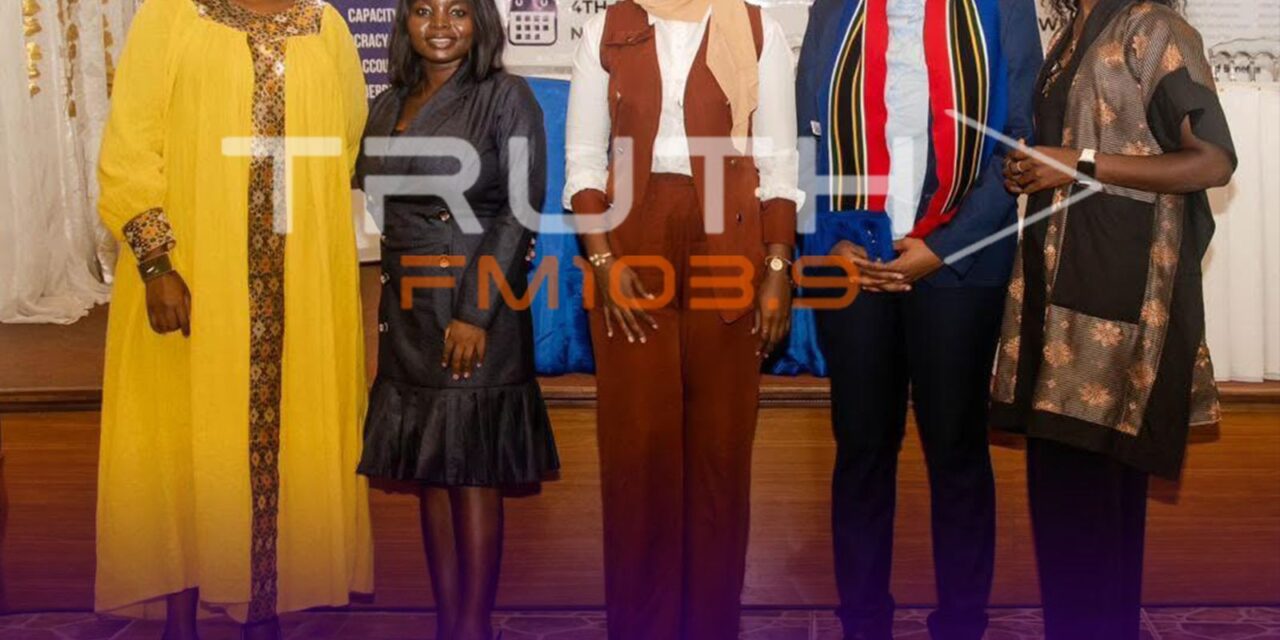
The National Young Women’s Conference, held on November 4th and 5th, 2025, at the Vanilla Complex in Aberdeen, Freetown, brought together young women, gender advocates, policymakers, and civil society leaders to discuss women’s political leadership under the theme “From the Margins to the Stage: Reimagining Young Women’s Political Leadership in Sierra Leone.”
The two-day event was designed to empower and inspire young women to take active roles in shaping political decisions that impact their lives and communities. It aimed to build a new generation of inclusive, visionary, and gender-responsive leaders who will redefine the country’s political landscape.
The conference was organized under the project “Building Young Feminist Leaders’ Capacity for Democracy Deepening and Accountability in Sierra Leone,” funded by the African Women’s Development Fund (AWDF) and implemented by the Campaign for Good Governance (CGG). The initiative focuses on empowering and strategically positioning young feminist leaders within the Young Women in Democracy Forum (YWDF) to influence reforms that advance women’s political, social, and cultural participation. YWDF, established by CGG in 2022, continues to create a network of empowered, informed, and active young women leaders driving positive change across Sierra Leone.
The event attracted participants from all 16 districts in Sierra Leone and featured key national stakeholders, activists, and three feminist leaders from West, South, and East Africa. The inclusion of international participants fostered regional solidarity, shared learning, and collaboration beyond borders.
Throughout the sessions, speakers and panelists addressed the realities young women face in politics and governance. Discussions centered on representation, access to social services, workplace discrimination, violence, and how far national policies have gone in integrating women’s needs. The conference also encouraged reflection, peer learning, and storytelling, allowing young women to share their experiences and amplify their voices in the national dialogue on political participation.
Speaking at the event, Madam Isata Sowa, Gender, Youth, and Disability Focal Person at the Political Parties Regulation Commission (PPRC), commended the initiative for its focus on women’s inclusion in politics. “Culture and society have long been barriers to women’s participation,” she said. “Women should no longer only be voters and campaigners; they must become candidates, policymakers, and decision-makers.”
Sowa emphasized that the PPRC’s mandate extends beyond regulation to ensuring fairness, accountability, and inclusivity in Sierra Leone’s political landscape. “Let this conference remind us to build a political culture where every woman feels seen, empowered, and valued,” she concluded.
Wokie Dassama, National Coordinator of the Young Women in Governance Network, echoed similar sentiments, stating that young women are ready to lead Sierra Leone. “We have trained women to lead with purpose,” she said. “We’ve fought against FGM, early marriage, and gender-based violence not with anger, but with conviction that our worth as women surpasses these ordeals.” She also urged political parties to nominate women as candidates based on merit rather than tokenism. “Women’s voices in politics are essential to strengthening our democracy,” she added.
Speaking on the role of women in strengthening democratic governance, Badriatu Turay, National Coordinator for the Young Women in Democracy Forum, noted that democracy flourishes when women are active participants. “We’ve been advocating for safe spaces for women and children across the country. Women are now breaking barriers and reshaping the future, building environments where their rights and dignity are protected,” she said.
Executive Director of the Campaign for Good Governance, Marcella Samba, encouraged women to take bold steps toward leadership. “If women are to move from the margins to the stage, they must do so with confidence,” she stated. “Society has conditioned us to stay behind, but it’s time to take centre stage. Women must actively engage in political activities and decision-making that affect their lives.”
Marie Sunkarie Kamara, Secretary-General of the All Political Parties Women’s Association (APPWA), reaffirmed her organization’s commitment to promoting women’s inclusion across political parties. “Our association is political but nonpartisan,” she said. “We’ve been echoing that women’s rights are human rights. Women should walk alongside men in key decision-making processes and must never be sidelined.” She further pledged APPWA’s continued advocacy for increased representation of young women in political leadership, emphasizing the need for gender-responsive democracy in Sierra Leone.
Delivering the keynote address, Hannah Robinson from the Ministry of Gender and Children’s Affairs highlighted the importance of unlocking women’s leadership potential. “President Julius Maada Bio has demonstrated his commitment to gender equality through the enactment of the Gender Equality and Women’s Empowerment Act of 2022,” she said. “But laws alone aren’t enough—political gatekeepers must open doors and build confidence in women.”
She cautioned that systemic barriers often prevent women from advancing in politics. “Women’s voices should not be treated as alternatives they are necessities,” she stressed. “We must support one another to overcome the limitations designed to keep us away from leadership.”
In her closing remarks, UN Women’s Programme Specialist, Mariam Jusu Collier reaffirmed the agency’s continued support for women’s empowerment. “Our ambitions should not be limited to politics,” she said. “While politics provides a platform to influence policy, women must also lead in other sectors. Too often, marriage is used to discourage women from leadership, but we are capable of multitasking and leading effectively.”
She urged women to maintain integrity and build strong reputations in their leadership journeys. “UN Women has trained and supported women leaders across Sierra Leone, particularly during elections, and the impact has been significant,” she added.
As the conference drew to a close, participants left with renewed energy, solidarity, and a shared determination to transform Sierra Leone’s political landscape. From the margins to the stage, these young women are prepared to lead, influence, and redefine leadership in a way that truly represents the voices and experiences of women across the nation.