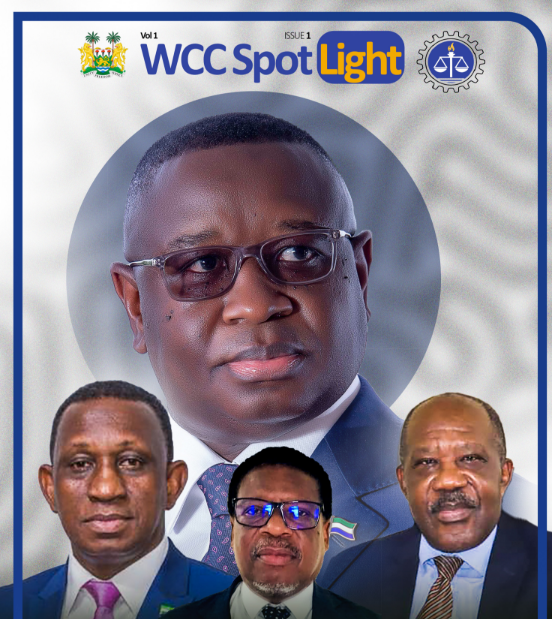
Freetown, 10th January 2026- After decades of uneven pay and unexplained disparities across Sierra Leone’s public service, the Government is signalling a renewed commitment to reform, as the Wages and Compensation Commission (WCC) unveils its first official newsletter outlining progress toward a fairer and more transparent salary system.
For years, public sector workers have complained of wide differences in wages and conditions of service, often between employees performing similar roles in different institutions. In some cases, pay levels reflected historical arrangements rather than clear standards, the result of fragmented wage-setting practices and weak coordination across government.
These distortions not only bred dissatisfaction among workers but also undermined morale and complicated efforts to build a professional and results-driven public service. Observers say the absence of a unified framework made it difficult to justify pay differences or hold institutions accountable.
It was in response to these long-standing challenges that President Dr Julius Maada Bio, in April 2023, signed into law the Act establishing the Wages and Compensation Commission. The legislation marked a major policy shift, aimed at replacing ad hoc pay arrangements with a system grounded in fairness, transparency and merit.
The launch of the Commission’s maiden newsletter, carrying the theme “Shaping a Transparent and Equitable Public Sector”, highlights how far the reform process has come and what lies ahead.
The WCC operates under the Wages and Compensation Commission Act, 2023, which outlines its mandate, functions, and governance structure. The law also establishes a Board of Commissioners responsible for strategic oversight and ensuring that pay reform supports national development priorities.
Officials involved in the process say the Commission’s work goes beyond simply harmonising salaries. The broader objective is to design a modern compensation framework that rewards performance, promotes equity and strengthens public sector productivity.
Since becoming operational, the Commission has taken several foundational steps. Chief among them is the development of a comprehensive three-year Strategic Plan, intended to guide institutional growth, define reform priorities and provide a roadmap toward salary harmonisation.
Laying the Foundation- Alongside planning, the Commission has prioritised engagement with key stakeholders. Outreach sessions have been held with Ministries, Departments and Agencies (MDAs) to clarify the Commission’s role and build collaboration around pay reform.
Acknowledging that Sierra Leone’s challenges are not unique, the Commission recently undertook a high-level study tour to Ghana’s Fair Wages and Salaries Commission. During the visit, Commissioners and senior staff examined Ghana’s compensation frameworks, implementation strategies and enforcement mechanisms.
According to officials, lessons from the Ghanaian experience, both positive and cautionary, are already shaping Sierra Leone’s approach, particularly around stakeholder engagement and phased implementation.
While the establishment of the Wages and Compensation Commission represents a significant milestone, authorities caution that meaningful reform will take time. Aligning salaries across a diverse public service, managing expectations and balancing fairness with affordability remain complex tasks.
READ FULL NEWSLETTER HERE: WCC Spotlight.pdf – Google Drive