By Andrew Chokpeleh
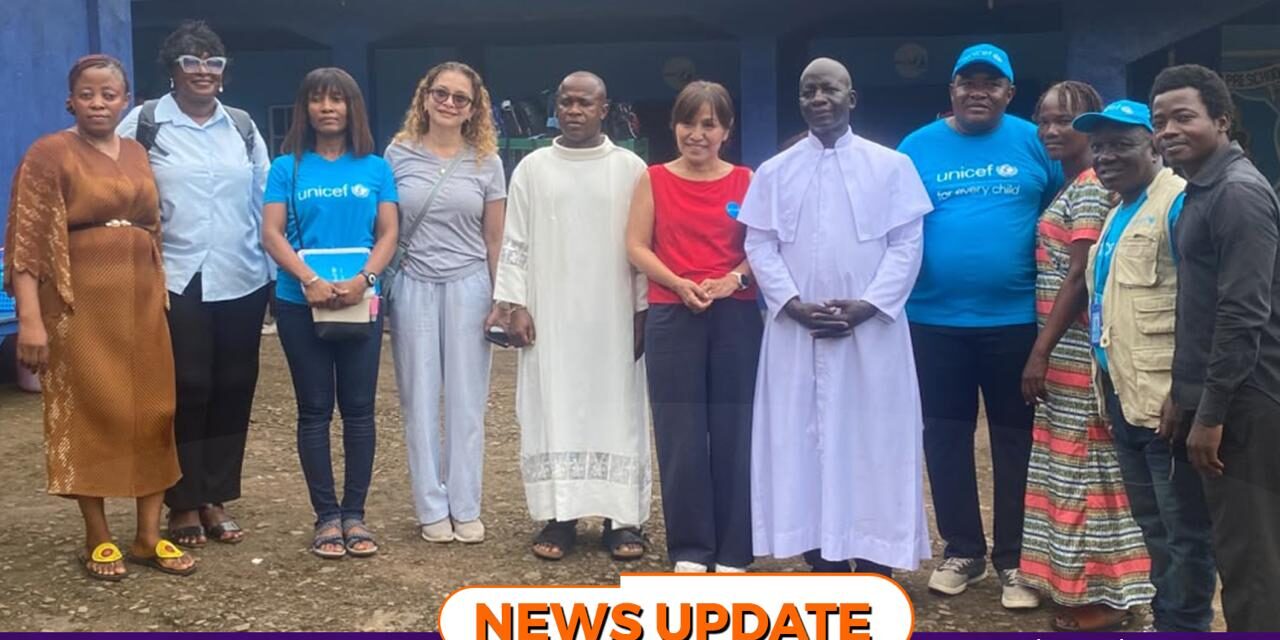
Freetown, 8th September, 2026 – The United Nations Children’s Fund (UNICEF), with funding support from the Global Partnership for Education (GPE), has trained teachers at Marian Pre-School in Kenema as part of efforts to strengthen innovative teaching and improve learning outcomes among young children.
The training focused on equipping teachers with new skills and practical approaches to teaching and mentoring pupils, while GPE also provided learning materials intended to support the children’s classroom experience.
UNICEF Representative, Mariko Kagoshima, explained that the training is being implemented in different parts of West Africa and was introduced in Sierra Leone with support from GPE to promote innovative learning. She said children exposed to innovative learning approaches are more likely to learn faster, understand concepts and retain what they are taught.
However, Kagoshima stressed that the training of teachers should not be considered the ultimate goal, noting that the real measure of success should be the impact the training has on children’s learning and development.
He said that the purpose of strengthening teachers’ skills is to enable them to better prepare children for a rapidly changing world and equip them with practical abilities that could benefit them in the future. She commended the teachers who participated in the programme, saying the benefits of the training are already reflected in their classroom delivery and in the way pupils are learning and retaining information.
Mohamed Jack Makieu, one of the teachers at Marian Pre-School who participated in the training, said the programme has introduced new teaching methods that have improved the way teachers deliver lessons and help pupils understand concepts. He noted that the learning materials have also helped children identify and understand objects more easily by providing them with practical resources to interact with during lessons. However, Makieu raised concerns that the available materials are not sufficient to meet the needs of all pupils in the school.
Makieu further called for the training to be extended to more teachers, preferably all educators within the school, so that they could adopt a common approach to teaching and ensure consistency in the way pupils are taught. He said the innovative methods have also enabled teachers to better identify the different interests and abilities of children, allowing them to develop those interests and make learning more engaging.
According to him, wider access to the training would help ensure that more teachers are equipped to effectively apply the new approaches.
UNICEF Representative, Mariko Kagoshima, explained that the training is being implemented in different parts of West Africa and was introduced in Sierra Leone with support from GPE to promote innovative learning. She said children exposed to innovative learning approaches are more likely to learn faster, understand concepts and retain what they are taught. Kagoshima stressed, however, that the training of teachers should not be considered the ultimate goal, noting that the real measure of success should be the impact the training has on children’s learning and development.
Kagoshima said the purpose of strengthening teachers’ skills is to enable them to better prepare children for a rapidly changing world and equip them with practical abilities that could benefit them in the future. She commended the teachers who participated in the programme, saying the benefits of the training are already reflected in their classroom delivery and in the way pupils are learning and retaining information.
Edward Mustapha Kpakra, chief education officer at the Ministry of Basic and Senior Secondary Education, said the rapid pace of change in the world makes it necessary for teachers to continuously adopt innovative methods of teaching. He encouraged educators to maximise the opportunity provided by the training and use the knowledge gained to better prepare children for the future.
Kpakra also called on GPE to continue supporting similar initiatives across Sierra Leone, describing them as important to strengthening teachers’ capacity. He stressed that the education system must increasingly focus on teaching children practical and innovative skills that could help them become self-reliant, even in situations where they may not eventually pursue university education. He maintained that preparing children for the future requires an education system that goes beyond traditional classroom instruction and equips learners with skills that could translate into meaningful opportunities.