By Davida Spaine Solomon
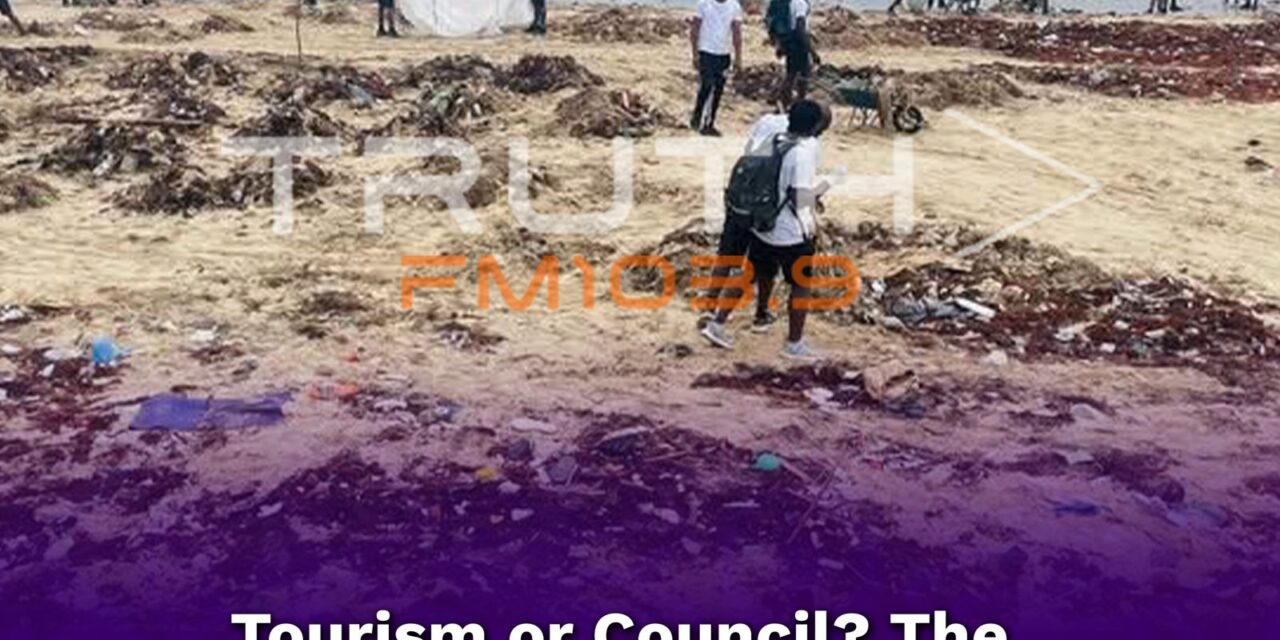
Freetown, 16th October 2025- Freetown’s beaches, once pristine symbols of Sierra Leone’s natural beauty and tourism potential, have in recent years become littered landscapes, sparking renewed public concern over sanitation and accountability.
Lumley and Aberdeen, two of the city’s most popular coastal spots, have drawn particular criticism for their deteriorating cleanliness. But while the problem is visible, the solution remains mired in institutional ambiguity.
At the heart of the issue is not a dispute over who should clean the beaches, but rather a lack of clarity and coordination between the two main institutions involved: the Ministry of Tourism and Cultural Affairs and the Freetown City Council (FCC).
The Ministry of Tourism acknowledges that beach cleaning is not formally part of its mandate. Yet, given the national importance of these spaces, it has historically stepped in to support cleanup efforts. Minister Nabeela Farida Tunis has emphasized that beaches are central to Sierra Leone’s image and appeal to tourists and investors. “Our beaches are the first impression many tourists get of our country. We cannot afford to neglect them,” she said.
Meanwhile, FCC insists that sanitation, whether on streets or beaches, is part of its statutory responsibility. Chief Administrator Rahman Tom Farmer explained that waste management falls within the council’s scope, but noted that the Tourist Board, under the Ministry of Tourism, has long taken the lead in beach cleaning. This includes signing agreements with beach businesses and collecting revenue, which Farmer says has created operational overlap and diluted accountability.
Mayor Yvonne Aki-Sawyerr added historical context, recalling that when she assumed office in 2018, she was informed, both publicly and during high-level meetings, that beach cleaning was the responsibility of the Ministry of Tourism. Citing the Tourism Act, the Ministry had claimed jurisdiction over the first 300 meters inland from the sea. Based on this understanding, FCC’s sanitation structures were designed without beach cleaning in mind.
However, the Mayor noted that the current Minister has adopted a more collaborative tone. “We made it clear that the council does not have the resources for beach cleaning,” she said. “Cleaning the beach is not the same as cleaning the street, it requires more manpower, logistics, and funds.” She confirmed that FCC has responded to recent correspondence from the Ministry and is open to joint efforts.
One of the sticking points remains revenue. Businesses along Lumley and Aberdeen beaches pay fees to the Tourist Board, which is expected to use part of those funds for waste management. Farmer argued that if FCC is to take on beach cleaning, there must be a clear revenue-sharing mechanism. “Functions given to councils usually come with revenue streams,” he said. “If the Tourist Board continues to collect revenue, then we need institutional engagement to ensure the resources follow the responsibility.”
Despite the overlapping mandates, both the Ministry and FCC agree on one thing: the beaches must be cleaned. What’s needed now is a formal framework for cooperation, realistic budgeting, and shared responsibility.
“The beaches belong to Sierra Leone,” said Farmer. “Their cleanliness should not be delayed by institutional turf wars.” Mayor Aki-Sawyerr echoed this sentiment, expressing optimism that with collaboration and clear role allocation, the issue can be sustainably addressed.
For many Sierra Leoneans, the question of beach cleanliness transcends bureaucratic boundaries. It speaks to national pride, public health, and the country’s global image. As discussions continue between the Ministry of Tourism, the Tourist Board, and FCC, one truth remains: clean beaches are not a luxury; they are a necessity.
And while the question of who is ultimately responsible may remain technically unresolved, the answer in practice is becoming clearer: it’s everyone’s job, and it’s time to act together.