
By Nafisatu Olayinka Deen
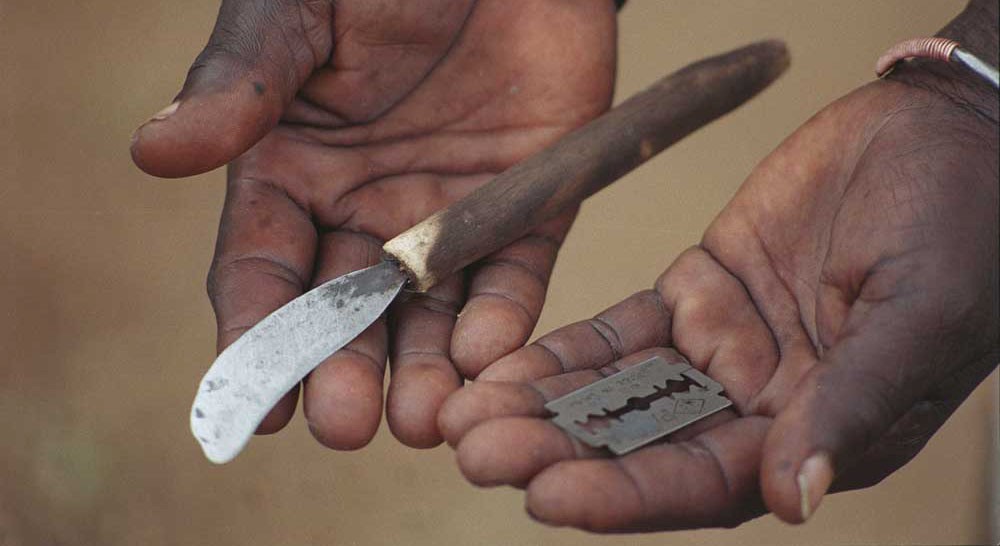
Freetown, 18th August 2025 – Like many other countries, female circumcision remains a deeply rooted norm in Sierra Leone. According to the 2019 Demographic Health Survey, 83% of women aged 15–49 have undergone Female Genital Mutilation (FGM). The World Health Organization defines FGM as procedures involving partial or total removal of the external female genitalia or other injury to female genital organs for non-medical reasons. The practice offers no health benefits and can lead to severe bleeding, urinary complications, cysts, infections, menstrual difficulties, childbirth complications, and increased risk of newborn deaths.
Despite its dangers, the Child Rights Act of 2007 in Sierra Leone does not explicitly prohibit or criminalize FGM. While the Act provides a broad framework for protecting children under 18 and includes provisions against harmful and degrading treatment, it fails to mention FGM by name. A press release from Parliament dated 7th July 2025 clarified that the newly enacted Child Rights Act of 2025 does not contain any provision imposing fines, penalties, or punishments specifically addressing FGM.
This omission has sparked concern. The Human Rights Commission of Sierra Leone issued a statement expressing deep disappointment, warning that underage girls will continue to be subjected to cruel and inhumane treatment under the guise of cultural tradition. The Commission called on President Bio to withhold assent to the Act and return it to Parliament with a provision explicitly exempting children from such practices.
A landmark lawsuit filed by Kadijah, an FGM survivor, alongside Forum Against Harmful Practices and Purposeful, led the ECOWAS Court of Justice to rule against the Government of Sierra Leone. The Court held the government liable for violating the rights of women and children by failing to criminalize FGM, declaring the practice “one of the worst forms of violence against women” and, when intentionally inflicted, meeting the threshold for torture.
However, not all voices are aligned. The Sierra Leone Women Are Free to Choose organization and the National Sowie Councils issued a press release on 10th July, rejecting the ECOWAS ruling. They claimed the case was fabricated and accused the ruling of being a political maneuver to justify an FGM ban. They commended Parliament for preserving what they consider a vital cultural tradition by omitting the FGM clause.
Amid Parliament’s inaction, civil society organizations and some government stakeholders continue to advocate for an outright ban on FGM. Meanwhile, the National Council of Soweis and Sierra Leone Women Are Free to Choose praise Parliament for upholding tradition. Many are now urging President Bio to reject the Act and comply with the ECOWAS Court ruling.
Attorney General Alpha Sesay stated, “The Government of Sierra Leone acknowledges receipt of the judgement from the ECOWAS Court and it respects the decision of the court.” He added that President Bio, as chairman of ECOWAS, has a duty to strengthen its institutions, including the ECOWAS Court.
In an interview with Truth Media, Minister of Gender and Children’s Affairs Dr. Isata Mahoi said, “Fortunately, the ruling came at a time when we missed the opportunity to pass the FGM clause in the Child Rights Act. I am happy about the ruling.” She emphasized that it is the President’s responsibility to sign or reject the Act, and that she can only advise him on state obligations.
Advocacy Continues- Eleanor Thompson Esq., the prosecution lawyer in the ECOWAS case, told Truth Media, “Banning FGM is the bare minimum the government can do to show real commitment to protecting women and girls in Sierra Leone.” She urged President Bio to reject the current Child Rights Bill and demand a revised version that bans FGM outright.
“With a legal ban, communities can finally lead the way in ending FGM in practice while preserving culture without violence,” she added.
The National Council of Soweis holds a contrasting view. They argue that Bondo is a cultural heritage and the pride of Sierra Leonean women. “This campaign against Bondo is a lucrative one,” said Dr. Fuambai Ahmadu, spokeswoman for the Council. “Politicians and activists promoting this campaign are doing it for the money; they do not care about our clitorises and our vaginas.” She emphasized that Bondo predates colonialism and embodies the identity of Sierra Leonean women. “President Bio, do not do it,” she urged.
“We see FGM as degrading treatment,” said Ishmael Cole, National Coordinator of Forum Against Harmful Practices, in an interview with Truth Media. “That is why we are always reminding the Government of Sierra Leone to fulfill its international obligations by ending FGM.” He stressed that FGM should not only be banned but criminalized. “We believe President Bio will not sign the Act,” he concluded.
The ECOWAS Court ruling stands as a testament to the relentless advocacy of civil society organizations committed to protecting human rights, regardless of age or gender. Activists believe that while Parliament is expected to safeguard citizens’ rights, it has instead been found liable for violating them.
At the crossroads of human rights and tradition, the future of women and girls in Sierra Leone hangs in the balance. The final decision rests with President Bio.




A powerful shut fighting for women and Educating the public killing two birds with one shot .