By Kelfala Kargbo
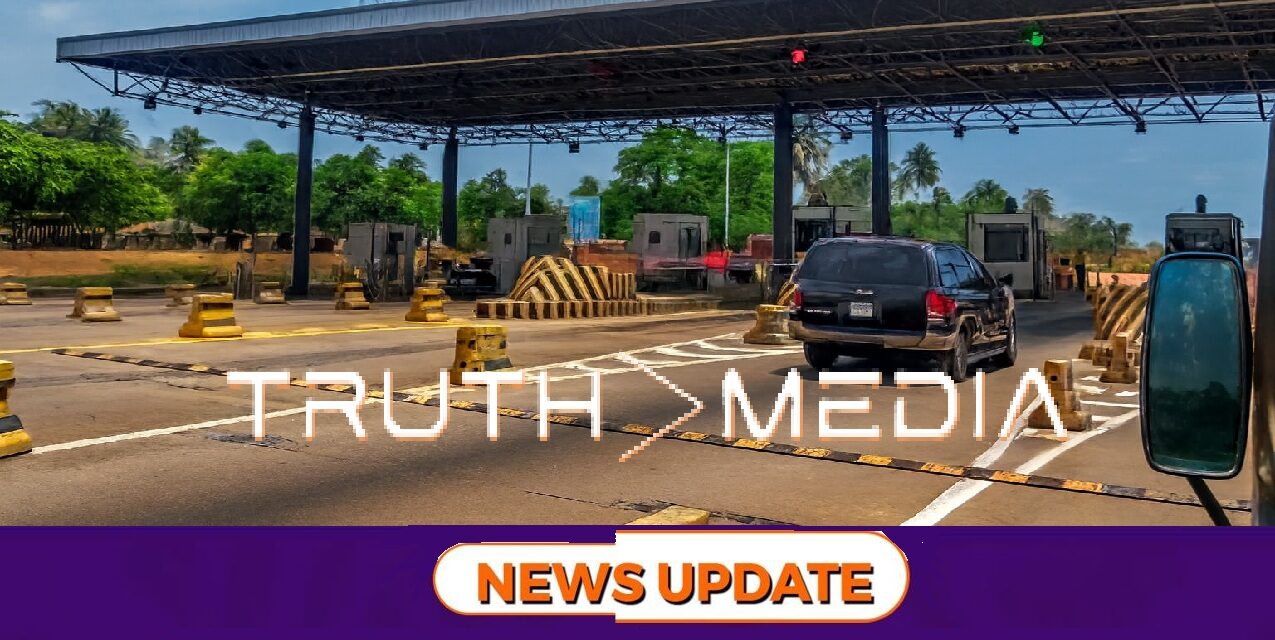
Freetown, 2nd February 2026- Sierra Leone has received only USD 1 million in toll revenues over the past nine years, despite an estimated USD 172 million being generated during the same period, according to a new report by the Institute for Governance Reform (IGR).
The report highlights what it calls a “staggering revenue gap” in the Wellington–Masiaka toll road project, raising serious questions about transparency, accountability, and the country’s ability to leverage infrastructure for sustainable financing.
“The toll road is a lucrative enterprise Sierra Leone can use as a sustainable mechanism for financing major trunk roads. On average USD 21 million is raised in toll fares every year, which amounts to an estimated USD 172 million that should have been collected over the last nine years. However, only USD 1 million has been paid to the GoSL’s National Revenue Authority over the same time period,” the IGR report stated.
Andrew Lavalie, Executive Director of IGR, said the toll project is symbolic of how major contracts have failed to deliver benefits to ordinary citizens. He revealed that IGR is investigating more than 3,400 contracts signed between 2016 and 2023 under both APC and SLPP governments, with the toll road singled out as a key case study.
The Wellington–Masiaka highway, a 65‑kilometre four‑lane road linking Freetown to the provinces, was built under a USD 148 million, 27‑year Build‑Own‑Operate‑Transfer (BOOT) concession with China Railway Seventh Group (CRSG). Since its inception in 2017, the government has not made the contract terms public, fueling concerns about secrecy in supervision and payment arrangements.
In 2024, toll fees were sharply increased by more than 110 percent across vehicle categories citing road maintenance obligations under the concession agreement. Tricycles (kekehs) rose from NLe1 to NLe3, taxis from NLe2 to NLe5, and heavy‑duty trucks from NLe183 to NLe400.
Professor Fredline M’Cormack‑Hale, who contributed to the assessment, stressed that roads are critical pillars of economic growth and service delivery. “If we get the toll gate right, we can replicate the model across the country,” she said.
IGR’s findings, based on AI‑powered monitoring of vehicle flows, revealed significant discrepancies between traffic volumes and reported revenues.
The IGR report urges Sierra Leone to rethink its anti‑corruption strategy, warning that international firms are often complicit in deepening institutional weaknesses that drain state revenues. It calls for deliberate consensus among political elites to revisit loss‑making contracts and recommends criminalizing the actions of public officials who knowingly structure agreements that result in systemic financial losses.
The report also stresses that fraud prevention should take precedence over reactive enforcement, with agencies such as the Anti‑Corruption Commission and the National Public Procurement Authority mandated to enforce full contract transparency. Beyond government reforms, the report highlights the need to dismantle extractive practices in public contracting and replace them with open, efficient systems of economic management.
It further calls for stronger coalitions among civil society and media actors to monitor revenue governance, arguing that while networks like the Budget Advocacy Network have advanced expenditure accountability, a broader alliance is needed to counterbalance entrenched state and business interests in revenue‑raising sectors.