By Davida Spaine-Solomon
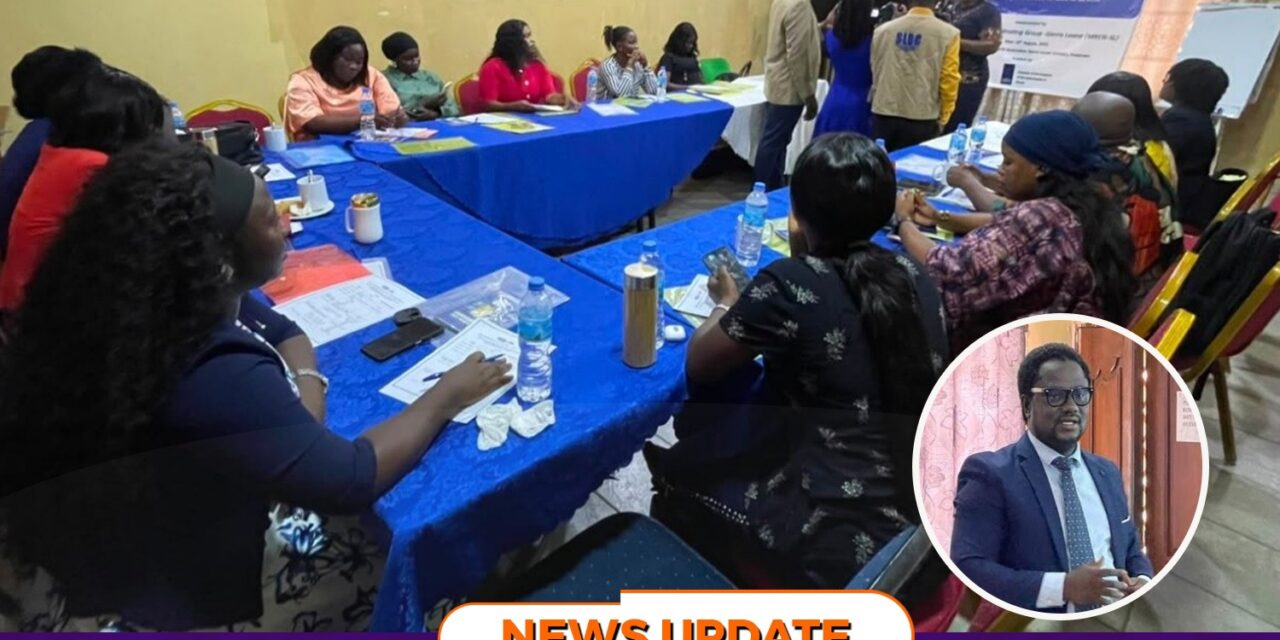
Freetown, 18th August, 2026 — The Media Reform Coordinating Group (MRCG) has convened a national stakeholders’ forum on Women’s Online and Digital Rights Issues in Sierra Leone, bringing together more than 25 women, including journalists and civil society activists, to identify challenges affecting women in digital spaces and develop practical recommendations to address them.
The National Coordinator, MRCG, Dr Francis Sowa, described digital rights as human rights that apply to online spaces, encompassing people’s ability to access and use the internet and digital platforms, while being protected from abuse and discrimination.
To help safeguard women’s rights in online spaces, Dr. Sowa said MRCG had implemented several initiatives between 2020 and 2024 focusing on women’s rights online, media professionalism, journalists’ safety and digital literacy for female journalists and activists. He also stated that the organisation had produced reports including “Women’s Rights Online in Sierra Leone: Policy Gaps and Recommendations for Promoting Gender Equality and Empowerment,” an annual Women’s Rights Online Report examining gendered disinformation, and State of Media Freedom Reports assessing freedom of expression and media freedom in Sierra Leone.
However, he stated that women still face specific challenges online, including threats to their safety, privacy, freedom of expression and equal participation.
The forum was held at the Christian Health Association of Sierra Leone (CHASL) Hall in Freetown, as part of MRCG’s ongoing project, “Enhancing Press Freedom, Women’s Rights, and Accountability Governance in Sierra Leone,” with funding support from the Embassy of the Kingdom of the Netherlands in Ghana.
According to Dr. Sowa, the forum is expected to enable participants to identify key challenges affecting women, assess gaps in the implementation of relevant laws, policies and programmes, develop practical recommendations and strengthen collaboration among government, civil society, the media, the private sector and development partners.
Speaking at the forum, the Executive President of the Sierra Leone Association of Women in Journalism (SLAWIJ), Millicent Kargbo, said women working in public-facing roles continue to face sexualisation, bullying, harassment, threats and other forms of digital violence. She said these experiences had forced some women to reduce their online engagement, withdraw from public conversations or avoid controversial issues for fear of becoming targets of abuse.
She referenced a 2022 SLAWIJ study, titled “Threats Against Public-Facing Women in Sierra Leone,” which examined the experiences of women journalists and women’s human rights defenders using digital platforms. She said the research identified harassment, verbal insults and verbal threats as the three most serious threats facing public-facing women.
According to Kargbo, the psychological effects of online abuse could include depression, anger and low self-esteem, while fear of violence can discourage women from continuing their public-facing work.
She described this as a “chilling effect,” warning that when women withdraw from public spaces because of online abuse, society loses their voices and perspectives on important issues.
Kargbo called for greater public awareness of digital rights and existing laws, urging stakeholders to ensure women understand their rights, know how and where to report online abuse, and have confidence that complaints would be taken seriously.
She further stressed the need for psychosocial support for survivors of digital violence, noting that reporting incidents alone is insufficient without protection, support and access to appropriate remedies.
The President of Women in the Media Sierra Leone (WIMSAL), Eastina Taylor-Tucker, said women continue to face barriers to meaningful participation in digital spaces, including the high cost of connectivity, limited access, digital literacy gaps, and online harassment.
Taylor-Tucker noted that when women are empowered to participate fully online, they can amplify community voices, challenge misinformation through credible journalism and access educational, economic and professional opportunities.
She called for policies that protect women from online abuse, increased investment in affordable digital access and training programmes that equip women with the skills needed to participate
Participants hoped that the recommendations emerging from the forum would translate into concrete action, stronger protection mechanisms and greater accountability.
The forum ended with a shared call for a digital environment in Sierra Leone where women could express themselves, work, advocate and participate in public discourse without fear of harassment, intimidation or violence.