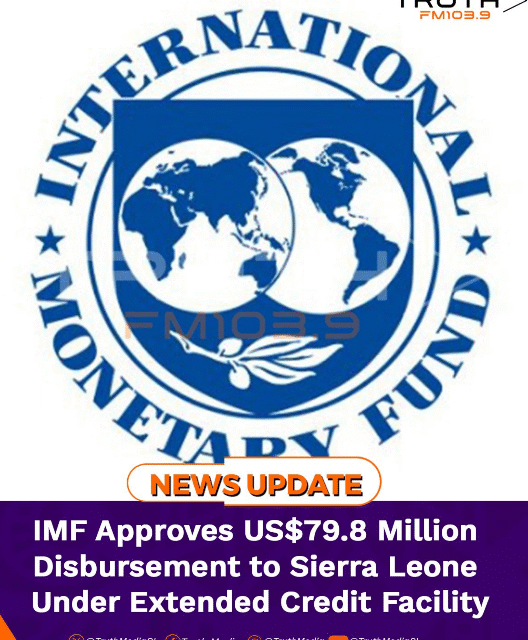
Washington, DC, 16th December, 2025. The Executive Board of the International Monetary Fund (IMF) has completed the first and second reviews of Sierra Leone’s arrangement under the Extended Credit Facility (ECF), unlocking an immediate disbursement of SDR 58.3 million (about US$79.8 million). This brings total disbursements under the program to SDR 93.3 million (about US$127.8 million).
The ECF arrangement, approved on October 31, 2024, is designed to maintain debt sustainability, reduce inflation, rebuild reserves, and strengthen governance. The first review had been delayed due to fiscal overruns in 2024, reserve depletion, and reform setbacks. However, the IMF noted that program performance has since improved, allowing the reviews to move forward.
In completing the reviews, the IMF Board approved waivers for non‑observance of several performance criteria, including net credit to government, net domestic assets, and net international reserves. These waivers were granted on the basis of corrective measures taken by Sierra Leonean authorities.
Sierra Leone’s economy is projected to grow by 4.4% in 2025, driven by mining and agriculture. Inflation fell to 4.4% in October 2025, supported by tighter macroeconomic policies and a stable Leone, and is expected to remain in single digits over the medium term.
Despite these gains, challenges remain. Reserves dropped to 1.5 months of imports as of September 2025, while debt continues to pose a high risk of distress. The IMF warned that reform fatigue could undermine progress, given the scale of fiscal adjustment required.
At the conclusion of the Board’s discussion, Mr. Bo Li, Acting Chair and Deputy Managing Director, praised Sierra Leone’s recent progress but stressed the need for continued discipline:
“The authorities have brought the ECF back on track following program slippages in 2024, and the economy is reacting favorably. Inflation declined to 4.4 percent by October 2025, the leone remains stable, growth is near potential, and the cost of borrowing has dropped to sustainable levels. However, debt remains at high risk of distress and reserves have fallen to 1.5 months of imports in September.”
He emphasized that fiscal tightening is “imperative,” noting that revenue measures, stronger tax compliance, and public financial management reforms will be critical to avoid future overruns.
“Maintaining debt sustainability will require adhering to the ambitious fiscal adjustment path, supported by robust improvements in debt management practices. Efforts should be intensified to secure grants and concessional financing, lengthen debt maturities, broaden the investor base, build buffers, and ensure that debt securities are issued at sustainable rates,” Mr. Li said.
He added that rebuilding reserves must remain a priority, while monetary policy should continue transitioning to a neutral stance given low inflation.
The IMF also welcomed Sierra Leone’s publication of the Governance and Corruption Diagnostic report, urging authorities to focus on its implementation to strengthen institutions and address corruption vulnerabilities.