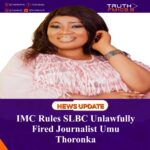
Freetown, 11th March 2026- The Independent Media Commission (IMC) has ruled that the Sierra Leone Broadcasting Corporation (SLBC) unlawfully terminated journalist Umu Thoronka, a decision hailed by Women in the Media Sierra Leone (WIMSAL) as a landmark victory for fairness and accountability in the industry.
After three hearings beginning in November 2024, the IMC concluded that SLBC “failed to exercise due diligence in handling the termination process” and ordered the broadcaster to compensate Ms. Thoronka. WIMSAL has urged SLBC to swiftly comply.
Ms. Thoronka was dismissed in July 2024 after posting a TikTok video showing a woman publicly humiliated during a presidential town hall. SLBC claimed she was not a staff member and accused her of breaching internal policy. Her dismissal came amid a wave of harassment, including online abuse, home visits by unidentified individuals, and death threats, which eventually forced her into exile.
“This ruling is a clear affirmation that women in the media deserve fairness, dignity, and respect in their workplaces,” said WIMSAL President Eastina Taylor. “We call on SLBC to honor its obligation and set a precedent for accountability across the sector.”
Her lawyer, Paul Kamara, described the decision as “a restoration of Ms. Thoronka’s dignity,” adding that the case will also proceed before the ECOWAS Community Court of Justice.
Ms. Thoronka’s ordeal reflects deeper systemic issues. Despite a decade of service at SLBC, where she anchored flagship programs and headed entertainment, she was denied a full contract after rejecting sexual advances from superiors. Her dismissal over the phone underscored the hostile environment she endured.
“This case is emblematic of the trend of sexual harassment within the media industry in Sierra Leone and globally,” said Ikechukwu Uzoma of the Kennedy Human Rights Center, co-counsel in the ECOWAS case. “Female journalists often face quid pro quo harassment and hostile conditions if they resist.”
The ECOWAS suit, filed by KHRC and WIMSAL, argues that Ms. Thoronka’s rights to dignity, freedom of expression, and equitable work conditions were violated. Advocates say the IMC ruling is only the first step toward justice, and they are calling on government to act decisively against sexual harassment in the media sector.
For WIMSAL, the case is more than a personal victory—it is a rallying cry for reform. “This is an opportunity for Sierra Leone to match its public commitment to ending sexual violence with concrete action,” Taylor said.