By Nafisatu Olayinka Deen
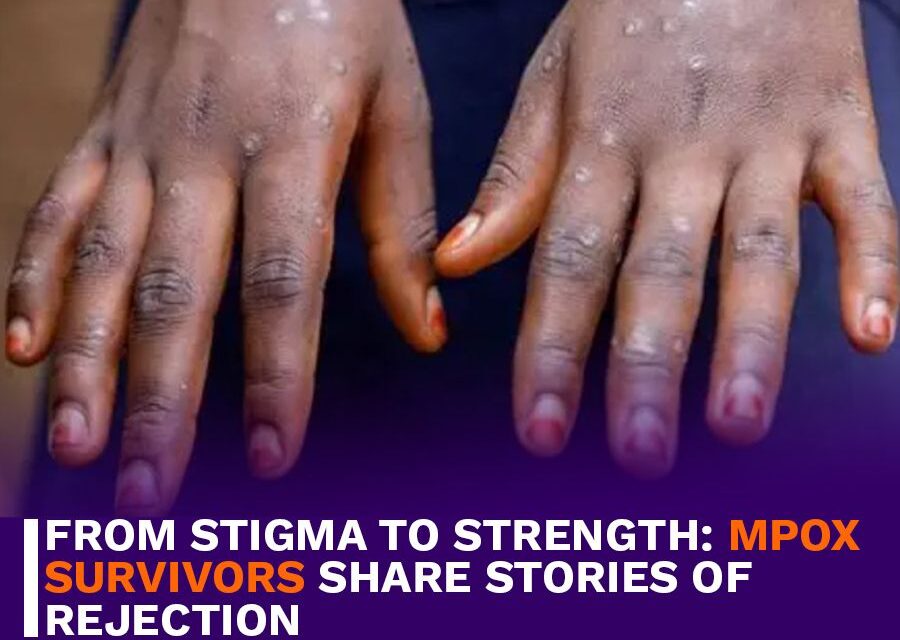
Freetown, 10th November 2025- Stigmatization after recovering from contagious diseases in Sierra Leone remains a deeply rooted social challenge, one that often leads to isolation, economic hardship, and emotional trauma. For Mpox survivors like Abass Sesay, the journey from illness to recovery has been far from straightforward.
Abass, a young man who contracted Mpox while using public transport, never imagined that a routine ride would spiral into a life-altering ordeal.
“I first noticed rashes after using public transport and assumed it was a common infection,” he recalled. “When pharmacy treatments failed, a friend encouraged me to seek medical help. That led to a confirmed Mpox diagnosis. That moment of truth marked the beginning of a life-changing journey.”
Abass spent twelve painful and isolating days in hospital. Though he survived and was declared cured, the relief was short-lived. Upon returning home, he was met not with open arms, but with rejection.
“I was relieved after I was discharged, but I lost valuable opportunities. When I finally returned home, my room was locked. My brother turned me away. Since then, I’ve been struggling to get back on my feet. It hasn’t been easy,” he told Truth Media.
The rejection extended beyond his family. Neighbours and the broader community also distanced themselves.
“It wasn’t just my family who turned away, neighbours and the entire community followed suit,” he said. Still, Abass remains resilient, committed to both recovery and advocacy.
Fannie Abdulai, another young survivor, shares a similar story. A second-year university student with dreams of becoming a nurse, she contracted Mpox through public transport. Her diagnosis changed everything.
“My uncle, who had been supporting my education, stopped paying my fees, forcing me to drop out,” she said. “Before I could even return home, my luggage was sent to me with a clear message: I was no longer welcome.”
Both Abass and Fannie voiced shared concerns about economic hardship and social exclusion. But they also found a lifeline: a WhatsApp group for Mpox survivors.
“I was added to a WhatsApp group of survivors. The group offered encouragement and support. It was a lifeline,” Abass said.
“Everything changed when I joined the Mpox Survivors WhatsApp group,” Fannie added. “Suddenly, I was surrounded by people who truly understood. They listened, offered encouragement, and reminded me I wasn’t alone.”
A Society That Embraces- That virtual support network soon evolved into something bigger. “Together, we formed the Sierra Leone Network of Persons Recovered from Mpox to raise awareness and help others navigate the challenges of recovery,” Fannie explained.
The Sierra Leone Network of Persons Recovered from Mpox was officially launched on October 2–3, 2025, a landmark initiative unveiled by the Government of Sierra Leone through the National Public Health Agency (NPHA), with support from Jhpiego.
In an interview with Truth Media, Ibrahim Kamara, the Network’s Public Relations Officer and a fellow survivor, described the initiative as a movement born from resilience.
“Our aim is to provide peer support, help others find confidence after illness, and work hand in hand with government, health partners, and communities to end stigma and strengthen prevention,” he said. “Recovery is not only physical, it is emotional and social. It takes courage to speak out, to say, ‘I had Mpox and I recovered.’ That courage is what this new Network represents.”
Survivors Remain Hopeful- Abass and Fannie’s journeys are far from over. They still face economic hardship, social rejection, and emotional scars. But they also carry something stronger: hope.
“I’ve been struggling to get back on my feet. It hasn’t been easy but I’m still here. Still fighting. Still hoping,” Abass said.
“I still struggle. Some days I go without food,” Fannie added. “But I’ve found purpose. I’ve found strength. And I’ve found my voice.”