Freetown, 17th July 2026- Freetown’s media landscape has undergone a dramatic transformation. A new survey conducted by Meraki Analytics between April 13 and May 4, 2026, reveals that algorithms now control the news in Freetown, reshaping how residents consume information.
Out of 1,217 respondents, more than half 54% said they rely on social media platforms such as Facebook, TikTok, WhatsApp, Instagram, X, and YouTube as their primary news sources.
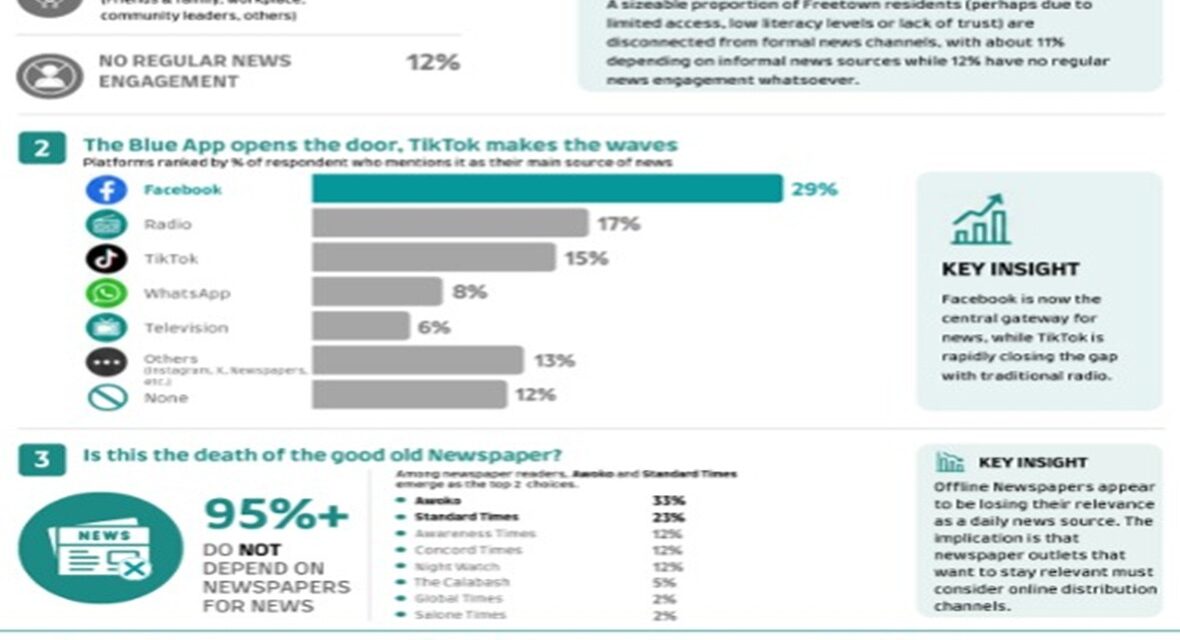
Traditional outlets like radio, television, and print newspapers account for just 23%, while 11% depend on informal networks of friends, family, and community leaders. Strikingly, 12% reported no regular engagement with news at all.
This shift underscores a growing reliance on algorithm-driven feeds, where what people see, read, and believe is increasingly determined by digital platforms rather than editorial boards. While traditional media retains some influence, its reach is shrinking, leaving a portion of the population disconnected from formal news channels altogether.
The survey highlights a clear hierarchy among platforms. Facebook leads with 29%, cementing its role as the primary gateway to news in Freetown. Radio, once the dominant medium, now trails at 17%, while TikTok surges to 15%, closing the gap with traditional broadcasters. WhatsApp (8%) and television (6%) remain secondary sources, while other outlets, including internet sites, X, and newspapers collectively account for 13%.
The findings suggest that TikTok’s rapid rise is reshaping news consumption habits, particularly among younger audiences, while Facebook continues to anchor the digital news ecosystem.
The July 17, 2026, report by Meraki Analytics, supported by Monime and Reform Foundation, confirms what many suspected: Freetown has gone digital. Social media platforms now dominate the news cycle, TikTok is challenging radio’s long-standing influence, and newspapers face near extinction. As algorithms increasingly dictate what residents see and believe, the future of journalism in Sierra Leone hinges on how quickly traditional outlets can adapt to the digital tide.