By Davida Spaine Solomon
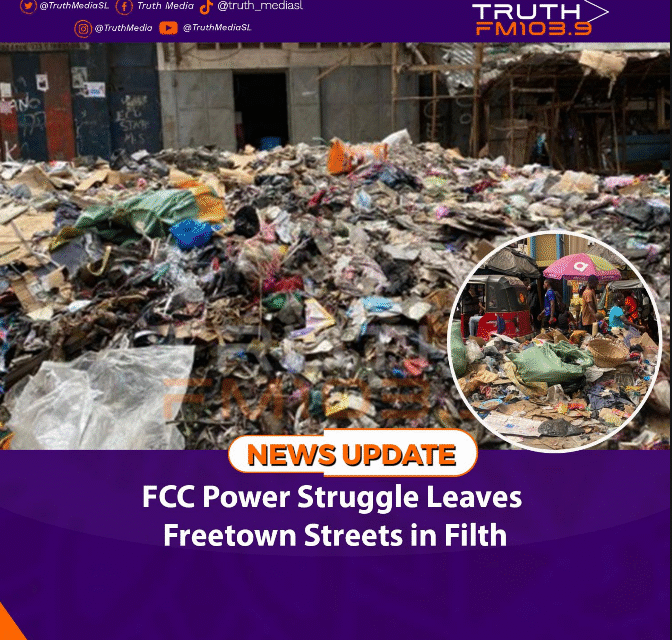
Freetown, 17th February 2026- The heart of Freetown’s business district is choking under piles of uncollected waste, as an administrative standoff at the Freetown City Council (FCC) cripples sanitation services.
On ECOWAS Street at PZ and along Sani Abacha Street, traders say garbage collection has slowed significantly, in some areas, it has stopped altogether. Overflowing piles of plastic, food remnants, and market refuse now line the streets, attracting flies, rodents, and complaints from customers.
“We are suffering,” lamented one shop owner, standing near a heap of rotting waste. “FCC no longer collects dirt the way they used to. The smell is bad, and customers complain.”
These streets are not ordinary roads; they are the commercial heartbeat of the capital. Yet under the hot sun, exposed garbage is turning Freetown’s busiest corridors into health hazards. Public health experts warn that prolonged exposure to decomposing waste raises the risk of cholera, typhoid, and other sanitation-related diseases illnesses that have historically plagued Sierra Leone’s urban centers.
The crisis comes as FCC grapples with a bitter power struggle between its political and administrative leadership. While negotiations continue behind closed doors, the consequences are spilling onto the streets. Traders say they care little about the internal wrangling; their concern is the mounting waste.
“This is the center of Freetown. If here is dirty like this, what about other places?” asked a businesswoman, frustrated by the stench and flies.
Beyond the unpleasant sight and smell, the economic cost is real. Some traders report customers spending less time in affected areas, while food vendors near garbage piles fear declining sales due to hygiene concerns.
Sanitation is one of the FCC’s core responsibilities, protecting public health and preserving Freetown’s image as a hub for commerce and tourism. When that system falters, the impact is immediate and deeply felt.
Residents are now calling for urgent intervention to prevent the situation from escalating into a full-blown health emergency. For many, the garbage crisis is a stark reminder that governance is not about titles or authority, it is about services that touch everyday lives.
For now, central Freetown’s traders and residents are left navigating their businesses, and their health, around growing piles of waste, waiting for action before the consequences become more severe.