By Davida Spaine-Solomon
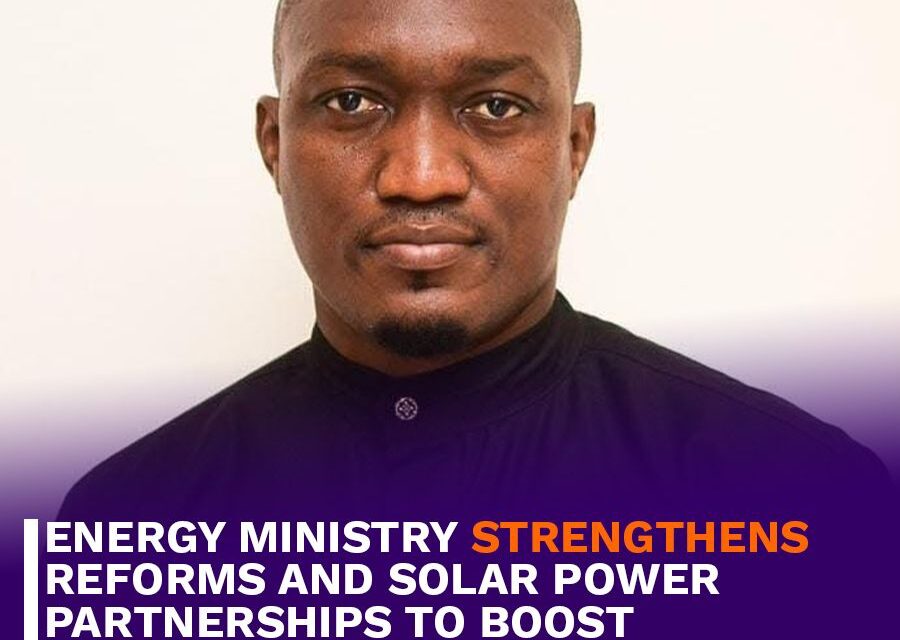
Freetown, 10th November 2025- The Deputy Minister I of Energy, Engineer Edmond Benjamin Nonie, has shared key updates on Sierra Leone’s ongoing energy reforms and new international partnerships aimed at expanding access to reliable and affordable electricity across the country.
Engineer Nonie explained that the Ministry has been working closely with development partners to overhaul the energy sector, improve infrastructure, and ensure stable power distribution for both households and institutions.
“We are continuously evaluating our systems to identify gaps and working hand-in-hand with management and partners to strengthen electricity delivery,” he said.
Highlighting recent progress, he noted that Sierra Leone is now fully connected to the CLSG power line, linking the country to Côte d’Ivoire and Guinea. While the nation is already generating a significant portion of its own power, efforts are underway to boost domestic energy production.
“By January next year, we plan to add at least 60 megawatts of new electricity from ongoing projects, including solar installations and generator upgrades,” the Deputy Minister revealed.
On international collaborations, Engineer Nonie discussed a recent visit to the United Arab Emirates (UAE), where the Ministry held talks with Global South Utilities (GSU)—a company specializing in solar energy projects across Africa. The meeting focused on strengthening solar power initiatives, particularly the 6-megawatt Newton solar plant, first established in 2019.
According to him, GSU has pledged to supply additional battery storage systems to improve energy reliability.
“GSU has offered batteries that will boost the efficiency of our solar projects. For example, the Newton and Lungi solar plants will soon receive supplementary battery units, allowing us to store energy and achieve full capacity utilization,” he explained.
Engineer Nonie further outlined the importance of battery storage in maintaining power supply consistency.
“Solar systems produce electricity only when the sun is out, so batteries are essential to keep the lights on at night or during cloudy days. With these systems, we can store power generated in the daytime and use it when needed,” he said.
The Deputy Minister disclosed that following the signing of a Memorandum of Understanding (MOU) with GSU in November, technical studies and system designs will commence immediately. He commended GSU’s efficiency in similar projects in the UAE, where installations can deliver up to 50 megawatts per day, and expressed optimism that Sierra Leone will see tangible improvements soon.
“If we move swiftly, these projects will significantly enhance energy availability by early next year,” he assured.
On the financial and operational model, Engineer Nonie explained that GSU will provide the battery systems, which will then be sold to the Electricity Distribution and Supply Authority (EDSA) at affordable tariffs. EDSA, in turn, will distribute electricity to consumers—ensuring both sustainability and affordability for Sierra Leoneans.
He also provided updates on critical infrastructure upgrades, including ongoing works at Kingtom and Black Hall Road, as well as the installation of new transformers and rehabilitation of transmission lines.
“We are prioritizing key projects to improve power generation, transmission, and distribution in strategic areas,” he emphasized.
Through these initiatives, the Ministry of Energy is reinforcing its commitment to expanding electricity access, promoting renewable energy solutions, and building strong international partnerships to address Sierra Leone’s energy challenges.
Engineer Nonie concluded by reaffirming the government’s broader goal: “Our mission is to ensure sustainable and reliable electricity for every Sierra Leonean, in both urban and rural communities.”