By Ishmael Zay-Bangura
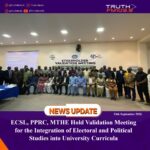
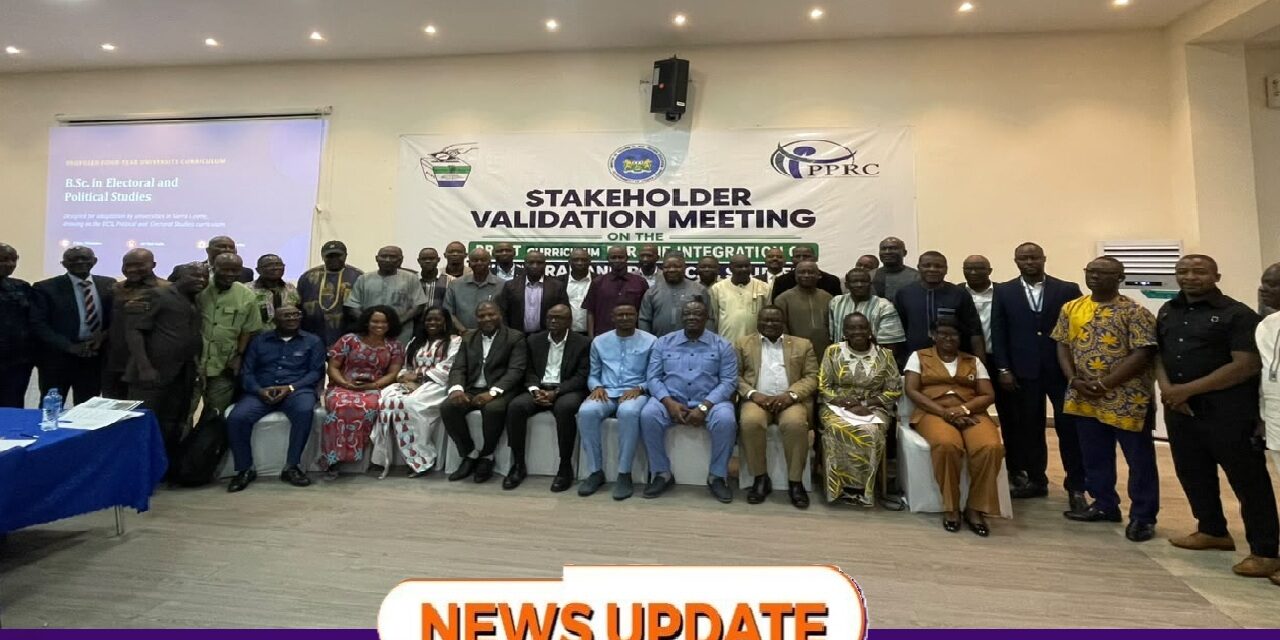
Freetown, 24th September, 2026 – In a move to strengthen democracy and civic education, the Electoral Commission for Sierra Leone (ECSL), in collaboration with the Ministry of Technical and Higher Education (MTHE) and the Political Parties Regulation Commission (PPRC), has organized a stakeholder validation meeting on a draft curriculum for the integration of Electoral and Political Studies into university curricula.
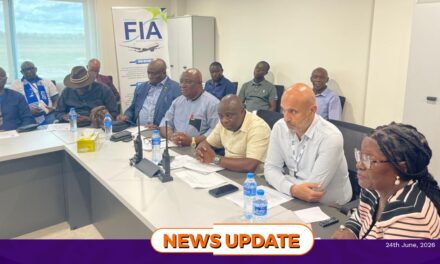
The event, held at the New Brookfields Hotel, Freetown, on September 22, 2026, brought together vice chancellors from various universities and other key stakeholders to review and endorse the proposed draft curriculum.
The Chief Electoral Commissioner of the ECSL, Edmond S. Alpha, highlighted that the curriculum is built upon four core principles: Electoral Constitution, Civic Education, Communication Skills, and Information and Communication Technology (ICT).
The Deputy Minister of Technical and Higher Education, Sarjoh Aziz Kamara, stated government’s readiness to collaborate with the ECSL and other election management bodies. He noted that the initiative aims to cultivate a culture of centralized politics, strengthen the understanding of electoral principles, and promote good governance in national development.
The Chairman of the PPRC, Emmanuel Amara Esq., emphasized the transformative potential of the draft. “This will deepen understanding of governance operations of political parties, political participation, internal party democracy, inclusion, political accountability, conflict management, and the responsibility that accompanies democratic competitions,” he stated.
The proposed university curriculum introduces a four-year, eight-semester programme culminating in a Bachelor of Science (B.Sc.) in Electoral and Political Studies.
A key feature of the program is a compulsory internship following the third year, designed to provide students with practical experience. The program offers multiple entry pathways, including certificate, diploma, higher diploma, and bachelor’s degree levels.
Designed for adaptation by the University of Sierra Leone, the curriculum addresses a critical gap in civic knowledge. Beyond merely casting a ballot, the program aims to ensure citizens understand political institutions, electoral processes, and constitutional principles.
One of the major purposes of the program is to equip graduates with a strong foundation in political science, democracy, governance, and citizenship, while also developing their ability to analyse electoral data.
The validation meeting marks a pivotal step toward embedding electoral and political studies into the national academic framework, with the ultimate goal of fostering a more informed, engaged, and democratic society in Sierra Leone.