Freetown, 12th Sierra Leone – Nearly seven years after President Julius Maada Bio established three Commissions of Inquiry (COIs) to investigate past government corruption, Sierra Leone’s judicial system is facing mounting criticism for failing to deliver timely justice.
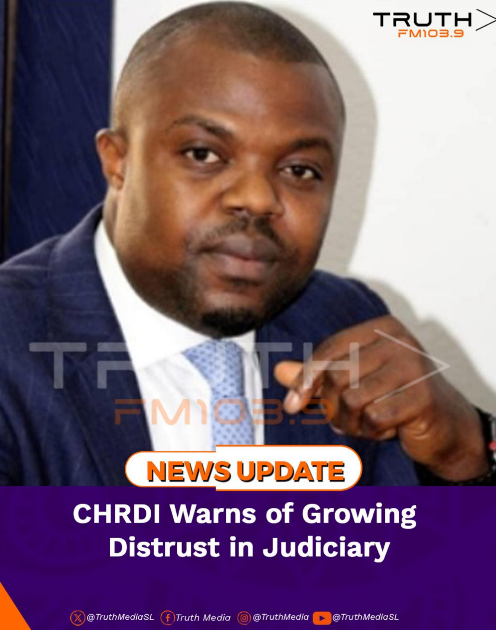
The Campaign for Human Rights and Development International (CHRDI) has raised alarm over what it describes as “endemic problems” within the judiciary, including corruption, poor record management, lack of transparency, and widespread delays in handling appeals stemming from the COIs.
The final COI reports were submitted in March 2020, but almost five years later, a significant number of appeals remain unresolved or poorly documented. According to CHRDI, this judicial backlog has eroded public confidence and cast doubt on the independence and efficiency of Sierra Leone’s courts.
Despite a directive issued in September 2023 instructing judges to conclude all COI-related cases by mid-October of that year, compliance has been slow. Frustration among litigants continues to grow as cases languish in the Appeals and Supreme Courts.
On August 21, 2025, CHRDI formally invoked the Right to Access Information Act (2013) to request updates on COI cases between 2021 and 2025. After months of resistance, the judiciary eventually submitted partial records in December 2025, covering 108 cases across three appellate panels.
However, CHRDI’s review revealed troubling discrepancies: 38 case files (35%) listed as “No Record”, 3 incomplete records and numerous inaccuracies in case documentation
The summary of judgments provided showed minimal progress: 2025: 2 appeals allowed, 1 dismissed, 2024: 3 appeals allowed, 1 dismissed, 2023: 5 appeals allowed, 4 dismissed, 1 dismissed for want of prosecution, 2022: 3 appeals allowed, 3 dismissed, 2021: 8 appeals allowed, 3 dismissed
Corruption within Sierra Leone’s judiciary has long been an open secret, with allegations reaching senior officials and staff. Some judicial officers have been suspended for misconduct, further fueling public distrust.
“The Judiciary’s failure to address these issues will undermine the rule of law and diminish citizens’ right to timely justice,” warned Abdul M. Fatoma, CHRDI’s Chief Executive. He added:
“A judge who accepts a bribe or obstructs justice cannot be considered independent or impartial. The problem is exacerbated when corruption is promoted by higher authorities, fostering an environment that encourages further corrupt practices.”
CHRDI is urging bold and honest reforms backed by full government commitment to restore trust in the justice system. The organization insists that without transparency, accountability, and adequate resources, Sierra Leone’s judiciary risks losing its credibility as the “temple of justice.”