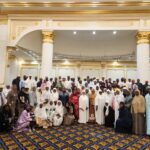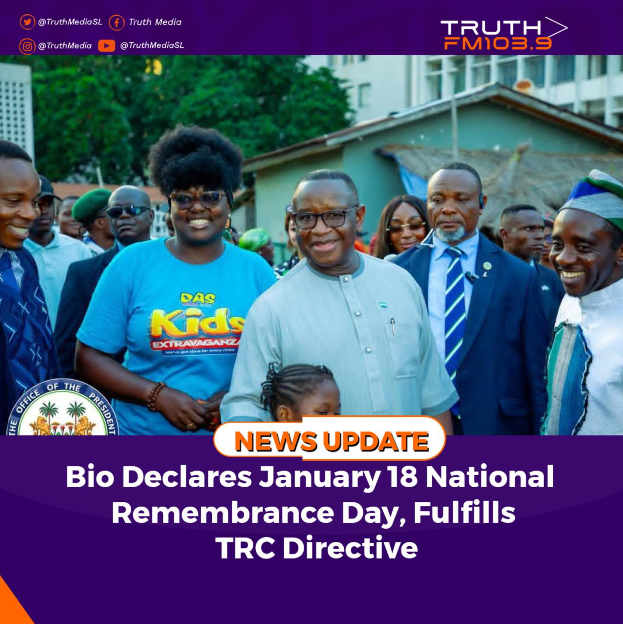
Freetown, 15th December 2025 – President Julius Maada Bio has formally declared January 18 as National Remembrance Day, fulfilling a major recommendation of Sierra Leone’s Truth and Reconciliation Commission (TRC). The announcement was made at the opening of the Salone Civic Festival 2025, held at the newly transformed Miatta Civic Centre in Freetown.
January 18, 2002, marked the official end of Sierra Leone’s brutal civil war, which began in 1991. The TRC Report, in Paragraph 202, had called for the date to be set aside annually to honour victims, promote reconciliation, and strengthen peace.
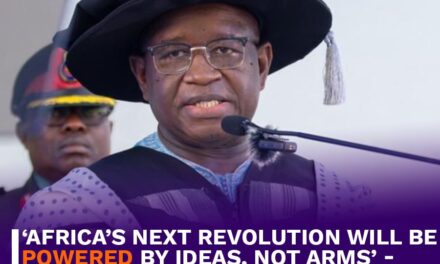
“Since the days of the TRC and the Bintumani Conferences, no administration has done more to promote press freedom and create space for national dialogue than my government,” President Bio said. He added that the new day of remembrance will be dedicated to civic education, community service, peacebuilding activities, and reflection on the lives of victims and survivors.
The President tasked the Ministry of Information and Civic Education (MOICE), the National Council for Civic Education and Democracy (NaCCED), and the Independent Commission for Peace and National Cohesion (ICPNC) to lead the annual commemoration.
Speaking on the importance of the Miatta Civic Centre, Bio described it as a national home for civic engagement, creativity, and digital innovation. “This is a place where citizens can speak truth to power, where artists and innovators shape the future, and where government connects directly with the people,” he said.
He highlighted reforms aimed at deepening civic culture, including weekly government press briefings, nationwide civic town halls, and the reintroduction of the Sierra Leone Daily Mail as a credible source of authoritative news. He also praised the rebirth of the Sierra Leone News Agency (SLENA), now with correspondents in every district, playing a key role in countering misinformation.
Bio further underscored the impact of the gov.sl digital platform developed by DSTI, which provides citizens with verified information on government projects. He noted that the Medium-Term National Development Plan (MTNDP) dashboard now allows the public to track national progress in real time, describing it as “a new era of accountability through technology.”
At the event, the President also launched three major policy frameworks developed by MOICE: The Government Information Policy, the National Archive Policy, and the National Film and Video Policy.
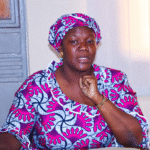
Minister of Information and Civic Education, Chernor Bah, said Sierra Leone is entering a new phase of civic consciousness. “Within two years, we have transformed public engagement through town hall meetings, improved weekly press briefings, and expanded civic knowledge nationwide. Civic education has been revived and restored to prominence in national life,” he noted.
UN Resident Coordinator Fredrick Ampiah reaffirmed that civic education is the foundation of nation-building, commending the government’s efforts to strengthen digital awareness. He observed that the second edition of the Salone Civic Festival was significantly larger than the first and pledged continued UNDP support.
Guest speaker Dr. Mavuso Walter Msimang, an 84-year-old South African activist and veteran of the anti-apartheid struggle, drew parallels between Sierra Leone’s anti-corruption efforts and South Africa’s. He urged young people to embrace civic responsibility, recalling his earlier encounter with Minister Bah at the Desmond Tutu African Leadership Academy.
Entertainment Ambassador Kao Denero emphasized the role of the creative sector in promoting shared national values. He thanked President Bio for establishing the Office of the Entertainment Ambassador, noting that the sector has aligned its work with the President’s Big Five Agenda. “Entertainment is a powerful national tool that must be used responsibly,” he said.
The ceremony concluded with President Bio touring booths and exhibitions mounted by government institutions, private sector organizations, and civil society groups, showcasing innovation, civic education initiatives, and public service programs.