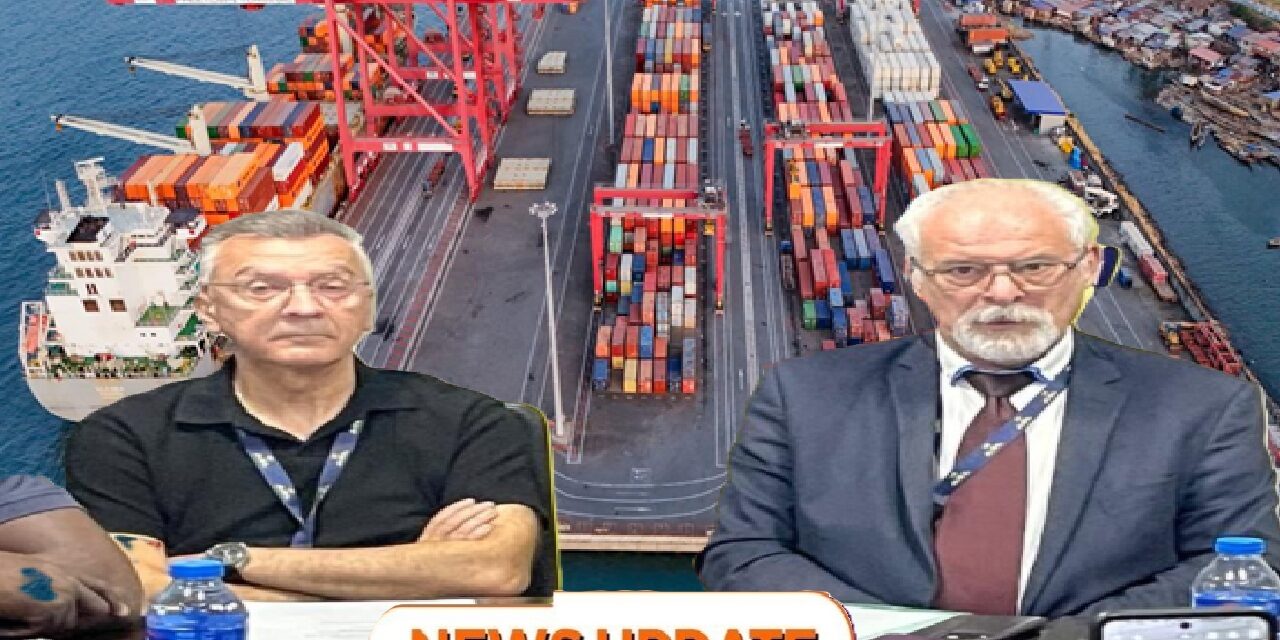
Freetown, 5th October 2026 — Africa Global Logistics (AGL), through its subsidiary Freetown Terminal Limited (FTL), has unveiled an US$84.11 million investment for 2026 and 2027, aimed at expanding infrastructure, boosting operational efficiency and strengthening the Port of Freetown’s role as a key gateway for trade in Sierra Leone.
The investment plan, announced during a media engagement at the company’s headquarters in Freetown, comes as the terminal records increased cargo throughput while grappling with persistent power supply challenges that management says continue to raise operating costs.
According to FTL, US$62.81 million is scheduled for deployment in 2026, with a further US$21.3 million planned for 2027. The resources would cover a broad range of infrastructure, logistics and energy projects designed to improve port efficiency and support future growth.
Among the flagship projects are the rehabilitation of terminal entry and exit gates using Optical Character Recognition (OCR) technology, upgrades to terminal fencing, construction of staff facilities, expansion of solar power generation and the addition of new logistics infrastructure.
The company also plans to install an additional 2-megawatt power generation capacity, construct new administrative and dock facilities, pave approximately 13,000 square metres of operational space, repair Quays 3 to 6 and increase refrigerated container capacity through the installation of about 126 reefer plugs.
Speaking at the event, FTL General Manager, Maroun Abi-Aad, said the company had already invested US$26.06 million in equipment acquisitions during 2026, while overall expenditure under its primary development programme reached approximately US$36.75 million. A further US$7.5 million has been earmarked for major equipment purchases in 2027.
The investment drive comes as operational reforms appear to be producing results. FTL reported that average daily container deliveries have increased from 225 Twenty-foot Equivalent Units (TEUs) to 300 TEUs, reflecting efforts to improve cargo movement and reduce delays.
Management attributed the gains to a series of reforms, including extending Terminal Delivery Orders from three to five days, allowing trucks unrestricted exit access from the port, lengthening banking hours until 8 p.m., opening export-gate operations around the clock and facilitating Sunday deliveries.
The terminal also disclosed that 252 TEUs have been auctioned since the start of 2026, helping to free up storage space within the port.
Despite the operational improvements, energy reliability remains a major concern for the company.
Abi-Aad revealed that FTL spends approximately US$10,000 daily on fuel to keep its operations running because of inadequate electricity supply from the national grid. He noted that in 2025 the company generated about 85 percent of its power requirements internally, relying on EDSA for only 15 percent.
He warned that the situation is unsustainable in the long term, as the generators were designed primarily as backup systems rather than continuous sources of electricity.
“A major generator breakdown could affect vessel operations, container discharge and loading activities, with consequences for cargo deliveries across the country,” he said.
Beyond power challenges, FTL identified customs clearance procedures as a significant contributor to congestion within the port.
The company said the practice of conducting physical inspections on all containers creates lengthy truck queues and slows cargo delivery. It called for greater reliance on scanning technology and risk-based inspections to accelerate clearance processes and improve efficiency.
FTL also urged faster auction procedures for long-dwelling containers and proposed the introduction of mobile scanning systems that would allow containers to be scanned while being discharged from vessels, reducing bottlenecks and improving turnaround times.
AGL Regional Director for Sierra Leone, Liberia and Guinea and Country Manager, Captain Fabjanko Kokan, described the investment programme as a strong vote of confidence in Sierra Leone’s economic future.
He said the expansion would improve port capacity while creating new employment and business opportunities.
“If we expand, there will be more jobs and opportunities,” Kokan said, while calling on government institutions, regulators and private-sector stakeholders to work together to ensure smoother port operations.
Beyond infrastructure investments, AGL highlighted its corporate social responsibility activities, with approximately NLe4.13 million allocated in 2026 to education, healthcare, community development, women’s empowerment and innovation initiatives.
Education received the largest share at NLe2.25 million, while community development projects accounted for NLe1.07 million. Health initiatives received NLe433,000, women’s empowerment programmes NLe172,000, and innovation projects aimed at promoting STEM education and robotics received NLe201,000.
On workforce development, Human Resources Manager Yvonne Elliott disclosed that AGL, SALS and FTL currently employ 524 workers, of whom 99.1 percent are Sierra Leonean nationals. Since January 2026, the companies have recruited 70 additional employees, including 10 women.
She also highlighted employee welfare programmes, including medical insurance coverage for workers and their immediate families.
The planned US$84.11 million investment ranks among the largest private-sector commitments announced for the Port of Freetown in recent years and reflects AGL’s strategy to modernise port infrastructure, improve energy resilience and position the facility to support growing trade volumes and broader economic activity in Sierra Leone.