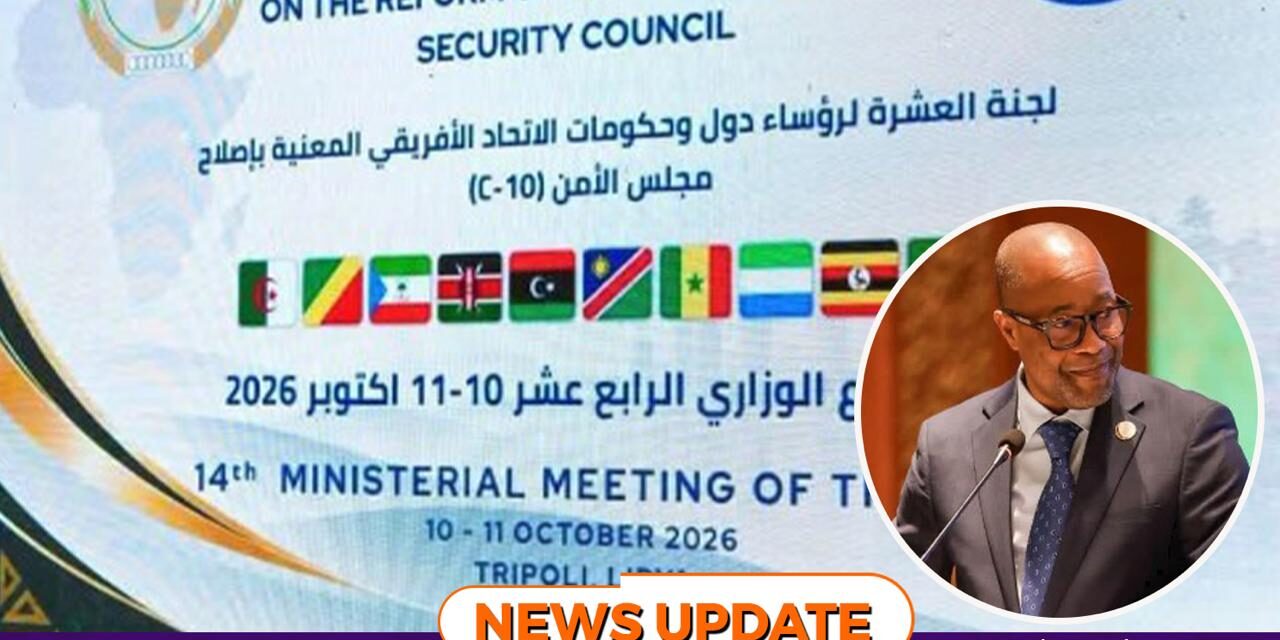
TRIPOLI, Libya, 13th October 2026– African leaders have renewed their campaign for greater representation on the United Nations Security Council following the successful conclusion of the 14th Ministerial Meeting of the African Union Committee of Ten Heads of State and Government (C-10) on UN Security Council reform.
The meeting, which ended on Sunday, October 11, in Tripoli, adopted the 2026 Tripoli Outcome, reaffirming Africa’s long-standing demand for fair representation in the world’s most powerful decision-making body.
Ministers used the gathering to review progress made during the Intergovernmental Negotiations (IGN) on Security Council reform at the 80th Session of the United Nations General Assembly. They welcomed the presentation of the African Reform Model in April 2026, describing it as the only reform proposal formally tabled during the session and one that attracted broad international support.
Participants also agreed on a unified strategy for the next phase of negotiations, focusing on advancing Africa’s reform agenda, responding to proposals emerging from the IGN process, and translating global commitments contained in the UN’s Pact for the Future into concrete gains for the continent.
The meeting was jointly chaired by Sierra Leone’s Minister of Foreign Affairs and International Cooperation, Mohamed Rahman Swaray, who serves as Coordinator of the C-10 Committee, and Libya’s Acting Minister of Foreign Affairs and International Cooperation, El-Tahar Salem El-Baour.
In a message delivered via video link, President of the 81st Session of the United Nations General Assembly, Dr. Khalilur Rahman, commended the committee’s efforts and reiterated the importance of inclusive reform of the UN system. Also participating were the Permanent Representatives of Kuwait and the Netherlands to the United Nations in their capacity as Co-Chairs of the Intergovernmental Negotiations.
The C-10, established by the African Union in 2005, comprises Algeria, the Republic of the Congo, Equatorial Guinea, Kenya, Libya, Namibia, Senegal, Sierra Leone, Uganda and Zambia. The committee is mandated to champion the Common African Position on UN reform.
Central to Africa’s demands are the Ezulwini Consensus and the Sirte Declaration, which call for no fewer than two permanent African seats on the Security Council with full privileges, including veto powers, as well as five non-permanent seats.
The adopted Tripoli Outcome underscored Africa’s determination to maintain a united front in the reform process and will form the basis of the 27th Report of the C-10 Heads of State and Government to be presented at the 40th Ordinary Session of the African Union Assembly in February 2027.
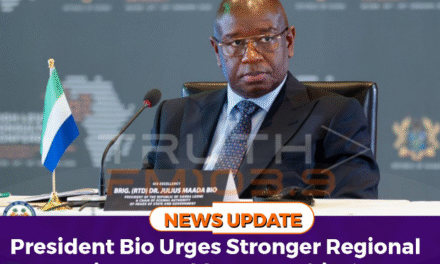
Ministers expressed appreciation to the Government and people of Libya for hosting the meeting and commended President Julius Maada Bio of Sierra Leone for his leadership as Coordinator of the C-10 Heads of State and Government.
They also thanked the African Union Commission for its continued support, while reiterating Africa’s resolve to secure a stronger voice in global governance through comprehensive reform of the United Nations Security Council.