By Nafisatu Olayinka Deen
Freetown, 11th November, 2026 –Trade relations between Sierra Leone and the United Kingdom are gaining momentum, with bilateral trade increasing by 20 percent to £190 million and Sierra Leone’s exports to the UK surging by 40 percent over the past year.
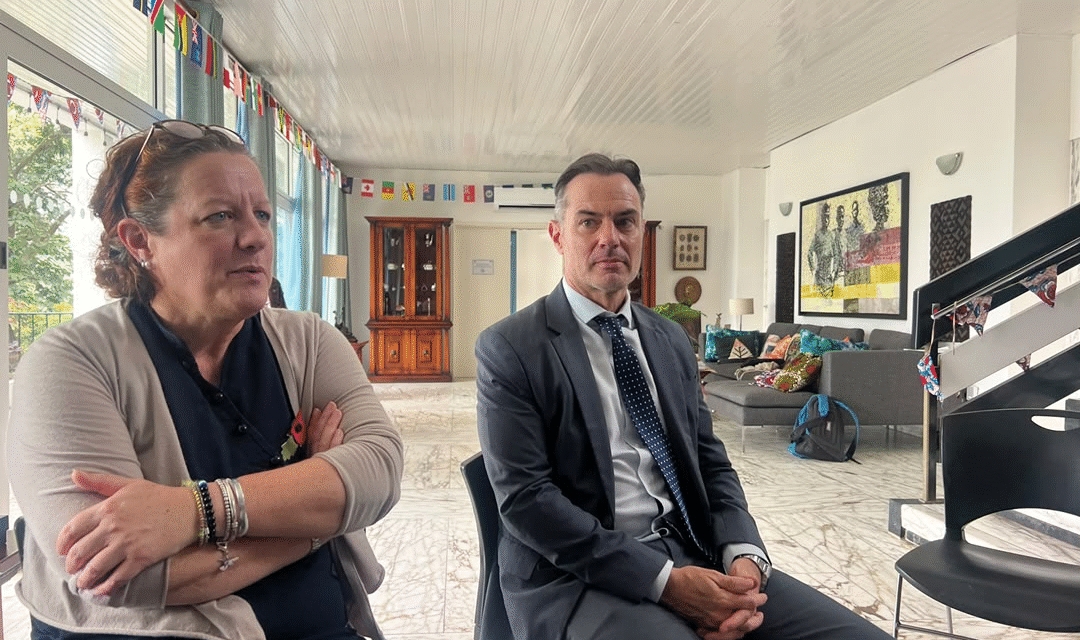
The figures were disclosed by British High Commissioner Josephine Gauld during a press conference ahead of the King’s Birthday celebrations, where she outlined a new phase in UK-Sierra Leone relations centered on trade, investment, private sector development and domestic resource mobilisation.
Gauld said Britain is increasingly moving away from a traditional aid-based relationship towards a partnership focused on economic growth and helping Sierra Leone leverage its own resources to finance development.
A key component of that strategy is attracting investment into high-potential sectors of the economy. She revealed that British International Investment (BII) has selected Sierra Leone as one of only a handful of priority countries for investment, signalling growing confidence in the country’s economic prospects.
The announcement follows a major agriculture investment forum held in London in October and comes ahead of the West Africa Integration and Investment Summit in Lungi, where the UK is expected to promote new investment opportunities.
UK Trade Lead for West Africa, Mark Smithson, described Sierra Leone as a market with significant untapped potential and encouraged local businesses to take greater advantage of the UK’s Developing Countries Trading Scheme (DCTS), which provides duty-free access for eligible exports entering the British market.
According to Smithson, about 90 percent of Sierra Leonean exporters to the UK are already benefiting from the scheme. However, he stressed that greater awareness and participation could help boost exports further, particularly in agriculture, manufacturing and agro-processing.
He also highlighted the country’s emerging creative economy as a major source of future jobs and investment, noting that Sierra Leone possesses significant talent capable of driving growth in the services sector.
Beyond trade, the UK is also supporting reforms aimed at improving Sierra Leone’s fiscal position and strengthening domestic revenue generation.
Gauld noted that Sierra Leone currently collects tax revenues equivalent to about 8 percent of Gross Domestic Product (GDP), significantly below the regional average of roughly 15 percent.
She emphasised that the solution is not to increase taxes on existing taxpayers but to improve compliance and broaden the tax base. She pointed to ongoing collaboration between the National Revenue Authority and the UK’s HM Revenue and Customs, as well as a UK-backed property tax initiative that reportedly quadrupled collections through improved administration and enforcement.
“There is money in Sierra Leone. It is how we can help channel it,” Gauld said, suggesting that stronger revenue collection could help finance critical investments in health, education and infrastructure.
The High Commissioner also highlighted British support for climate-related investments, including assistance to Sierra Leone in accessing international climate finance and developing a regulatory framework for carbon credit projects.
Several UK-supported ventures are already operating in areas such as clean cooking technologies, reforestation and mangrove restoration, creating potential new revenue streams within the country’s emerging green economy.
Analysts view the latest trade figures and investment commitments as evidence of growing economic ties between Sierra Leone and the United Kingdom, with increasing emphasis on private-sector-led growth, export expansion, investment promotion and improved domestic resource mobilisation.
As both countries seek to deepen commercial relations, officials believe stronger trade and investment flows could play an important role in supporting Sierra Leone’s long-term economic transformation and job creation ambitions.