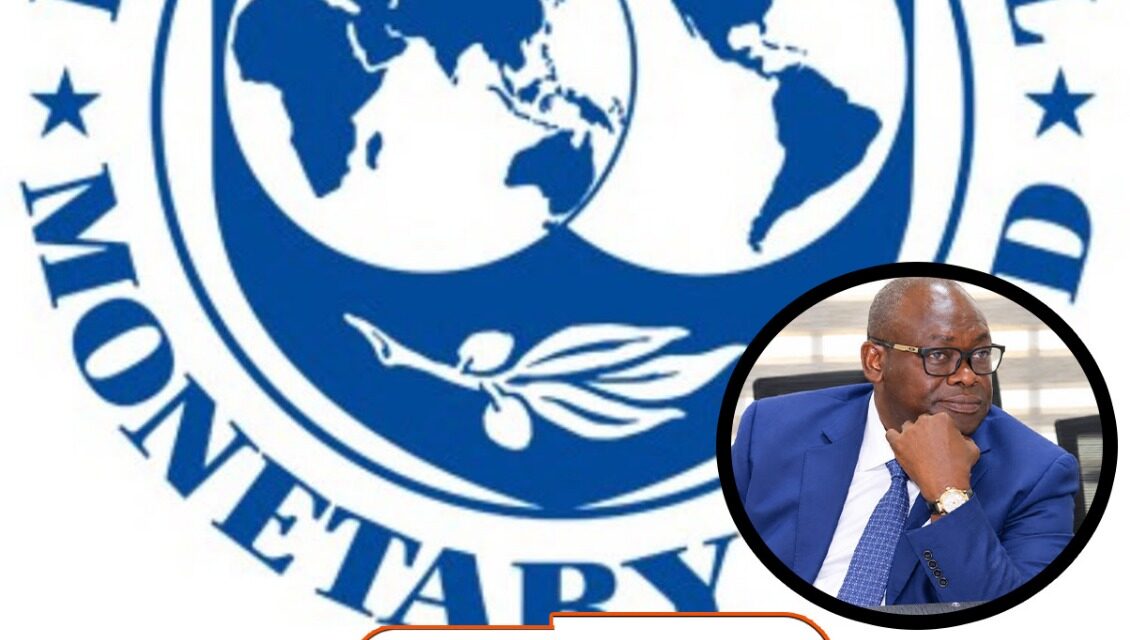
Freetown, 17th November, 2026 – Sierra Leone is set to receive US$78.2 million in additional financing from the International Monetary Fund (IMF) after staff and government authorities reached a staff-level agreement on the fourth review of the country’s Extended Credit Facility (ECF) programme and the first review of its Resilience and Sustainability Facility (RSF).
The agreement, which remains subject to approval by the IMF Executive Board and the completion of agreed prior actions, would unlock SDR 57.9 million (about US$78.2 million), including SDR 23.33 million (US$31.5 million) under the ECF and SDR 34.57 million (US$46.7 million) through the RSF.
The IMF said Sierra Leone’s economic reform programme remains broadly on track despite mounting pressures from rising global oil prices, inflation and foreign exchange demand, which are threatening gains achieved in recent years.
In a statement issued at the end of an IMF mission to Freetown, mission chief Jeta Menkulasi said economic growth is projected to reach 4.0 percent in 2026 and strengthen to 4.4 percent in 2027. However, inflation remains a major concern, having risen to 17.1 percent in September and projected to increase further to 19 percent by the end of 2026 before declining to single digits by the end of 2027.
The Fund noted that while fiscal performance was strong during the first half of the year, spending overruns in the third quarter weakened the government’s fiscal position. Authorities have since introduced expenditure cuts and measures to improve revenue collection while maintaining key social programmes, including the national school feeding initiative.
The IMF also welcomed the government’s decision to phase out temporary fuel subsidies introduced earlier this year, saying the move has reduced fiscal pressures and created additional space for priority social spending.
Despite these efforts, the Fund warned that Sierra Leone’s debt burden remains a significant challenge. According to the IMF, interest payments now consume approximately one-third of tax revenues, underscoring the need for continued fiscal consolidation to lower borrowing costs and reduce financing pressures.
The government is currently preparing its 2027 budget, which the IMF said should balance fiscal adjustment with the protection of critical social programmes, including school feeding, while also beginning the clearance of audited domestic arrears.
On monetary policy, the IMF backed the Bank of Sierra Leone’s tight stance aimed at containing inflation. The central bank has increased its policy rate to 17.25 percent and stands ready to tighten further if inflationary pressures persist.
The Fund stressed the importance of rebuilding international reserves through tighter controls on government foreign exchange spending and improved monitoring of export earnings.
While describing Sierra Leone’s banking sector as well-capitalized, the IMF said rising non-performing loans, sovereign risk exposures and foreign exchange positions require close monitoring. It also welcomed efforts to close the funding gap arising from the Union Trust Bank resolution and urged the timely implementation of bank-resolution and deposit-insurance frameworks.
The IMF further commended progress under the RSF programme, including measures to assess climate-related fiscal risks and strengthen reporting of bank lending by location and sector. It said completion of the remaining reforms would help improve Sierra Leone’s climate resilience and reduce future balance-of-payments risks.
However, the Fund cautioned that risks to the economic outlook remain elevated. Volatile global oil and food prices, climate-related shocks and political uncertainty ahead of the 2028 elections could place renewed pressure on the economy.
The IMF said sustained implementation of governance reforms, stronger public financial management and continued support from development partners will be essential to preserving macroeconomic stability, maintaining debt sustainability and consolidating recent economic gains.