By Davida Spaine-Solomon
Freetown, 16th November, 2026 – The Freetown City Council, in partnership with the Ministry of Health, has officially launched the five-day “Fritong Don Wam Oh!” Outreach Campaign aimed at raising public awareness of heat-related illnesses and promoting practical measures to protect residents from the growing health risks associated with extreme temperatures.
The campaign, which will run from 16th to 20th November, 2026, seeks to increase public understanding of heat-related illnesses, encourage preventive measures and promote safer behaviours during periods of extreme heat.
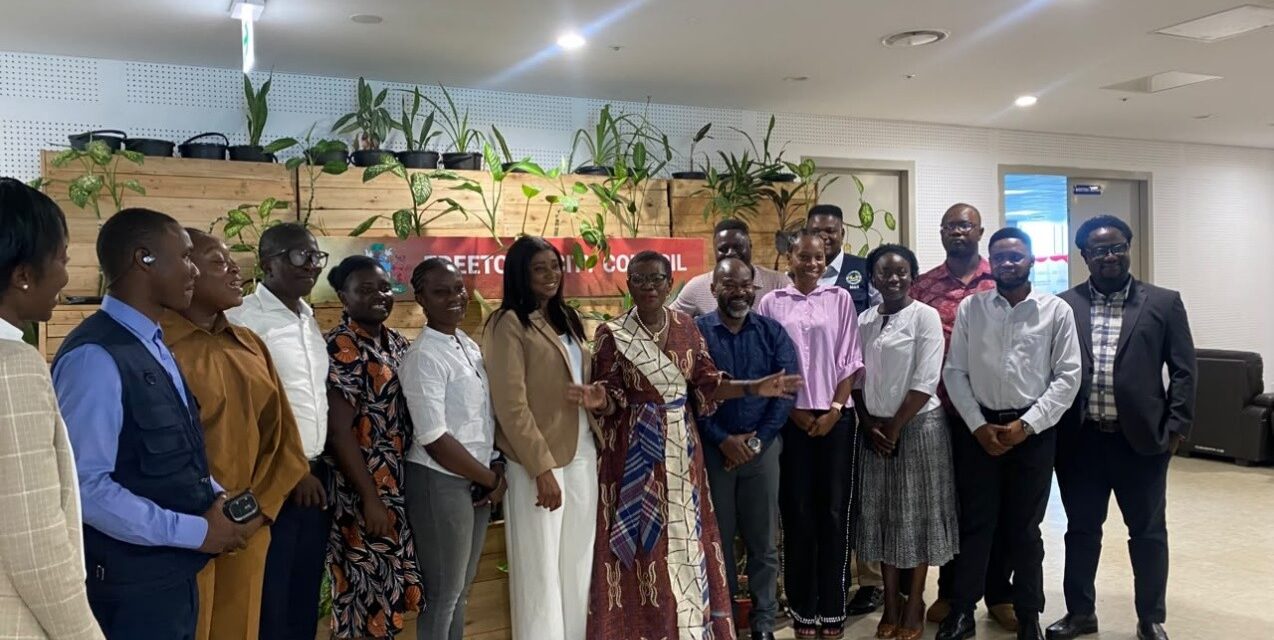
The launch, held at the Freetown City Council building, brought together representatives of the Ministry of Health, the Sierra Leone Meteorological Agency (SLMet), environmental stakeholders, members of the campaign task force and media practitioners.
Speaking at the launch, Mayor Aki-Sawyerr warned that rising temperatures pose a serious public health concern, particularly for pregnant women, market women, street vendors and residents living in overcrowded and poorly ventilated settlements.
The Mayor said the effects of extreme heat had become increasingly noticeable, including during nighttime. She urged residents not to dismiss the situation on the assumption that Africans were naturally accustomed to hot weather.
She recalled that since becoming Mayor in 2018, she had consistently advocated for climate action and tree planting, stressing that the protection of green spaces is essential to reducing urban temperatures.
Referring to a recent visit to a garden along Hannah Benker-Coker Street, Mayor Aki-Sawyerr said she experienced a noticeable drop in temperature while standing beneath the trees, demonstrating the importance of vegetation in creating cooler urban environments.
She explained that prolonged exposure to extreme heat increases the risk of dehydration, heatstroke, heat rash and other health complications, particularly among people whose occupations require them to work outdoors for extended periods.
The Mayor also highlighted the difficult conditions faced by residents of informal settlements, including Kroo Bay, where many people live in zinc-roofed structures that absorb and retain heat. She questioned how residents without adequate ventilation, fans or surrounding vegetation could comfortably sleep under such conditions.
As part of the council’s response, she disclosed that 500 healthcare workers had been trained to identify heat-related illnesses, recognise their symptoms and provide appropriate guidance to patients and members of the public.
She further announced that approximately 25,000 tree seedlings had been made available, encouraging residents to participate in tree planting, including within their residential compounds.
The Mayor called on residents, institutions and the media to move beyond awareness and take practical action to make Freetown cooler and safer.
“We all need to plant trees,” she emphasised, urging the public to take collective responsibility for protecting the city’s environment.
Chief Heat Officer at the Freetown City Council, Eugenia Kargbo, said the campaign was necessary as residents continued to experience uncomfortable temperatures, even at night.
In her presentation, Kargbo explained that the removal of trees and the replacement of natural surfaces with concrete buildings, metal structures and asphalt contribute to what is known as the Urban Heat Island Effect.
She noted that these materials absorb heat during the day and gradually release it at night, causing built-up areas to remain warmer than their surrounding environments.
Kargbo also highlighted the health implications of prolonged exposure to extreme heat, including sleep disruption, exhaustion, headaches and dizziness. She warned that these effects could undermine people’s health, productivity and general well-being.
Communication and Outreach Consultant for the campaign, Dr Francis Sowa, said the five-day initiative would combine social media engagement, community outreach and radio and television discussions to expand public awareness.
He announced that the first community outreach would take place at Lumley Roundabout, targeting residents, commercial drivers and tricycle (kekeh) operators. He further stated that outreach activities were planned for locations including Eastern Police and Ayandeh.
Head of Climatology at the Sierra Leone Meteorological Agency, Joseph Polynus Thomos, reaffirmed the agency’s commitment to supporting the campaign through meteorological data and technical expertise. He said the Agency’s responsibility extends beyond collecting weather information, including rainfall, temperature and humidity, to ensuring that such data are properly interpreted and communicated in ways that enable the public to make informed decisions.
Thomos described extreme heat as a public health emergency and assured the Freetown City Council of the Agency’s continued technical support in providing relevant weather and climate information.
Councillor Unisa Koroma of the Freetown City Council described the initiative as an important step towards protecting residents, noting that many people experience heat-related illnesses without understanding their causes or the dangers associated with prolonged exposure to high temperatures.
He said the campaign reflected the council’s commitment to its guiding principle that the welfare of the citizenry is the supreme law.
Koroma also acknowledged the contributions of the task force, which includes representatives from the Ministry of Health, the Sierra Leone Meteorological Agency, the environmental sector and other institutions. He said members had held regular meetings to share ideas, discuss challenges and develop the communication materials being launched.
Bockarie P. Sesay, senior Public Health Superintendent at the Ministry of Health, encouraged participants to become ambassadors for the campaign by taking heat-health messages into their respective communities. He reaffirmed the Ministry’s commitment to public health awareness and called for sustained collaboration to ensure residents understand the dangers of extreme heat and the steps they can take to protect themselves.
Head of Climate Change at the Freetown City Council, Yata Esther Kallon, commended the task force and its partners for their commitment to developing communication materials that explain how extreme heat affects people’s health, livelihoods and occupational safety.
The campaign will also involve media engagements to provide journalists with opportunities to seek clarification and obtain information on heat-related health risks.
Freetown, home to more than 1.2 million residents, is among the most climate-vulnerable urban centres in West Africa, the media brief states. Rapid urbanisation, high population density and the expansion of informal settlements have increased the city’s exposure to climate hazards, including extreme heat.
It stated that the campaign builds on the Freetown Climate Action Plan launched in 2023 and the city’s Heat Action Plan introduced in 2025 during the inaugural Africa Heat Summit hosted in Freetown and officiated by the Vice President.
Through the “Fritong Don Wam Oh!” campaign, the Freetown City Council and its partners aim to strengthen public understanding of heat-related health risks and encourage residents to adopt protective measures.
The organisers are calling on residents, government institutions, community stakeholders and media organisations to share the campaign messages and support efforts to make Freetown a cooler and healthier city.