By Nafisatu Olayinka Deen
Freetown, 14th September, 2026 – Sierra Leone’s first home-grown investment network, the Salone Angel Network (SAN), was officially launched at Mamba Point in Freetown on 9th September, 2026, bringing together investors, entrepreneurs, government officials, and development partners to mark what organisers describe as a turning point for the country’s early-stage investment ecosystem.
The establishment was supported by Invest Salone, which helped bring the network to fruition and co-hosted the official launch event. The network is driven by a distinguished group of founding members and directors, including Chukwu-Emeka Chikezie, Francis Stevens George, Emma Fofanah, Ade Freeman, Pooja Melwani, and Alexandre Tourre, who are collectively committed to strengthening early-stage investment for Sierra Leonean entrepreneurs.
Head of Secretariat, Salone Angel Network, Christopher Greene, noted that the network aims to create a platform through which Angel investors could identify and engage promising businesses, share investment opportunities, provide mentorship and expertise, and contribute to the growth of Sierra Leone’s entrepreneurial ecosystem.
Addressing business owners and founders directly, Greene encouraged them to “dream big,” saying SAN was interested in backing entrepreneurs across agriculture, Agri-tech, renewable energy, education, logistics and e-commerce, fintech, and the creative and cultural industries. He cautioned, however, that applicants should already be generating revenue, showing signs of traction, have their documentation in order, and understand the responsibilities that come with accepting investment.
“In Sierra Leone, investment is often associated with large-scale investments in real estate, mining, or acting as a silent partner in a small or medium-sized enterprise,” Greene said. “People don’t immediately associate investment with equity and debt instruments in fledgling companies.”
Greene, however, did not shy away from the risks. He cited a study of more than 1,100 Angel investments, noting that 52 percent returned less than the amount initially invested.
He argued that the potential upside justifies the risk. He pointed to Airbnb, whose 2008 pitch- letting people sleep in a stranger’s home for roughly the price of a hotel “initially sounded ridiculous” before growing into a company valued at more than $100 billion. Citing the same study, he noted that “only seven per cent of exits generated returns of more than ten times the money invested.”
Greene pointed to billion-dollar companies emerging from Nigeria, Egypt, Senegal and South Africa as proof of what is possible. “The Salone Angel Network wants to demonstrate that billion-dollar companies can also emerge from Sierra Leone,” he said, calling it “a bold statement” but one the country “cannot afford not to make.”
He argued that many of the problems facing Sierra Leone and the continent “cannot be solved by government alone, aid alone, or traditional methods of doing business,” and instead require “innovators, rule-breakers and companies willing to disrupt established ways of doing things.”
He also extended an invitation to government officials, development partners, bank managing directors and other private-sector leaders to get involved, saying development partners in particular could contribute “practical regulatory pathways that would allow startups to test their products and services safely, tax incentives to encourage domestic angel investment, and co-investment structures that could bring public and private capital together.”
He explained that SAN sources opportunities, interviews founders and conducts due diligence, though “members ultimately decide which businesses they want to invest in and support.”
Beyond capital, he said the network offers what it calls “smart capital” hands-on support through board seats, founder calls, and helps navigating operational, legal and strategic challenges.
Greene formally announced that SAN is now open for individual and corporate membership, and that its monthly pitch and founder Q&A sessions previously held online would move in-person for the first time on Thursday, 29th October, at 5:30 p.m., in partnership with the Christex Foundation at its headquarters on the Fourah Bay College campus.
Minister of Communication, Technology and Innovation, Salima Bah, described Invest Salone as one of the “godfathers” of Sierra Leone’s ecosystem and congratulated the organisation for convening stakeholders around SAN’s launch, calling it “an exciting day,” and stated that it reflected the growing maturity of the entrepreneurial ecosystem. “Not long ago, such an initiative did not exist,” she said.
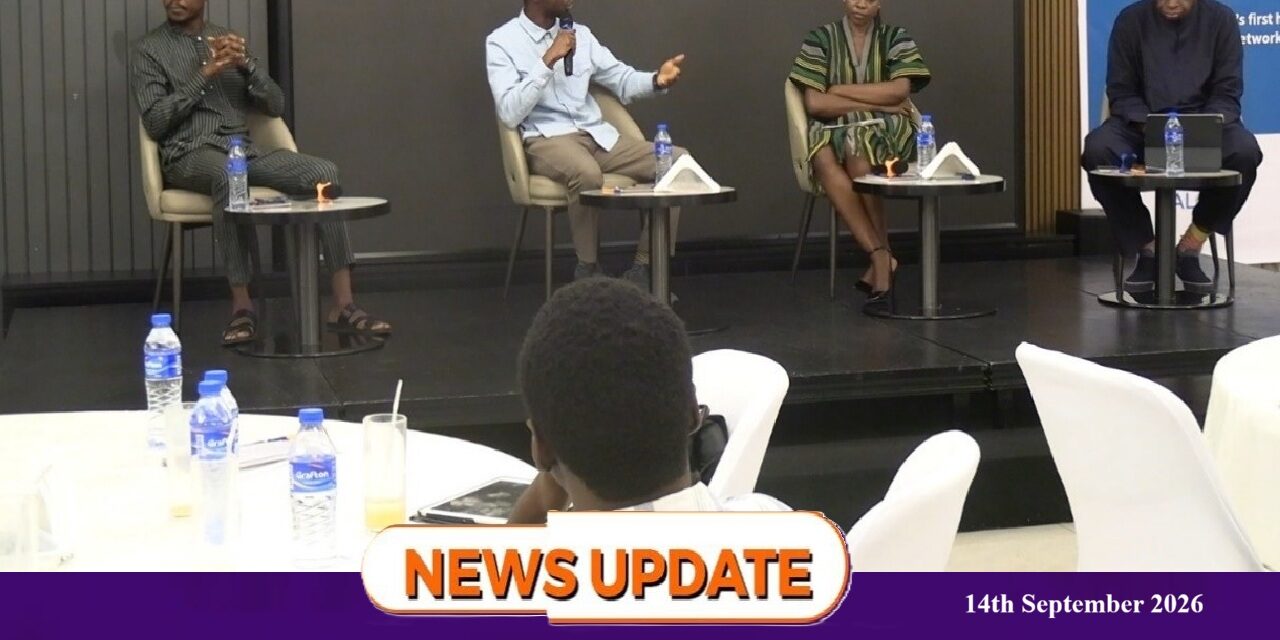
The formal remarks were followed by a panel discussion on investment and business, where investors in the room shared their own perspectives on financing early-stage companies in Sierra Leone, before the evening moved into a cocktail and networking reception giving founders, investors and stakeholders further opportunity for informal engagement.
Sierra Leone’s new Angel Investment Network connects local and diaspora investors with early-stage businesses to provide capital, mentorship, and support that banks often can’t, helping to drive innovation, jobs, and growth in the country’s private sector.