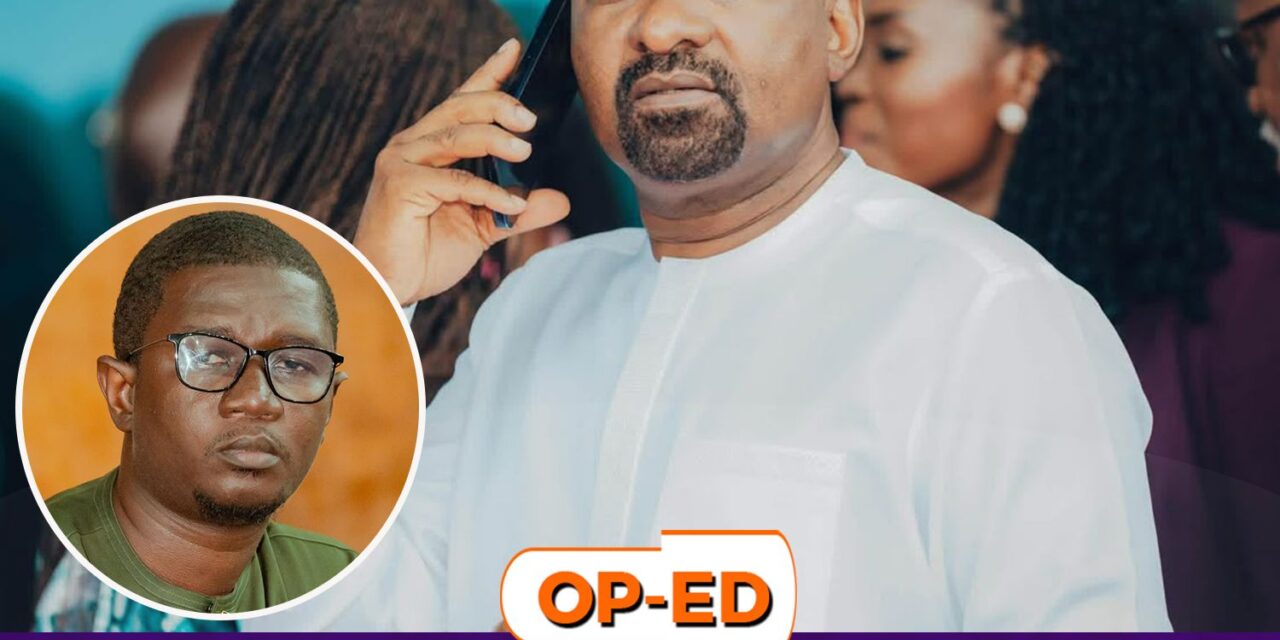
Freetown, 22nd July 2026- It’s 11 p.m. on Saturday, on the eve of the second day of the ECOWAS Midyear Summit in Lungi, and Vice President Juldeh Jalloh is managing a mini-crisis. He is talking with the event planner, the décor specialist and facility managers about tables.
This might sound small and irrelevant, but I promise you, it’s not. Stay with me. Because of the strong reputation and positive publicity the summit has garnered, everyone wants to be in Sierra Leone. That success has also created pressure, including shortages of some basic amenities.
Tables, and more importantly, their positioning, can have a significant impact on a conference, especially one of this magnitude.
Before the table situation, he was finalising Villa accommodations for Presidents and dignitaries like Dangote.
Table arrangements. These are the things that will never make the news. They are the stories you may never hear. You won’t see them in the highlight reel. Everyone will simply remember how smoothly everything went, as they do after every major event. This is the unseen work behind the scenes, and the Vice President of Sierra Leone is in the thick of it.
VP Jalloh is supposed to be resting, focusing on bigger things. Instead, here at the conference centre, he is working with everyone to ensure we get the right-sized tables, the right quantity, enough linen to cover them, and that every piece is arranged exactly as it should be.
He has a 7:30 a.m. appointment the next morning to receive Heads of State at Tagrin. But he wants to ensure we deliver a flawless event. So he is here anyway.
Standing a few feet away, I watched him up close as he nailed down every little detail to a tee, working from a dummy diagram of how the setup should look. How many inches apart the tables should be, how many countries should sit at each one, what colour the table coverings should be. He was sorting through all the boring details, leaving nothing to chance.
And this was not even the first time.
He had been in and out of Lungi for days leading up to the summit, working on both the very big and the very small things. The kind of details that can easily fall through the cracks if someone is not paying close attention.
Just twenty-four hours earlier, he had walked nearly 300 metres with my colleague, Valona Taylor, identifying places where branding needed to be strengthened, while also urging residents along the airport route to clean their front yards.
That work kept us up until 4 a.m. It was brutal, but we did it with a sense of purpose. Seeing it all come together so cleanly made every sleepless hour worthwhile.
The obvious question is: why is the Vice President getting involved in something as small as the number of table coverings?
The answer is simple.
Vice President Juldeh Jalloh is a perfectionist. He is also a doer. His instinct is to work and remain in the background.
How people lead in moments like these tells you far more about their character than any speech ever could. Are they here for the photo opportunity? Are they here for the adrenaline? Or for the pomp and pageantry that comes with occasions like this?
Here he was, at the conference centre close to midnight. No cameras. No fanfare. Just rolled-up sleeves, grinding alongside everyone else.
That tells you everything you need to know about him.
Having worked closely with this man, I have also seen that he is driven by the belief that almost anything is possible. He doesn’t quite understand the concept of “No.”
My boss is like him. Those of us who work for Minister Chernor Bah understand firsthand how frustrating that mindset can sometimes be. But every time we have bought into his vision of what is possible, every time we have trusted those big ambitions, we have won.
So we are learning not to say “No” anymore. We might say “Not yet,” but never “No.”
In good time, we hope Sierra Leone will learn with us too.
So many people contributed to making this ECOWAS Summit a success. The entire machinery of government was in motion. But VP Jalloh’s quiet authority and calming influence were the oil that lubricated this powerful machine, ensuring that every moving part worked in harmony.
And God, we have delivered.
We may even have outdone ourselves.
Baggy eyes, sore hands, aching backs, heavy legs and pounding migraines are all part of the cost of this effort. But we would gladly pay that price again and again for what Sierra Leone has managed to achieve here.
There was a genuine sense of pride as President Julius Maada Bio delivered his opening statement before his fellow Heads of State.
It took fifty years for Sierra Leone to host an ECOWAS Summit of this scale. President Bio made that possible.
To have a vision is one thing. To deliver it is another.
Here, President Bio’s top lieutenant ran an exceptional ground operation, as he has done every time he has been entrusted with an assignment.
Thank you, sir.