By Kate Krontiris
Freetown, 20th July 2026- Three things happened this week that may not look related to the untrained eye – but to close followers of the country’s creative scene are actually a massive leap forward.
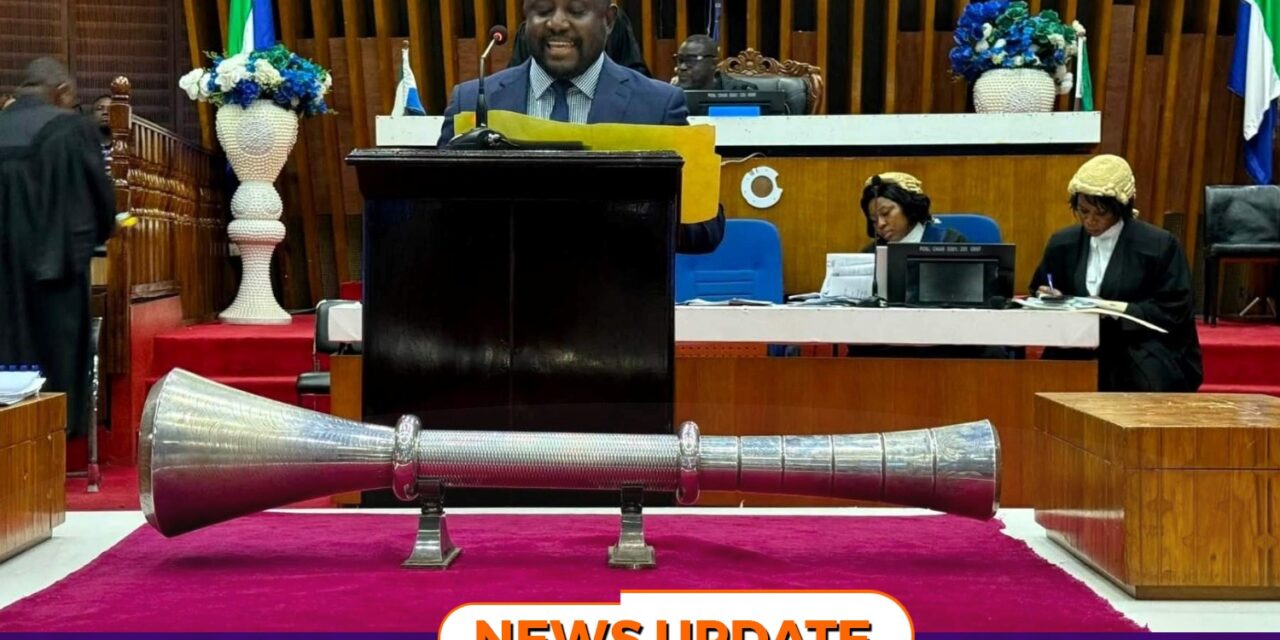
First: the Parliament unanimously ratified a suite of international intellectual property (IP) treaties — the Singapore Treaty, the Trademark Law Treaty, the ARIPO Banjul Protocol, the WIPO Copyright Treaty, and the Kampala Protocol on copyright registration. That is the legal architecture. It means local creators can now register rights in a way that is recognized across ARIPO member states, not just at home. It is a missing piece that has been flagged for years as a reason our creative economy leaks value — no clean, enforceable ownership, no real basis for licensing deals, no protection investors can underwrite.
Domesticating legislation needs to be passed, but ratification alone is big: it means local authors, performers, and producers now have their creations protected internationally, fully, under these instruments — and the reverse is true too, since international rights holders now have rights here. That reciprocity means that if a local CMO is given statutory mandate, it can start collecting performance royalties under blanket license, because the international catalog it would license against is now legally recognized here. This week’s ratification is built on years of work from the Office of the Administrator and Registrar General and from the Attorney General and Ministry of Justice.
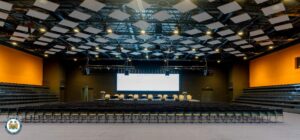
Second: a new flagship venue opened at the Julius Maada Bio International Conference Centre (JMBICC) in Lungi, right by the international airport. Its event hall is a performer’s dream. Engineered for multiple purposes, it has seven distinct configurations, from theatre and concert to boxing to fashion show to expo, all in one hall. Retractable grandstands turn a flat 1,100 m² floor into a tiered, 1,430-seat arena and back again, with a dedicated 543 m² foyer for arrivals and receptions. That’s not a conference room with folding chairs. That’s a purpose-built regional stage, developed by FB Group with interior architecture by CA2O, and it is one of the first places visitors will encounter when they land on Salone soil.
As a musician, this is thrilling – not only to have a year-round venue for musical engagements for our local artists, but also to put the country on international touring circuits for artists previously too tepid to do shows here. As we see more and more of our artists gracing international stages, we too are now able to convene the globe on a world-class stage right here at home.
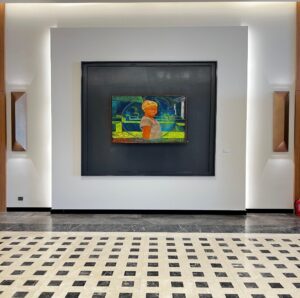
©️ Arthur Timothy. Courtesy of unx-art Gallery
And finally: PASSAGE, a full pan-West African art exhibition, opened inside that same JMBICC Events Hall as part of the ECOWAS Mid-Year Summit — curated by unx-art Gallery, with a local curator on the team, showing artists and heritage objects from all fifteen ECOWAS states side by side. When was the last time curation at this scale, spanning the whole region, physically happened here rather than in Dakar, Accra, or Lagos? The country is holding the room where West Africa gets to look at its own art — and it is happening in the very hall built to hold that kind of moment.
Put together, this is what it looks like when a nation moves on three tracks at once: protect the work, build the stage, and put it at the center of the region’s own gaze in the same breath. Most places do one of these at a time for a decade before the others catch up. This week, all three happened together.
A serious national development plan for the creative sector rests on four pillars: learning and training, so the next generation of creators and the businesspeople around them actually have the skills the sector demands; financing, so ideas can become ventures instead of dying as good intentions; physical performance infrastructure, so the work has somewhere to be made, seen, heard, and sold; and intellectual property protection, so the value that gets created actually stays with the people who created it. Miss any one of the four and the other three underperform — training without financing produces skilled people with nowhere to go, infrastructure without IP protection becomes a venue for uncompensated labor, financing without infrastructure has nothing to point capital at.
This week, the country moved decisively on two of the four: IP protection, through ratification, and physical infrastructure, through JMBICC. That’s not a coincidence, it is half of the strategic map, filled in, in the same week. PASSAGE is the proof of concept: it is what physical infrastructure looks like the moment it is actually used, and used at regional scale rather than local.
The real test now is domestication and follow-through — implementing legislation, OARG’s operational capacity to actually process registrations, whether JMBICC gets booked with local acts and regional events year-round, and whether the level of curation PASSAGE offers becomes a recurring fixture of the country’s cultural calendar. We all have a role to play in building on the foundation that has been laid: whether arts and events curators, private companies, cultural groups, or fans, the onus is on us to activate these spaces, build the operating systems to sustain the policy transformations, and show up for our creative sector events at every single turn.
As someone building commercial infrastructure for artists here, I’ll take this kind of week. It’s rare, it’s real momentum, and it’s inspiring beyond belief.