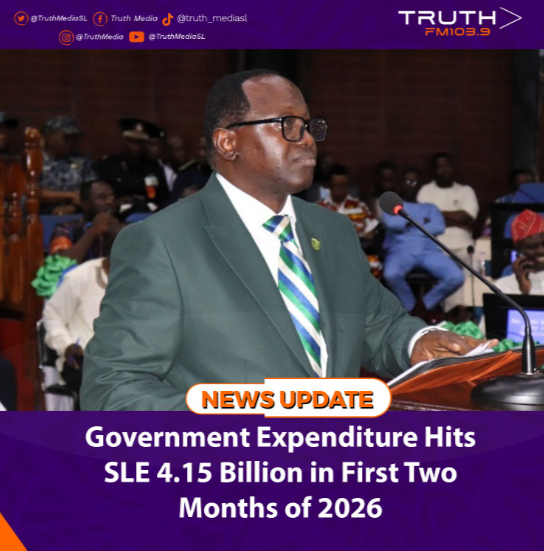
Freetown, 8th April 2026 — Sierra Leone’s public finances are under pressure as government expenditure soared to SLE 4.15 billion in just the first two months of 2026, according to the Accountant General’s fiscal operations report.
The figures reveal that wages and salaries alone consumed SLE 1.45 billion, representing nearly 35 percent of total spending. This heavy wage bill underscores the fiscal strain of personnel costs, leaving limited room for investment in infrastructure and social services.
Non-salary recurrent expenditure stood at SLE 944.8 million, covering goods, services, and transfers. Yet capital expenditure, the spending that builds schools, roads, and hospitals, was restricted to just SLE 157.8 million, a fraction of the budgeted SLE 8.39 billion for the year.
Debt servicing costs were another major drain. Domestic interest payments reached SLE 1.52 billion, while external interest added SLE 74.3 million. Together, financing costs accounted for more than 38 percent of total expenditure, highlighting the burden of Sierra Leone’s rising debt profile.
Transfers to local councils were minimal at SLE 165,000, and tertiary education institutions received no disbursements during the period, raising concerns about the impact on service delivery at the grassroots and in higher education.
With revenue collections totalling SLE 2.33 billion, the mismatch between income and spending left the government with a cash deficit of SLE 1.82 billion by February.
For ordinary Sierra Leoneans, the numbers translate into tough realities: delayed infrastructure projects, limited support for schools and health centers, and the risk of inflation if borrowing is used to plug the deficit. For policymakers, the report is a stark reminder that fiscal discipline and revenue diversification are urgent priorities.
The challenge now is balancing the demands of a growing wage bill and debt servicing with the need to invest in development. Without decisive action, Sierra Leone’s fiscal sustainability could be at risk in the months ahead.