By Kelfala Kargbo
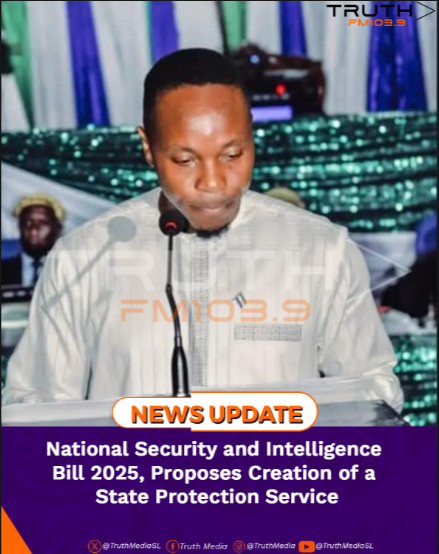
Freetown, 27th March 2026- The Chief Minister, David Moinina Sengeh, yesterday tabled in parliament the National Security and Central Intelligence Bill 2025, proposing the setting up of the State Protection Service.
The bill aims to repeal and replace the National Security and Central Intelligence Act (Act No. 2) 2023, which had been the framework for both internal and external security of Sierra Leone.
The central component of the bill is the establishment of a State Protection Service, which proposes to provide security services to President, Vice President, Speaker of Parliament and other VIPs.
While making the presentation, the Chief Minister said the security of the persons mentioned in the bill only has an ad hoc mandate, most without professional training and regulation.
There has been, he said, a growing presence of threat to leadership.
“Modern threats have evolved beyond conventional policing and military defence. This is a risk on the heads of state’s leadership,” Sengeh argued, noting that it is only the SPS can provide professional and well-trained services.
“Effective protection of state leadership now requires a specialised doctrine, dedicated training and a unified command. The State Protection Service can provide just that, and it is the justification for amending the National Security and Central Intelligence Act, 2023,” he said.
However, members of parliament did not entirely support the bill, especially the clause on the creation of SPS.
Deputy Leader of Government Business, Hon. Bashiru Silikie, questioned the long-term sustainability of the SPS, noting possible politicization of the institution and also subject to political loyalty.
Hon. Abdulai Charles, representing Bo District, flagged the issue of duplication of the mandate of the PSP with that of the Police and the military, urging the Chief Minister to clarify the role of the SPS to prevent institutional duplication.
At the end of the debate, Leader of Government Business and Majority Leader in Parliament, Hon. Mathew Sahr Nyuma, moved a motion for the bill to go before the legislative committee for more scrutiny.