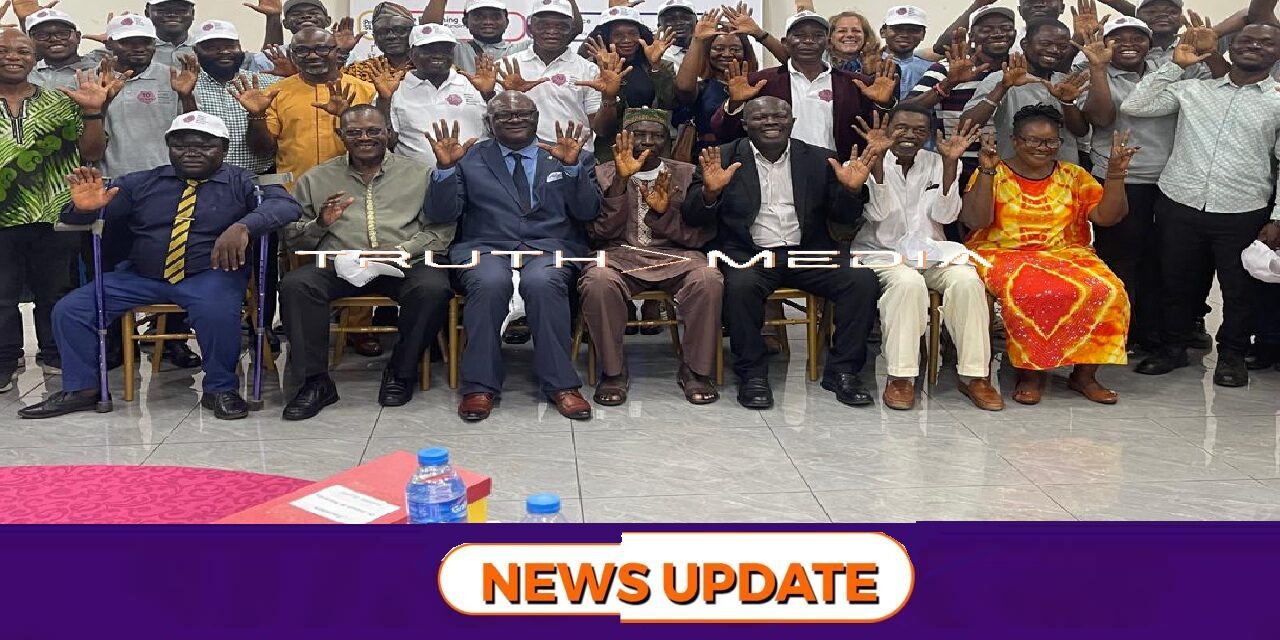
Freetown,18th February, 2026– The Sierra Leone Urban Research Centre (SLURC) has marked its 10th anniversary with a landmark celebration at the New Brookfields Hotel, drawing government officials, city councils, civil society, donors, academia, and community representatives to reflect on a decade of groundbreaking urban research and policy influence.
Founded in 2015 as a partnership between Njala University’s Institute of Geography and Development Studies and University College London’s Bartlett Development Planning Unit, with core funding from Comic Relief (UK), SLURC began its work in four informal communities in Freetown. Today, it has expanded to more than 15 informal settlements and 8 secondary cities nationwide, becoming a trusted hub for urban knowledge and inclusive development.
Over the past decade, SLURC has grown from a single project into 48 influential studies and partnerships, delivering significant outcomes across Sierra Leone. Its mission is clear: to strengthen the research and analytical capacity of urban stakeholders, improve knowledge on informal settlements, and make urban research accessible to those who need it most.
Dr. Joseph Macarthy is the institutions Executive Director, reflecting on the centre’s journey he revealed that they started with just four communitys but have expanded into more areas over the years.
“Our work in the initial four communities provided deep insights that served as a proxy for understanding the urban development challenges across Sierra Leone’s informal settlements. Cities are growing rapidly, and if challenges are not addressed, they lead to informality and structural deficits.”
SLURC has become a strategic advisor to the Government of Sierra Leone and international institutions including the World Bank, African Development Bank, and UN‑Habitat. Its contributions range from housing dialogues with the Ministry of Lands, Housing and Country Planning, to feasibility studies for regenerating Freetown’s Central Business District, and the development of a Spatial Development Framework for the new Lungi Administrative City.
The centre has equipped city councils with essential planning tools, such as Strategic Flood Risk Assessments and Climate Action Plans for Bo, Kenema, and Makeni. These frameworks translate national climate goals into actionable local strategies, helping cities prepare for climate change and urban growth.
SLURC’s commitment to informal urban communities remains central. Through initiatives like Urban SHADE, Urban TRACS, and ARISE, the organisation has championed participatory research methods, including photovoice, transect walks, and governance diaries, ensuring marginalized residents co‑create knowledge and adaptation strategies for climate and health interventions.
SLURC’s collaborative model links local expertise with global resources. Partnerships include learning alliances with University College London and Imperial College London, participation in the CLARE programme, and collaborations with institutions such as the Liverpool School of Tropical Medicine, London School of Hygiene & Tropical Medicine, and the University of Waterloo.
It also works closely with Sierra Leonean partners such as the Federation of the Urban and Rural Poor (FEDURP), the Institute of Gender and Children’s Health Research (IGCHR), and CODOHSAPA, ensuring that local voices remain central in shaping urban policy.
In the long term, as outlined in its 2024–2029 Strategic Plan, SLURC aims to cement its legacy as a centre of learning by nurturing the next generation of Sierra Leonean urban professionals through degree‑awarding programmes.
Director of Research and Training Braima Koroma emphasized the centre’s forward vision:
“In the next decade, our message is courage and creativity. We are thinking of cleaner, better cities. Ten years are behind us, but a lifetime is ahead. Research is not useful if it stays on paper, it must drive change.”
The anniversary was climaxed with the cutting of a cake and presentation of awards to long‑standing partners. Honorees included FEDURP (Local Partner Award), Dr. Alhaji Njai (Academia Partner Award), Haja Lukay of Bo City Council (Local Government Partner Award), Francis Reffell of CODOHSAPA (Board Member and NGO Partner Award), and Dr. Percy Toriro of RUSLP (Urban Planning Partner Award). A Founder’s Award was presented to Braima Koroma for his role in shaping SLURC’s vision.
The celebration underscored SLURC’s role as more than a research institution but a driver of urban transformation, proving what is possible when government, academia, civil society, and communities unite around evidence and a shared vision for just, sustainable, and resilient cities.