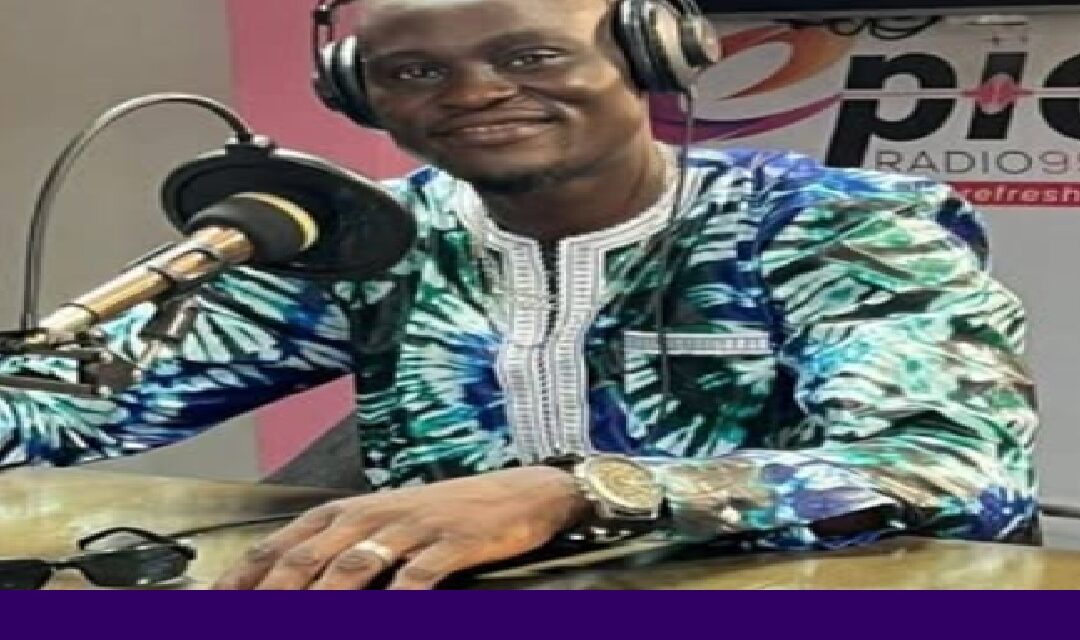
Freetown, 10th January, 2026– Today marks one year since parliamentary journalist Melvin Tejan Mansaray was indefinitely banned from accessing the Chamber and precincts of Sierra Leone’s Parliament, a decision he describes as “psychologically torturous and life-threatening by nature.”
The ban, imposed by Speaker of Parliament Solomon Segehpoh Thomas, has drawn widespread criticism from media organizations, civil society groups, and international partners. Despite repeated calls for resolution, Mansaray remains barred, raising concerns about press freedom and democratic accountability in Sierra Leone.
Mansaray, a seasoned parliamentary reporter, says the ban has crippled his career and livelihood. Over the past year, he has lost contracts, professional opportunities, and international roles, including his position as Research Assistant to a Japanese academic on parliamentary studies, his role as ECOWAS Parliament Local Press Coordinator and training opportunities with the Parliamentary Press Gallery on anti-FGM initiatives.
Melvin further notes that he can no longer effectively carry on his leadership responsibilities within the African Parliamentary Press Network (APPN), and he has also lost a lucrative contract as a Parliamentary Correspondent with a popular radio station.
He also cites the collapse of his blog, Parliamentary Update Group, due to a lack of access to real-time reporting, and the financial strain of maintaining a legal retainer in a case with no clear end.
Melvin argues that the process leading to his ban was deeply flawed. Instead of complaining to the Independent Media Commission (IMC), the matter was referred to the Parliamentary Privileges and Ethics Committee.
At the hearing, Mansaray says his lawyer was barred from speaking, he was prevented from reading his full statement, and was coerced into issuing apologies across radio, social media, and Parliament itself.
When the committee’s report was eventually tabled, MPs Dickson M. Rogers and Brima Mansaray of the ruling SLPP moved for debate. But the motion stalled, leaving the ban unresolved as the parliamentary session expired.
“This was a ploy to filibuster the lifting of my indefinite ban, putting it in a state of perpetuity,” Mansaray wrote.
Media watchdogs argue that the ban sets a dangerous precedent. Mansaray insists it has become a deterrent to other parliamentary journalists, undermining transparency and the public’s right to information.
“The government prides itself on saying no journalist has been killed or imprisoned,” he said. “But this is half-truth. I am not dead or in a physical prison, but the impact of this indefinite ban is knee-crippling.”
Melvin has received support from organizations including SLAJ, SLPPG, APPN, PNAfrica, Reporters Without Borders, and the Media Foundation for West Africa. He also acknowledged efforts by government officials such as Information Minister Chernor Bah, Chief Minister David M. Sengeh, and opposition leaders working behind the scenes to resolve the matter.