Freetown, 8th December 2025 – Sierra Leone’s public finances in 2025 reveal a mixed picture. Stronger domestic revenue collection on one hand, but rising expenditures and debt service pressures on the other.
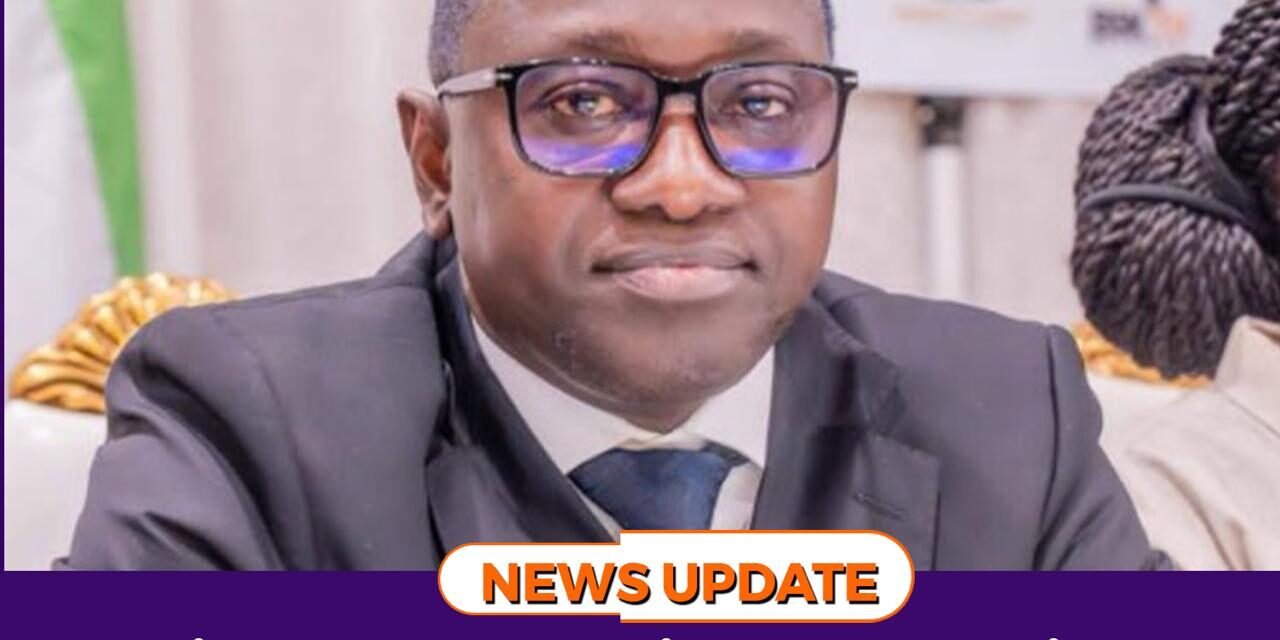
According to official budget figures presented to parliament by Minister of Finance, Sheku Ahmed Fantamadi Bangura, as he presented the Government Budget and Statement of Economic and Financial Policies for the 2026 financial year, under the theme “Enhancing Domestic Revenue Mobilization for Sustainable Economic Stability and Improved Service Delivery,”
Domestic revenue between January and September 2025 stood at NLe13.4 billion, equal to 8.1 percent of GDP, and is projected to reach NLe17.9 billion (10.8 percent of GDP) by year-end. This represents a notable improvement compared to previous years, driven largely by income taxes (NLe5.1 billion) and customs duties (NLe2.9 billion). Goods and Services Tax contributed NLe2.4 billion, while mineral revenues added NLe1.1 billion.
Yet, the revenue gains have been outpaced by expenditure growth. Total spending and net lending reached NLe21.0 billion (12.7 percent of GDP) in the first nine months and are expected to climb to NLe30.0 billion (18 percent of GDP) by December. Wages and salaries alone consumed NLe5.3 billion, while interest payments surged to NLe5.6 billion, with domestic debt service accounting for NLe5.3 billion.
Capital investment stood at NLe4.8 billion, but three-quarters of this (NLe3.7 billion) was financed externally, underscoring Sierra Leone’s reliance on foreign-funded projects. Domestically financed capital expenditure was just NLe1.0 billion, highlighting limited fiscal space for homegrown development.
The result is a widening budget deficit. By September, the overall deficit, including grants, was NLe5.2 billion (3.1 percent of GDP), projected to reach NLe9.0 billion (5.4 percent of GDP) by year-end. Excluding grants, the deficit is even starker: NLe8.0 billion (4.8 percent of GDP) rising to NLe12.1 billion (7.3 percent of GDP).
Still, there is one bright spot. For the first time in years, Sierra Leone recorded a primary budget surplus, meaning revenues exceeded non-interest expenditures. The domestic primary surplus was NLe1.4 billion by September and is expected to remain positive through December.
This reflects fiscal consolidation efforts aimed at stabilizing public finances despite heavy debt service obligations.