By Davida Spaine Solomon
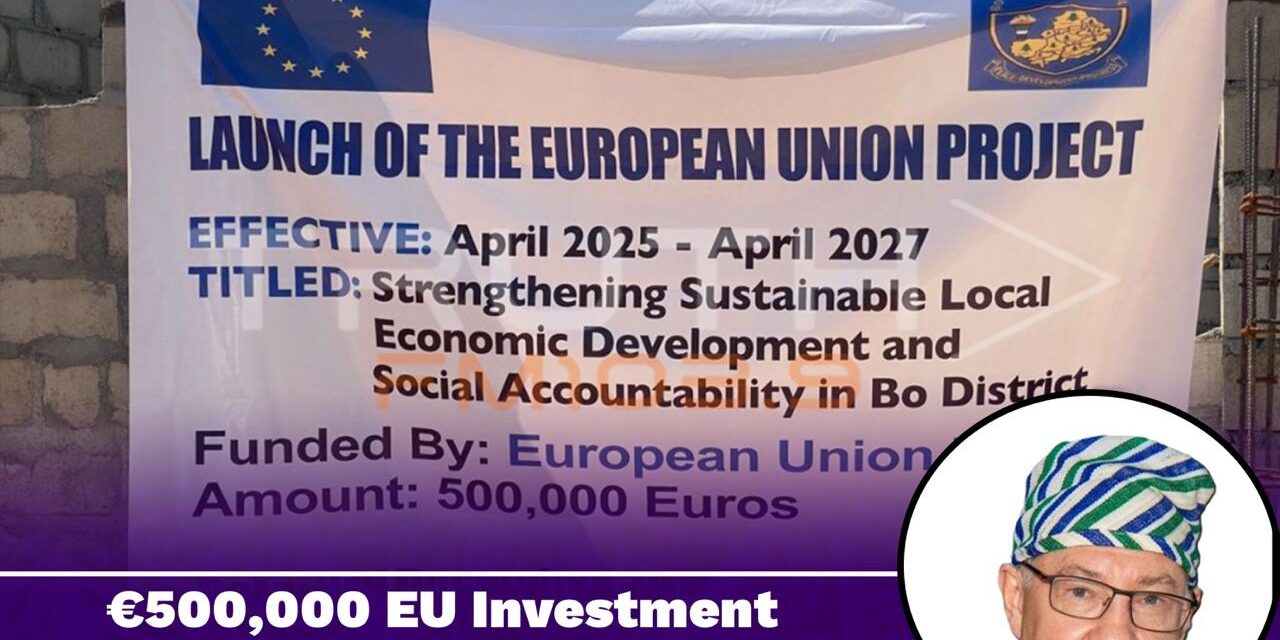
Bo, District, 5th December 2025- A €500,000 injection from the European Union is set to transform Bo District, with funds earmarked for strengthening local governance and tackling Njala University’s long-standing student accommodation crisis.
The project, titled “Strengthening Sustainable Local Economic Development and Social Accountability in Bo District,” was officially launched at Njala University’s Bo Campus. The initiative brings together local leaders, students, chiefs, and development partners in a collective push for progress.
European Union Ambassador to Sierra Leone, Jacek Kankowski, described the investment as a strategic step toward lasting development. “Local empowerment is at the heart of sustainable development,” he said, stressing that stronger institutions, improved financial management, and greater transparency will ensure public resources benefit communities directly.
Beyond governance reforms, the funding addresses Njala University’s acute housing shortage. Out of roughly 10,000 students, only 1,000 currently have access to on-campus accommodation. The EU-backed construction of a 39-bedroom hostel, alongside improved water facilities and internet access, is expected to ease the burden of high rents, overcrowding, and long commutes.
For students like Mamawa L. S. Gassama, the project represents more than convenience. “This will help reduce travel costs, prevent lateness, and create a better environment for learning,” she said during the launch ceremony.
Deputy Vice-Chancellor Professor Fofanah echoed the sentiment, calling the hostel shortage an urgent academic concern. “Students who live on campus perform better and face fewer challenges. This support from the European Union is timely and deeply appreciated,” he noted.
At the district level, Chairman Victor Hindowa welcomed the dual focus on governance and development, pledging to prioritize accountability and open budgeting. “Good accommodation reduces stress, improves academic performance, and strengthens student life,” he added.
Minister of Local Government and Community Affairs, Tamba Lamina, highlighted the project’s potential to boost district revenue. He explained that the hostel system will operate on a cost-recovery model, with students paying minimal fees to sustain maintenance and operations.
The launch concluded with a traditional libation ceremony, symbolizing community approval and cultural blessings. Chiefs, students, and residents expressed optimism that the initiative will leave a lasting imprint on education and governance in Bo District.
As construction begins and reforms take shape, the €500,000 EU intervention stands as a clear example of how targeted investment can bridge gaps in leadership and infrastructure, offering renewed hope for students and communities alike.