By Andrew Chokpeleh
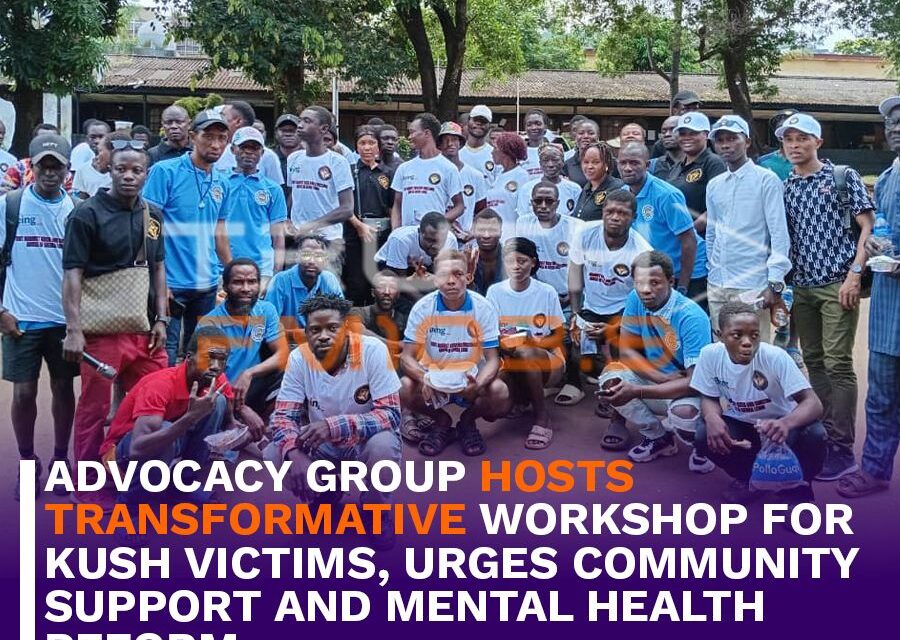
Freetown, 17th November 2025- In an effort to confront the growing crisis of substance abuse among Sierra Leone’s youth, the Advocacy for Youth Mental Health and Empowerment convened a weekend workshop in Freetown, bringing together kush victims, mental health professionals, law enforcement, and government representatives for an open dialogue on recovery, stigma, and support.
The organization, known for championing youth mental health and rehabilitation, focused this session on kush users, many of whom are family breadwinners grappling with addiction and societal rejection. Esther F. Seisay, a leading member of the group, opened the event by highlighting the overlooked dangers of tramadol, a drug she said is quietly wreaking havoc on internal organs and mental health alongside kush.
“We chose to focus on kush victims today because many of them are living lives they’re not proud of,” Seisay said. “But there is hope. We’ve seen people recover through counseling and support, and we’re here to remind them that change is possible.”
The workshop emphasized rehabilitation and reintegration, with Seisay noting the organization’s partnerships with the Ministry of Social Welfare and other stakeholders working to restore dignity and purpose to those affected.
Mental Health Officer Matthew S. Kambeh from Kissy Psychiatric Hospital addressed the psychological toll of stigma, warning that community bullying often leads victims to internalize their condition. “Drug abuse is not limited to the poor or idle,” Kambeh said. “Even professionals are affected. This is a national crisis, and we must stop treating victims as outcasts.”
Kambeh stressed that mental health stability is key to recovery, urging victims to reclaim their agency and reject what he called “an evil drug.” He commended the organization’s efforts, calling them “a step in the right direction.”
Police Sergeant Frederick A. Sesay of New England Station shared a personal account, revealing that his own son once smoked kush but overcame addiction through firm parental intervention. “We’re tired of raiding kush victims like they’re criminals,” Sesay said. “We need to focus on prevention and support, not just arrests.”
Sesay also linked rising theft cases to drug-induced vulnerability, noting that many victims are found sleeping during raids, physically weakened by the substance.
Representing the Ministry of Social Welfare, Madam Vivial Curam praised the advocacy group as one of their strongest partners in the fight against drug abuse. “We cannot win this battle alone,” she said. “Many of those affected are part of our human resource base. We especially urge women to seek help they are among the most vulnerable.”
The workshop’s emotional peak came when participant Mariama Fofanah shared her story. Once based in Kono, she fled to Freetown to escape family pressure to quit kush. She alleged that some police officers resell seized drugs instead of submitting them as evidence, and called for a shift in focus from users to dealers.
“We are victims,” Mariama said. “The police should go after the producers and sellers, not those of us struggling to quit.” She pledged to stop smoking kush and become an ambassador for recovery, encouraging others to follow her lead.