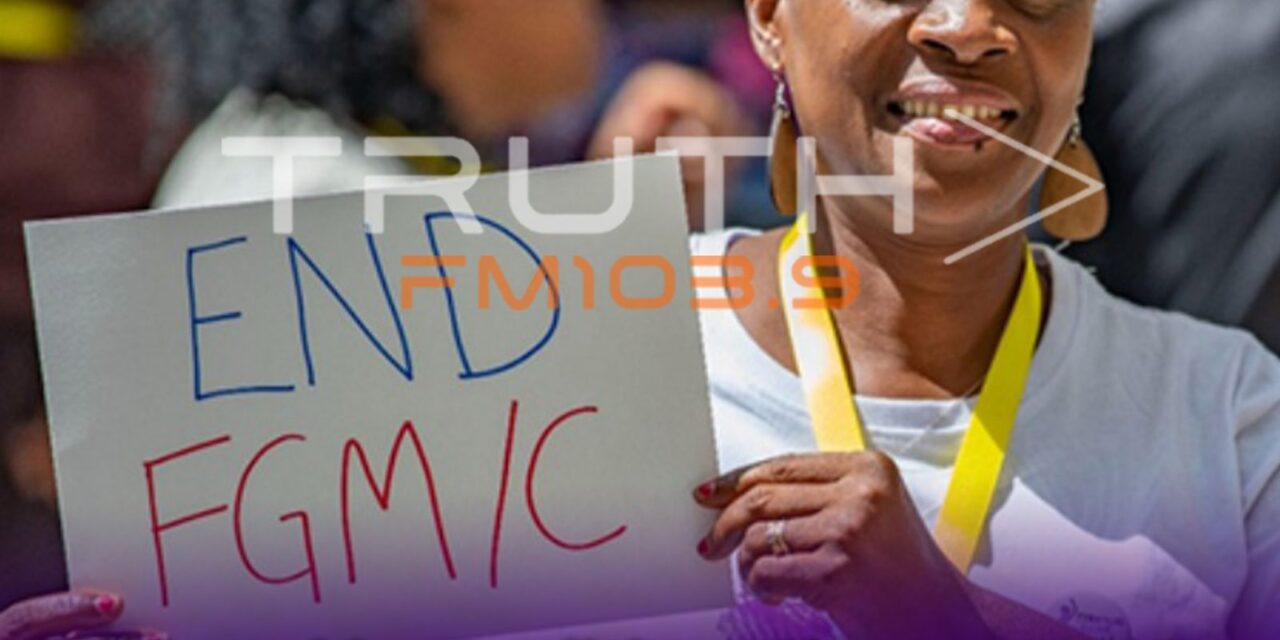
Freetown, 28th October, 2025- Sierra Leone’s newly enacted Child Rights Act has ignited a wave of criticism from activists and civil society leaders, who say the law fails to protect the very children it claims to serve, particularly girls at risk of female genital mutilation (FGM).
The Act, signed into law by President Julius Maada Bio, was expected to strengthen protections for children across the country. But its omission of any criminal provisions against FGM has drawn fierce backlash from campaigners who have spent years advocating for legal reform.
“There were no cries of joy in the churches and mosques, no celebrations in the streets,” said Rugiatu Neneh Turay, Head of the Amazonian Initiative Movement (AIM) and Chairperson of the Forum Against Harmful Practices (FAHP). “For a country that should be proud of protecting its youngest citizens, the silence says everything.”
Turay, a leading voice in the fight against FGM, accused lawmakers of retreating from progress. A previous draft of the Child Rights Act had explicitly named FGM and proposed penalties for those who perform it. That language was removed in the final version.
“They replaced real protection with plenty English about ‘practices that dehumanize children,’ as if avoiding the truth would make it easier to stomach,” Turay said. “That is not reform. That is retreat.”
The government’s (Parliament) decision to issue a public clarification, stating that FGM is not criminalized under the new law, was seen by many as a political gesture aimed at appeasing traditional leaders. “Politicians wanted to let the soweis know that they will protect tradition and politics before they protect women and girls,” Turay added.
FGM remains widespread in Sierra Leone, with devastating consequences for girls and women. Activists say the practice leads to infections, infertility, childbirth complications, and lifelong trauma. “We have listened to mothers who could do nothing as they watched their daughters bleed to death,” Turay said. “We have held the hands of women who still have nightmares from what they endured.”
In 2023, the ECOWAS Court ruled that FGM constitutes torture and ordered Sierra Leone to protect its citizens, compensate survivors, and prosecute perpetrators. Yet, according to Turay, “Months later, nothing has moved. And still, our leaders talk about justice and equality as if words are enough.”
The contrast with neighboring Liberia, where FGM has been criminalized, is stark. “Does Liberia have more vision, more resources, or less tradition than we do?” Turay asked. “Or are they just more committed to protecting their female citizens?”
Activists are now calling on President Bio to revisit the law and implement the ECOWAS ruling. “Mr. President, you know the promise you made to protect the vulnerable,” Turay said. “This is your moment to prove that those words meant something.”
In all of this, campaigners say the protection of girls must be non-negotiable. “Cutting a girl’s body is a crime, not a custom,” Turay declared. “Show our daughters that their safety matters more than political fear.”
The Child Rights Act may be law, but for many, the fight for justice is far from over.