By Osman Benk Sankoh
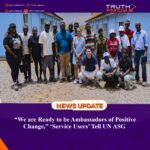
Freetown, 9th April 2026- Five weeks into their eight-week rehabilitation programme for Kush addiction, the leadership of the 99 inmates at Hastings Rehabilitation Centre delivered a heartfelt appeal on Good Friday, asking the international community to support their reintegration into society, where they aspire to serve as Ambassadors of Positive Change.
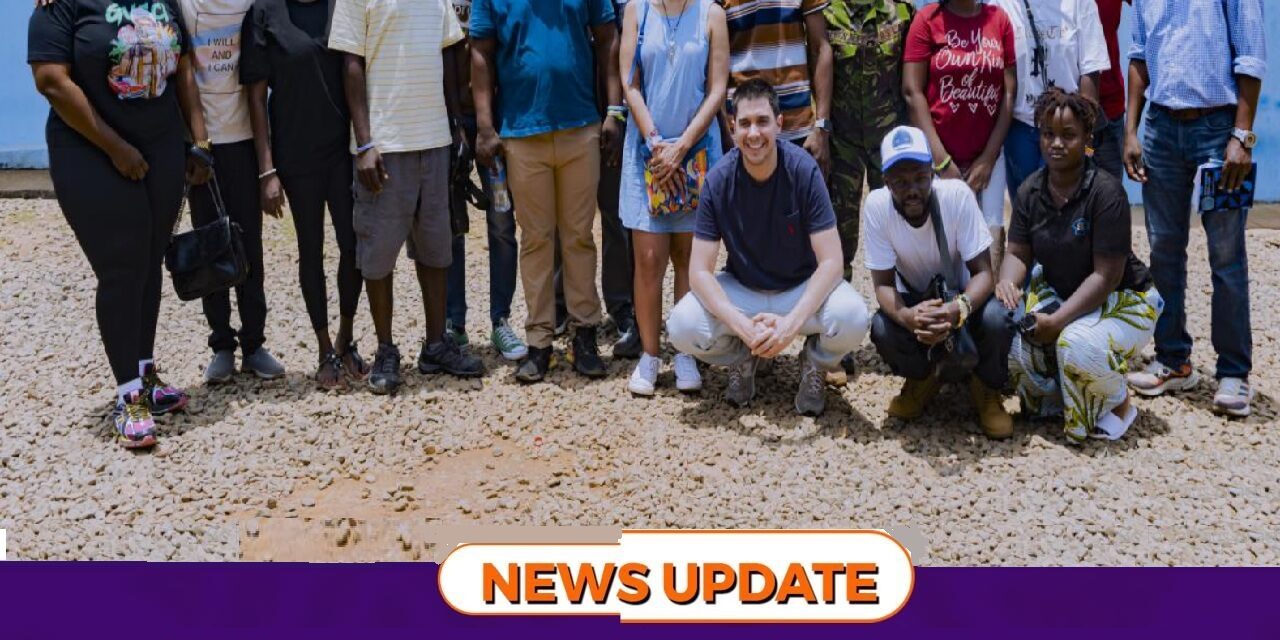
Now called Service Users, they met with Felippe Paullier, the United Nations Assistant Secretary-General for Youth, during his week-long visit to Sierra Leone to engage national leaders and partners on youth issues.
The meeting took place at the Peace Mission Training Centre (PMTC), a Republic of Sierra Leone Armed Forces (RSLAF) facility hosting the rehabilitation centre. The ASG listened to success stories from individuals who had once been addicted to Kush but, after rehabilitation, returned to society to pursue education or productive work.
One young man shared how he had lost both parents shortly after sitting his West Africa Senior School Certificate Examination (WASSCE). In his grief, he turned to Kush, tramadol, and cocaine. His elder brother brought him to the centre, where he was rehabilitated; he is now focused on his education and going to church.
Kush is a synthetic psychoactive drug formed from dangerous combinations of opioids and cannabinoids. It emerged in Sierra Leone around 2022 and spread rapidly among young people due to its low cost and high potency.
The drug has caused severe addiction, mental health breakdowns, and physical deterioration, tearing families apart and leading many youths to drop out of school, lose jobs, or turn to crime to sustain their addiction. A police officer dismissed from the Force for absence without leave due to the effect of Kush on him was one of the service users the ASG met.
Economically, Kush has undermined productivity and placed heavy burdens on the healthcare system. By April 2024, the crisis had escalated to such a level that President Julius Maada Bio declared Kush a national health emergency. The government launched interventions to expand treatment, rehabilitation, and community awareness. There are four rehabilitation centres across the country, and Hastings is home to the seventh batch of Service Users admitted there.
The Service Users emphasized that reintegration is key to sustaining their recovery. “We want to return to skills and education because if we are helped, we will be in a better position to help others,” they said. Another added, “We are drug addicts, but that does not mean our hopes end here.”
Drawing on his own family’s experience, (his mother works at a rehabilitation centre in Uruguay), the UN ASG encouraged them not to let addiction define them. “You have an identity that is stronger than this,” he told them, promising to raise their concerns with the wider UN in Sierra Leone. He noted that his presence at the centre was already a step in that direction.
Welcoming the ASG, Colonel Abdul Baba Keita, Commandant of PMTC, described the Kush crisis as a detriment to Sierra Leone’s human capital development and stressed that the RSLAF is working closely with the Ministry of Social Welfare to complement government efforts in addressing the menace.
Mr Gbangay Kanu, Deputy Director of Mental Health and Psychosocial Support Services at the Ministry of Social Welfare, outlined the challenges faced by service providers, noting that the Government covers the feeding and overall well-being of the Service Users. He called for partners to join in supporting key components of the programme, including reintegration into their communities.
The Service Users’ journey from addiction to rehabilitation to advocacy reflects Sierra Leone’s broader struggle against Kush. Their call to be Ambassadors of Positive Change is both a plea for reintegration and a reminder that recovery is possible, and that youth can lead the way in rebuilding communities devastated by the epidemic.