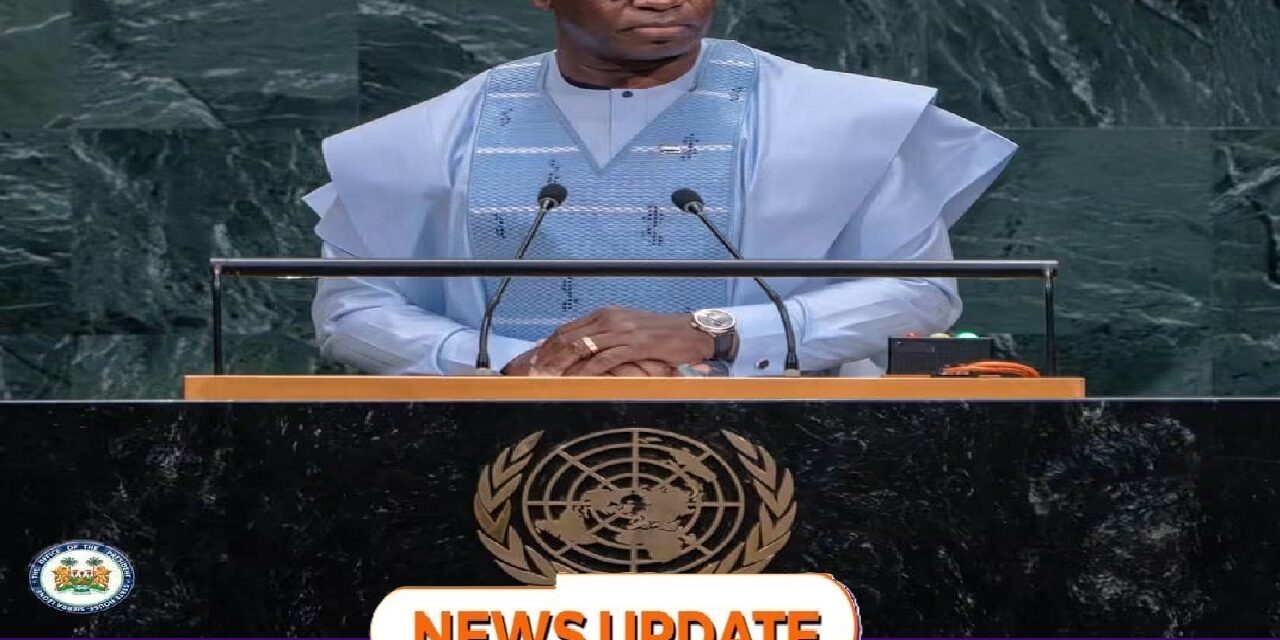
UNGA81, 28th September 2026- President Julius Maada Bio has delivered a sharp rebuke of global priorities at the 81st United Nations General Assembly, warning that the international community is pouring trillions into military spending while neglecting the urgent needs of peace and development.
Speaking under the theme “Restoring Trust, Managing Transformation: A United Nations That Delivers for All”, Bio highlighted a troubling imbalance:
“In 2025, global military expenditure reached almost 2.9 trillion United States dollars, the eleventh consecutive annual increase. Nations have legitimate security needs, but the speed with which the world finds resources for war, compared with prevention and development, reveals a grave disorder in our priorities.”
President Bio argued that while military action may contain threats, it cannot build lasting peace. Hunger, exclusion, and despair, he said, are the true seeds of insecurity. He urged the Assembly to move beyond rhetoric and channel resources into development budgets, not just defense.
President Bio’s remarks come as military budgets worldwide continue to climb, even as poverty, climate change, and displacement worsen. He stressed that peace and development are inseparable, and that investment in jobs, food security, and education is as critical as defense.
Bio tied the issue to broader UN reform, insisting that institutions must reflect fairness and inclusivity if they are to deliver “for all.”
The Sierra Leonean leader also pressed for Africa’s rightful place in global decision-making, noting that the continent, home to 1.6 billion people still lacks a permanent seat on the UN Security Council. He argued that no durable solutions on peace, climate, or technology can be achieved without African leadership.
Bio’s intervention underscores a growing frustration among developing nations: while trillions are mobilized for weapons, funding for climate adaptation, food security, and education remains scarce. His message was clear, without a shift in priorities, the world risks deepening instability rather than preventing it.