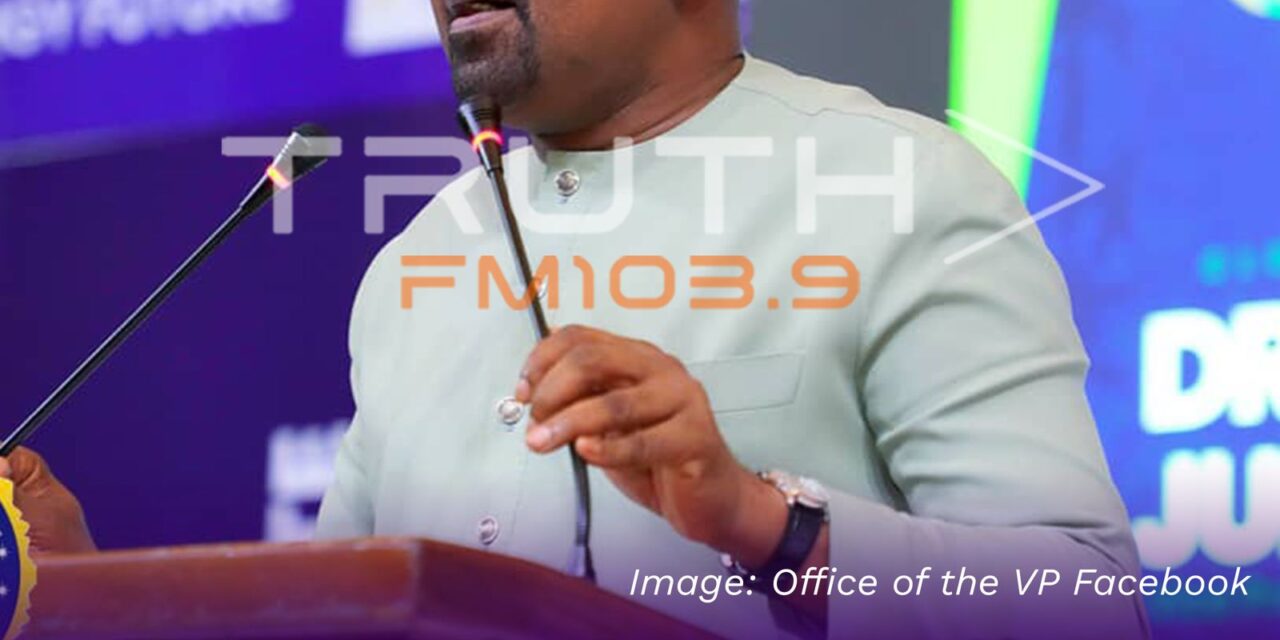
Freetown, 21st October 2025: Vice President Dr. Mohamed Juldeh Jalloh has reaffirmed the government’s commitment to energy reform as a cornerstone of Sierra Leone’s development agenda, describing access to reliable and affordable energy as “the gateway to economic transformation.”
Delivering the closing statement at the Third Climate Resilience and Energy Transition Dialogue held at the Bintumani Conference Centre in Freetown, Dr. Jalloh praised the progress made under the Presidential Initiative on Climate Change, Renewable Energy and Food Security, chaired by Dr. Kandeh Kolleh Yumkella.
“This third edition of the dialogue has cemented in my mind that our energy transformation is imminent,” the Vice President said. “We have a credible, data-driven, and endorsed energy plan that will scale access, improve utility performance, and attract private-sector investment across the energy value chain.”
Dr. Jalloh emphasized that energy underpins Sierra Leone’s entire development architecture, linking it directly to the country’s flagship Human Capital Development programme launched in 2018. He cited major gains in education and healthcare, including increased school enrollment, especially among girls, and significant reductions in infant and maternal mortality.
“By 2023, over 20% of the national budget was allocated to education,” he noted. “These gains create expectations for jobs and opportunities, which require a productive economy powered by reliable energy.”
The Vice President highlighted agriculture as the largest contributor to the economy and a key pillar of the “Feed Salone” initiative. He stressed that boosting domestic food production is essential to reducing Sierra Leone’s dependence on imports, which accounted for 23% of the national food bill between 2018 and 2022.
He also referenced the government’s ambitious target of creating 500,000 new jobs by 2028 under the Big Five Game Changers, linking employment generation to inclusive, low-carbon growth.
“Access to energy remains the single most binding constraint to growth,” Dr. Jalloh said. “We must modernize infrastructure, reduce losses, and increase renewable generation to meet our climate goals.”
He called for a shift away from over-centralized, state-led energy delivery models, urging greater private-sector participation and stronger governance frameworks anchored in transparency and the rule of law.
“Investors must have confidence that Sierra Leone is a predictable, fair, and stable environment,” he added.
Dr. Jalloh reported that national energy access has more than doubled from 16% in 2018 to 36% in 2025, marking progress toward the government’s Mission 300 target. He described energy as critical to sustaining gains in education, health, and economic resilience.
In closing, the Vice President thanked development partners and pledged to present the dialogue’s recommendations to President Julius Maada Bio, with a framework to monitor and implement them.
“Energy is not a luxury, it is a necessity for every household and business,” he said. “It will catalyze production, drive value addition, and create jobs.”