By Osman Benk Sankoh
Nothing prepared us for what was to come.
Some of us had survived the civil war. We knew the sound of gunfire, the direction of danger, the instinct to run. But Ebola was different. It was an invisible enemy, merciless, silent, and everywhere. There was no front line. No safe haven. I still hear the ambulances.
In the early hours. At midnight. Every day. All day. Their sirens, those haunting cries, pierced the air like a dirge. Ten years on, they still echo in my mind, just like the firecrackers that awaken memories of RPGs and rebel raids. The trauma is layered, and the sound is its cruel trigger.
I was in Liberia, working with the United Nations Mission in Liberia, when it began. The WHO had just been notified by Guinea’s Ministry of Health, a rapidly evolving outbreak in the forested southeast. Forty-nine cases. Twenty-nine deaths. A fatality rate of 59%. Soon, Liberia and Sierra Leone followed. The crisis had arrived.
As Head of Outreach, I was used to deploying traditional communicators, music, comedy, posters, and drama. We took to the streets of Monrovia, desperate to warn people. “Don’t eat bushmeat,” we pleaded. But they looked at us, bewildered. “This is our heritage,” they said. “Our livelihood. Our only source of protein.”
We told them not to touch. Not to hug. Not to hold their sick children or spouses. One woman asked me, “How can I not touch my husband if he’s dying?” I had no answer. We were learning as we went, fumbling through fear and uncertainty.
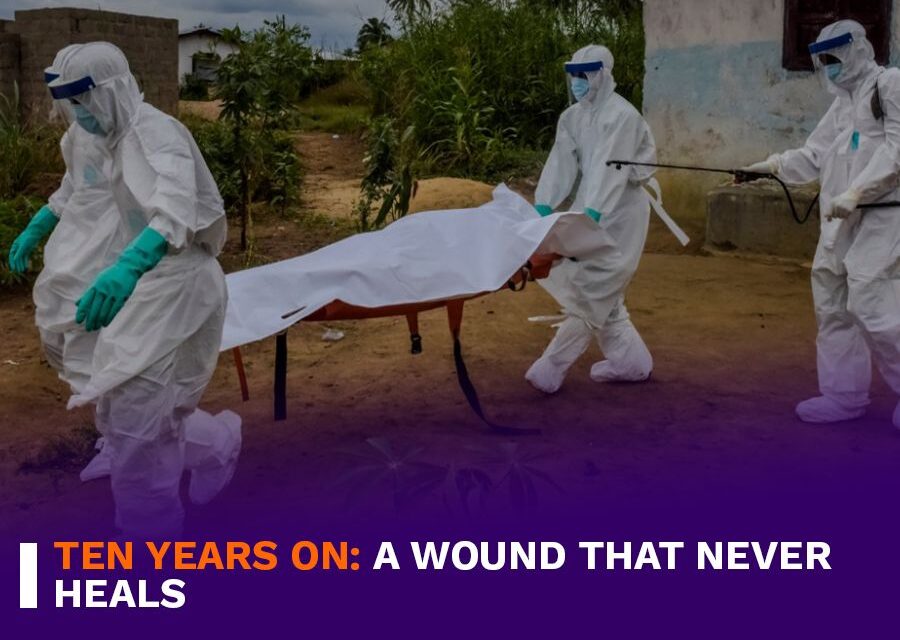
The ambulances multiplied. Each one a death knell. They carried the sick to treatment centres. Few returned. Families were denied the dignity of burial. No final goodbyes. No last prayers.
Back in Freetown, I lost my younger brother, Abdul Obomi Kamara.
He had left Masiemra with dreams of becoming an engineer. He earned his degree at FBC, worked at Sieratel, and had a beautiful wife and daughter. Haja Memuna only recently learned that the man she calls Dad is actually her uncle. Her real father died in the outbreak. Abdul was one of the 11,308 souls lost. We miss him. We love him. We carry him.
The world shut its doors on us. Green passports from Liberia, Sierra Leone, and Guinea became symbols of stigma. At JFK and Newark, I was pulled aside, screened, and questioned. The rhetoric on the radio and TV was degrading. Dehumanizing.
I once flew from Monrovia to Brussels with Thomas Eric Duncan, the Liberian man who became the first Ebola patient diagnosed in the United States. I don’t know if I sat near him. But when the news broke, panic spread. Calls for quarantine. Tracing. I stopped watching the news. His suffering was breaking news. His death, a spectacle.
Another time, Mohamed Massaquoi and I were en route to the United States. After a meal in Accra, I fell ill mid-flight. Sweating. Nauseated. Vomiting. At JFK, I was ushered into a private room. The fear in their eyes mirrored mine. I made it to the bathroom. I threw up. And I prayed.
At UNMIL, offices emptied. Non-essential staff stayed home. At my house in Monrovia, friends stopped visiting. My cook stayed away. My security team kept their distance. Suspicion replaced companionship. Loneliness replaced laughter.
Each call to my parents in Freetown brought more grief. More ambulances. More neighbours gone.
We lost our heroes, too. Dr Victor Willoughby, our eleventh doctor to die. Martin Salia, airlifted to the United States, only to die in Nebraska. Dr Aiah Solomon Konoyeima, gone. These were our brightest lights, extinguished in the storm. Yet, there were survivors. Mohamed Mansaray lived. But he buried eight family members. Survival came at a cost.
Today marks ten years since the WHO declared the epidemic over. But the pain is not. The memories are not. The trauma is not.
We remember. We mourn. We pray.
May the souls of those who perished rest in eternal peace. May we never again face such devastation. And may the world never forget what West Africa endured.