By Samuel Hinga Norman
Freetown, 2nd March 2026- When I was in primary school, my grandmother and I had a routine that shaped many of my earliest memories. During school breaks, we would walk from Tengbeh Town to her garden in New England Ville. The walk was long but peaceful. Along the way, petty traders arranged their goods in neat rows as the city slowly came alive with the daily hustle.
Every Friday, we made a brief stop. My grandmother would reach into her purse and drop a few coins into a small rubber plate held by a visually impaired elderly woman sitting quietly by the roadside. She was always neatly dressed, her hijab carefully wrapped around her head and shoulders. She sat on a flattened carton, her right hand gently stretched forward. Inside the plate, coins clinked softly whenever someone gave. She greeted warmly and offered heartfelt prayers to anyone who stopped. Her final words, “May Allah Bless You,” still echo in my memory firm, sincere, and dignified.
Back then, begging seemed rare, reserved for those truly vulnerable.
Today, that narrative has changed. It feels almost miraculous to walk even a short distance in Freetown without being stopped for financial help. At junctions, supermarkets, banks, bus stops, and even residential streets, the requests come endlessly. Some are polite, others persistent. Street begging has grown into what many now describe as a profitable trade.
Well-dressed men and women confidently approach strangers with elaborate stories most often claiming they lack transport fare. Emergencies do happen, but when the same individual repeats the same story days later, the authenticity fades. What was once a last resort now feels like an organized routine.
If corporate-style begging unsettles the mind, child begging pierces the heart.
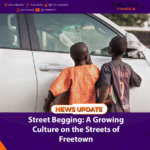
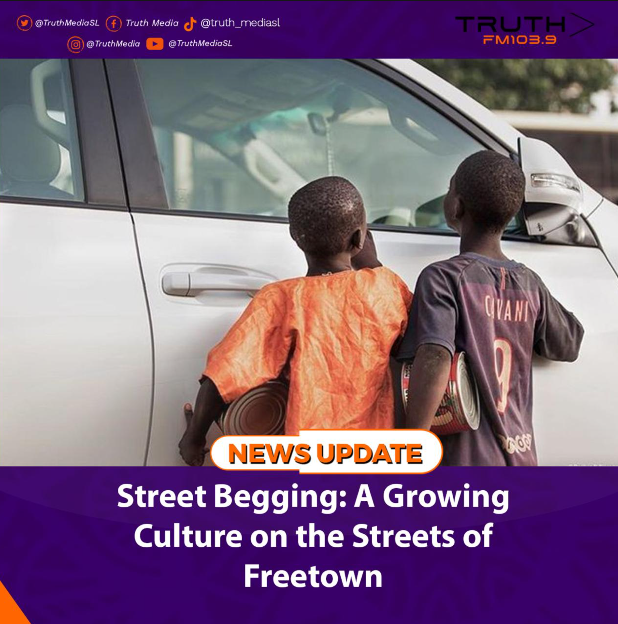
In recent years, children in school uniforms have joined the streets. They greet adults politely, smile, and then whisper, “I need financial assistance.” Some are barely tall enough to carry their own bags. Others weave between vehicles at traffic lights, under the scorching sun. A child in uniform should symbolize hope, education, and the promise of a better future. Instead, uniforms are now used as tools of persuasion.
Worse still, for some children, begging has become a hobby. After school, they roam busy commercial areas in groups, stopping strangers with rehearsed lines. At Lumley, Aberdeen Road, Congo Cross, and other parts of the city, the scenes repeat daily. Drivers roll up their windows. Pedestrians walk faster. Others give reluctantly, torn between compassion and the fear of encouraging dependency.
This growing culture raises difficult questions. What is pushing able-bodied adults to beg? Where are the parents or guardians of these children? What systems exist to protect minors from exploitation? And most importantly, how do we balance compassion with the need to discourage a cycle that could harm the next generation?
Street begging is no longer an isolated case of vulnerability. It has become visible, frequent, and normalized. As a society, we must face this issue with honesty and urgency. Government institutions, community leaders, religious groups, and civil society organizations must work together to address unemployment, child protection, and social welfare.
Compassion remains a virtue. Helping those in genuine need should never be discouraged. But allowing begging to become a culture risks shaping a mindset of dependency rather than resilience. The elderly woman my grandmother helped sat quietly with dignity, her situation calling for empathy. Today, the scale and style of begging demand reflection.
The question is no longer simply whether we should give. The question is whether we are watching the slow normalization of a practice that could redefine our streets, our values, and the future of our children who may be turning begging into a hobby.