By Nafisatu Olayinka Deen
Freetown, 30th December 2025- The Truth and Reconciliation Commission (TRC) describes youth as the lifeblood of a nation: “In Sierra Leone, the youth is the lifeblood of the nation. Every Sierra Leonean between the ages of 18 and 35 years old is considered to be a youth.” (Volume 3B, Chapter 5, p.343, Section 1).
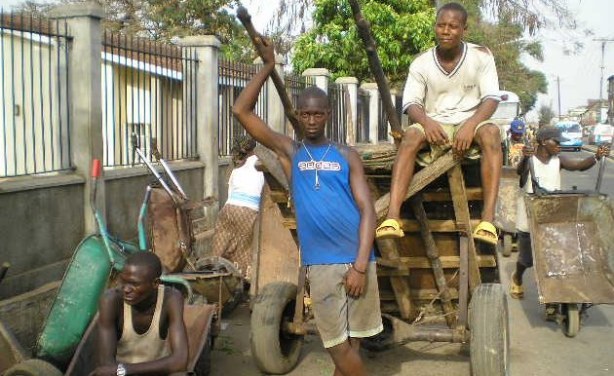
Two decades after the end of the brutal civil war, Sierra Leone continues to grapple with a persistent social and economic challenge: youth unemployment.
Unemployment was one of the major factors that drove many into the war, and it still threatens peace efforts today. The TRC noted: “Unemployment among the youth remains a major problem. The economy was destroyed during the ten-year conflict and as a result few jobs are available. Even where jobs are available, many youths do not have the required skills.” (Volume 3B, Chapter 5, p.358, Section 73).
The report further observed: “Every year hundreds of young people graduate from the university and have to scrounge and scramble for the very few jobs on offer. Ex-combatants who have learnt skills cannot find employment and are eking out a living as petty traders. Many youths sit around the streets and motor parks idling their time away.” (Volume 3B, Chapter 5, p.358, Section 74).
In December 2025 alone, 5,301 students graduated from the University of Sierra Leone, joining thousands of others scrambling for limited jobs.
Usman Fambuleh, a recent graduate, shared his frustration: “After graduating about a year ago, my experience with finding a job has been very difficult. I have applied for several jobs in both the public and private sectors, but I have not been successful. In many cases, I did not even receive feedback.
This has been discouraging, especially because I had high hopes that completing my education would open doors for me. Being unemployed has affected me in many ways. On a daily basis, it creates financial stress and makes it hard to meet basic needs. Mentally, it is very challenging because my hopes were high after graduation, but nothing has come through so far.
This situation sometimes leads to frustration, anxiety, and self-doubt. It has also delayed my future plans, such as further education, independence, and supporting my family.”
The TRC report also warned that unemployment among youths contributed to crimes against humanity during the war, as young people became instruments of violence.
Usman believes the same risks remain today: “I strongly believe youth unemployment contributes to problems like violence, crime, and drug abuse. When young people are idle for too long without jobs or opportunities, some may turn to negative activities out of frustration or survival. Lack of employment takes away hope, and when hope is lost, social problems increase in many communities.”
Onanah Jalloh, Executive Director of the National Youth Service, agrees: “I have identified a direct link between unemployment and crime, especially during the rainy season. Crimes increase in rural areas because most young people are not occupied with something useful that keeps them busy.”
He explained that the National Youth Service, under the Ministry of Youth, has made progress in recruiting and equipping young people to thrive in the job market. “Since its inception, the National Youth Service has tried to involve every Sierra Leonean. We have made progress in incorporating non-graduates, those who cannot make it to university.
Year in, year out, those with BECE or WASCE, and those languishing in the streets, are now given the opportunity to be part of the National Youth Service. They are recruited, trained, and sent to technical and vocational institutions where they learn skills to make themselves employable, and even employers.”
He added: “Recruitment started in 2018, and in the past two years, we have recruited about 1,200 graduate youths. Our mandate is to make them competitive in the job market. Over 65% of those deployed every year either get direct employment in the workplace we send them to, or venture competitively in the job market based on the experience attained.”
Minister of Labour and Social Security, Mohamed Rahman Swaray, told Truth Media that the government has created 147,343 jobs between 2023 and 2024 as part of its pledge to create 500,000 jobs. “The government’s pledge to create 500,000 jobs is still a work in progress. We have created 147,343 jobs, but we are not there yet,” he said.
Minister Swaray also encouraged Sierra Leoneans to take advantage of overseas opportunities, citing that 10,000 jobs are available in Qatar under a new bilateral labour agreement. “Some companies in Qatar have promised to give Sierra Leone over 10,000 jobs. With the agreement we have signed, we hope to get more in the coming years. We will soon advertise job vacancies and encourage competent citizens to apply.”
Despite these efforts, the World Bank recently reported that Sierra Leone needs to create at least 75,000 new jobs annually just to keep pace with its expanding labour force.
The numbers are stark: thousands of graduates every year, limited jobs, and a growing risk of frustration spilling into crime and instability. Two decades after the war, youth unemployment remains one of Sierra Leone’s most pressing challenges, a reminder that peace is not only about ending conflict, but also about creating opportunity.
‘This story is brought to you with support from the Africa Transitional Justice Legacy Fund (ATJLF) through the Media Reform Coordinating Group (MRCG), under the project ‘Engaging Media and Communities to Change the Narrative on Transitional Justice Issues in Sierra Leone.’