As member states push back against a disputed process, the controversy highlights the critical need for transparency, consensus, and institutional credibility in shaping Africa’s global engagement.
By John Baimba Sesay
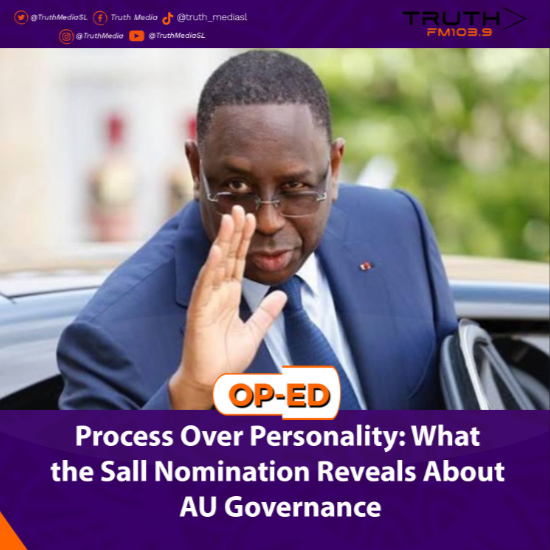
The controversy surrounding the nomination of Macky Sall for United Nations Secretary-General has exposed deeper fault lines within the African Union (AU).
Burundi, in its capacity as AU Chair, put forward Sall rather than his home country, Senegal (I will attempt to speak to this later) and did so without broad consultation, according to reports. This has raised serious concerns about transparency, legitimacy and collective decision-making within the Union.
Rwanda, through its Foreign Minister Olivier Nduhungirehe, has led the criticism, arguing that established AU procedures were bypassed and that the nomination lacked consensus among African heads of state. He warned that such actions risk pushing the AU into a governance crisis.
While Burundi has defended its move, citing its role as Chair and favouring quiet diplomacy, the backlash points to a process widely viewed as unilateral and procedurally flawed.
This is no longer a bilateral dispute. The move triggered a coordinated response, with 23 countries effectively blocking the decision. While each has framed its position diplomatically, there is clear convergence in rejecting the process, not necessarily the individual. This includes influential states such as Nigeria, South Africa, and Ethiopia.
Notably, Senegal itself has taken a surprising position, distancing itself from Sall’s candidacy despite his status as a former president. Reports suggest the government was neither consulted nor involved in the nomination process.
This posture is also shaped by lingering political tensions between Sall and the current leadership; tensions that, while expected to ease over time, remain evident.
I served as a UN agency staff member in Senegal for a few months in 2023 and witnessed firsthand the political tensions between the parties and supporters of then-President Macky Sall and his opponents.
Today, Senegal is led by President Bassirou Diomaye Faye and Prime Minister Ousmane Sonko, both of whom rose to power after periods of detention during that turbulent political moment. While the democratic transition marked a significant shift, the underlying animosities from that period continue to shape the country’s political landscape.
My understanding, based on discussions with a senior African diplomat, is that no African country should support this bid. This is not about Macky Sall as an individual, but about upholding the established principle of regional rotation that has guided past UN Secretary-General selections. By that convention, it is the turn of Latin America and the Caribbean and that norm should be respected.
What is at stake, over and above the rotational aspect, is that this goes beyond a single candidacy and beyond Senegal’s internal political dynamics. Africa’s ability to present a unified voice on the global stage is being tested.
If unresolved, this episode risks weakening the continent’s bargaining power and reinforcing perceptions of opaque governance. The choice before the AU is clear: uphold transparency and consensus or risk losing credibility at a moment when unity matters most.