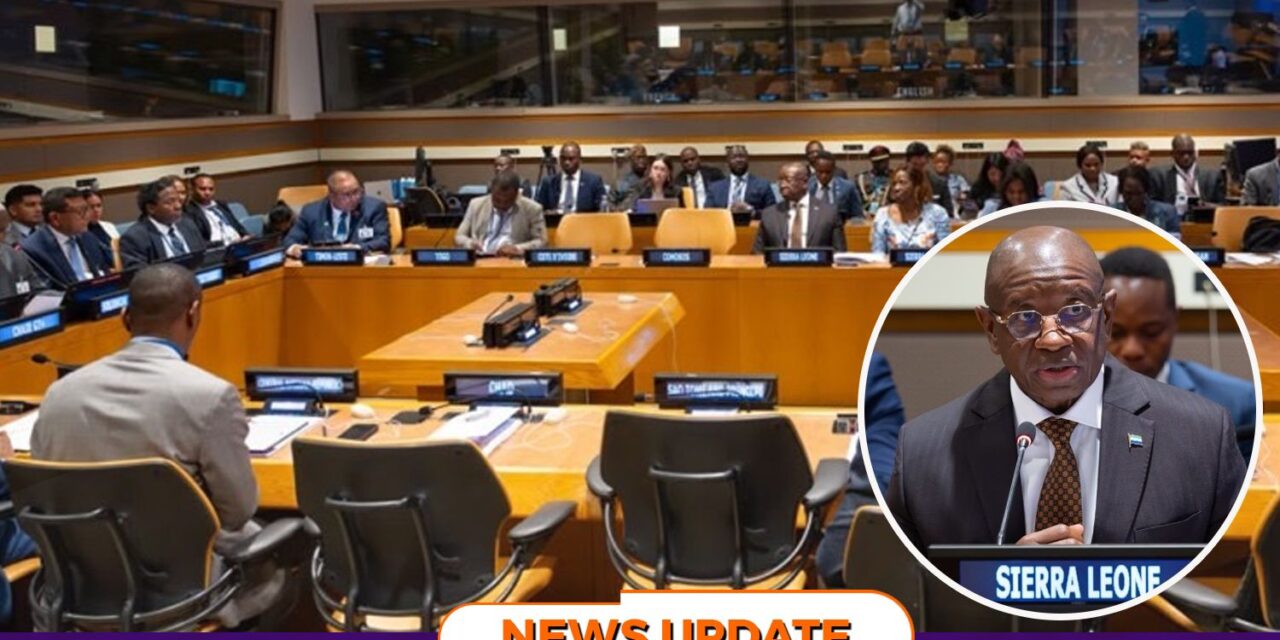
New York, Thursday, 24 September 2026 — Sierra Leone’s President Julius Maada Bio has urged world leaders to move beyond declarations and deliver concrete results, unveiling five guiding principles to transform the g7+ Framework for Peace through Dialogue and Reconciliation into a practical tool for preventing conflict and sustaining peace.
Speaking as an Eminent Person of the g7+ at a High-Level Summit held on the margins of the 81st United Nations General Assembly, President Bio called for the framework’s formal endorsement, immediate implementation, and clear accountability. He stressed that fragile states must not be defined by their past conflicts but empowered to lead global solutions.
President Bio outlined five pillars he believes are essential to making the framework effective:
National ownership — He emphasized that the framework must rest on trust and consent, activated only at the invitation of member states, and remain voluntary, confidential, and complementary to regional and international efforts.
Prevention — Bio urged a fundamental shift in global responses, arguing that success should be measured not by crises managed but by crises prevented. He proposed a standing Council of Eminent Persons to engage early and discreetly when invited.
Practical action — The framework, he said, must deliver peer-accompaniment missions, structured knowledge exchange, and targeted technical assistance. He called for strengthening the Rapid Response Advisory Centre to help countries address risks before they escalate.
Adequate resources — Warning that “a framework without capacity to act is no more than a communiqué,” Bio pressed for predictable financing and stronger support for prevention rather than reactive emergency aid.
Coordinated advocacy — He urged g7+ states to speak with unity in global institutions, ensuring their lived experiences of conflict and recovery inform international decisions on peacebuilding and development.
President Bio insisted that peace cannot be confined to governments and negotiating tables. Women, youth, and communities must be central to reconciliation efforts.
“Sustainable peace is built not only around negotiating tables, but also in homes, communities, schools, institutions and places of worship,” he said.
Bio’s appeal culminated in a call for the Summit to formally endorse the framework and mandate its implementation with clear responsibilities, adequate resources, and accountability for results.
“That is how we move from declarations to delivery,” he declared, adding that countries once scarred by conflict can become sources of knowledge, leadership, and solutions.