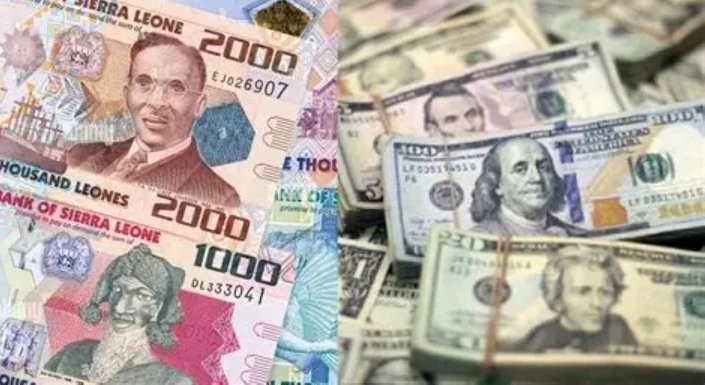
Freetown, 7th April 2026- Sierra Leone’s currency, the Leone, came under renewed pressure last week as the US dollar strengthened globally, raising fresh concerns about inflation in the West African nation.
Between March 23 and 27, the Leone slipped 0.29 percent against the dollar, moving from 22.701 to 22.7669 per US dollar. The greenback posted steady daily gains, reaching 22.7651 on March 26 before edging slightly higher at week’s close.
Local traders say rising demand for dollars driven by fuel import obligations and regional trade settlements, is compounding domestic price pressures at a time when global oil prices remain elevated.
The depreciation comes against a backdrop of already high inflation. Sierra Leone’s consumer price index showed annual inflation at 8.05 percent in February 2026, up from 6.38 percent in January. Transport costs rose 4.76 percent month‑on‑month, reflecting higher logistics and fuel expenses cascading into broader consumer prices.
“The Leone remains vulnerable to external shocks and import dependency,” said Ibrahim Kamara, a local economist. “Persistent pressure from the US dollar and elevated commodity prices will likely keep the currency under stress in the near term, which in turn may push domestic inflation higher.”
Movements in other currencies were more volatile. The British pound climbed 0.80 percent midweek to 30.5161 before retreating 0.66 percent to 30.3153, while the euro rose 0.87 percent to 26.4129 before easing back to 26.2322, leaving a modest net gain of 0.18 percent. Analysts attributed the euro’s resilience to cautious signals from the European Central Bank on further monetary tightening.
Sierra Leone’s heavy reliance on imported fuel, foodstuffs, and other dollar‑denominated commodities makes the economy particularly sensitive to exchange rate fluctuations. The Bank of Sierra Leone has previously stressed the importance of maintaining adequate foreign reserves and prudent fiscal management to cushion against volatility.
Without decisive policy interventions, households will continue to feel the brunt of imported inflation, particularly in transport, energy, and essential goods. “The key challenge remains managing domestic prices while maintaining foreign exchange stability,” Kamara added.
With global uncertainties, including high energy prices and regional trade fluctuations weighing on low‑income economies, close monitoring of exchange rates, coupled with targeted fiscal and monetary measures, will be essential to prevent inflation from spiraling further.