By Kelfala Kargbo
Freetown, 10th November 2025– Street photography in Sierra Leone was once more than a livelihood, it was a cultural archive. Photographers held a cherished place in society, capturing everyday life in prints that filled family albums and adorned living-room walls across the country.
Along the bustling streets of Freetown, they were a familiar sight: cameras slung around their necks, waiting by roadside corners, rushing toward pedestrians to offer instant ID photos or event snapshots.
Times Are Changing– Today, the rise of smartphones and the spread of photo studios are shrinking the craft.
“Right now, the photography we do is not like how it used to be sometime ago,” said Mahmoud Kandeh, a street photographer based at Bottom Mango, Wilberforce.
Kandeh has been in the trade since 2018. Photography is his sole source of income, the work that feeds his family and keeps him afloat. But his tone now carries concern.
“Smartphones want to take away my source of livelihood,” he said, frustration etched in his voice. He explained that it’s become nearly impossible to attract even ten clients a day, as most people now prefer snapping photos on their phones rather than printing them.
His work has narrowed almost entirely to ID photo printing.
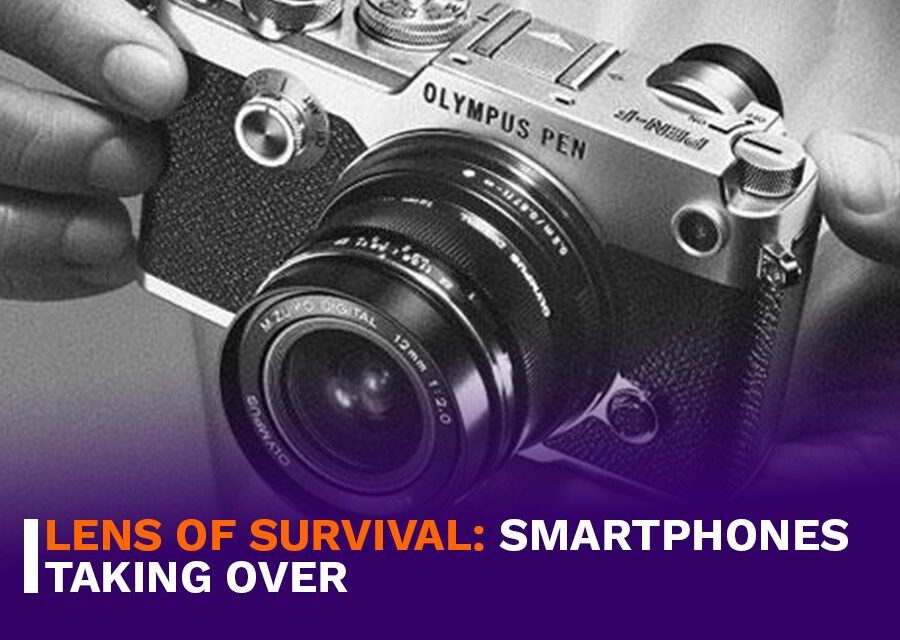
“The only thing clients come to us for is to snap photo ID. For other pictures, they use their phones,” he said, glancing at his camera, once a tool of survival and beauty.
Not Everyone Is Giving Up– Despite the growing threat, some photographers see opportunity in the shift.
Mohamed Wulareh, Secretary-General of the National Union of Photographers, acknowledged that technology has disrupted their market. But he remains hopeful.
“Some street photographers see studio photographers as a threat. For me, they are not a threat because I can professionally do my work,” Wulareh said, insisting the trade remains vibrant for those willing to adapt.
One such adapter is Precious Williams, who transitioned from street hustling with instant prints to digital storytelling and commercial photography.
“For people like us, the livelihood of photography has changed,” he said. “It’s not just about taking pictures anymore, it’s about branding, networking, and finding a niche.”
The Smartphone Era- New iPhone models have transformed photography culture in Sierra Leone. Among young people, it’s become a trend to visit scenic spots just to take snapshots. Portrait mode, with its skin-smoothing and sun-warming effects, gives photos a professional feel.
For smartphone users like Sia Dauda, mobile photography is more practical.
“Snapping with my phone secures the longevity of images,” she said. “Printed photos can fade in no distant time.” Still, some remain loyal to printed photography.
Ansumana Thomas Mansaray, a picture frame builder, believes street photographers are the true artists.
“To me, street photographers are storytellers who freeze real, unscripted moments that reflect the pulse of a city and its people,” he said. “They help us see the beauty, grit, and emotion in everyday life, things we often overlook.”
Adapting to Technology– Photography has evolved beyond raw prints. Editing tools like Adobe for desktops and CapCut for smartphones allow users to refine images instantly.
For Wulareh, however, true photography begins with the raw image.
“When you take a good raw image, you already have quality, even before using any editing tool,” he said. “It doesn’t require much editing to get good pictures.”
With years of experience, Wulareh says he doesn’t just take pictures, he considers the weather and temperature, too.
Once a cherished urban rhythm and a lucrative trade, street photography now fights to survive in a digital era where everyone carries a camera in their pocket. Livelihoods aren’t being lost to laziness or stagnation, but to innovation that’s moving faster than ever.