By Andrew Chokpeleh
Freetown, 13th October 2025 — The deadly grip of kush continues to tighten around Sierra Leone’s youth, outpacing every government intervention thrown at it. Since its emergence, the government has launched at least three major efforts to curb the intake, production, and distribution of the drug. A task force led by Vice President Dr. Mohamed Juldeh Jalloh was formed in partnership with security forces.
The National Drug Law Enforcement Agency was established to lead investigations, control narcotics abuse, and combat trafficking. Rehabilitation centers were built to treat addicts and reintegrate them into society. Yet, despite these efforts, kush use is rising and the crisis is deepening.
What makes the situation even more troubling is the involvement of high-profile Sierra Leoneans in drug-related scandals. Earlier this year, contraband substances were found in the vehicle of the Sierra Leonean Ambassador to Guinea. He was dismissed, and an investigation was launched, but months later, the public is still waiting for answers. Not long after, entertainers and celebrities were caught with illegal substances at the Guinea border. Just days ago, the Sierra Leone Police declared popular musician Natasha Beckley wanted for allegedly owning a house used to store chemicals linked to kush production.
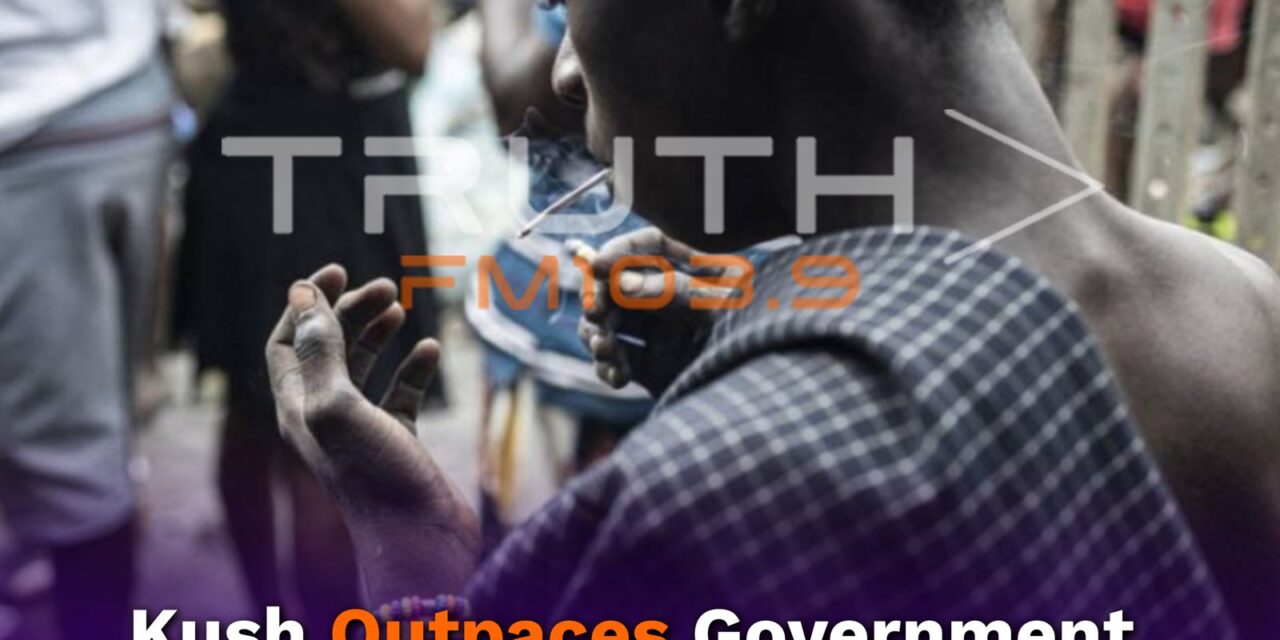
The streets of Freetown tell their own story. Kush addicts are everywhere, slumped in corners, wandering aimlessly, or causing distress in communities already burdened by poverty and insecurity. Their presence poses serious social, psychological, and health threats. Citizens are now calling on the government to revive the rehabilitation centers that once offered hope. But those centers are in ruins, starved of resources and staff. The few that remain are overwhelmed, unable to cope with the growing influx of addicts.
Mr. Ibrahim Samuel Dugba, Director of Drug Prevention Education and Training at the National Drug Law Enforcement Agency, painted a grim picture during an interview on Truth Morning Devotion. “The rehabilitation center in Kenema, owned by a private individual, is in such bad shape that you’ll be tempted to cry,” he said. “They’re overcrowded, under-resourced, and lack trained professionals to treat and counsel addicts.” Dugba added that community members often know who the dealers are, but choose silence over action. “It’s our collective responsibility to fight this drug. Its impact touches all of us, directly or indirectly.”
Dr. Abdul Jalloh, Consultant Psychiatrist and Director of Mental Health at the Ministry of Health, echoed the urgency. “When government fails to provide adequate services, people take advantage,” he said. “We’ve seen addicts chained and treated inhumanely, a gross violation of their rights.” He stressed the need for professional mental health support, warning that the unprescribed intake of these substances has led to mysterious deaths among young people. “You can’t consume all these drugs in one night and expect no consequences.”
The Ministry of Social Welfare, too, is struggling. Mr. Ansumana Konneh, Director of Mental Health and Psychological Support Services, admitted that they cannot financially support private rehabilitation centers. “We had to shut down our own centers due to lack of resources,” he said. “If we had the funding, we could do more.”
Even the Mayor of Freetown, Yvonne Aki-Sawyerr, has voiced frustration. Speaking to Truth Media, she said the government’s kush task force has been left to operate without the necessary resources. “If the government truly prioritized this fight, they would fund it properly,” she said. “We claim to promote human capital development, yet we abandon the very youth who represent that capital.” She warned that the number of kush-related deaths in recent months is alarming. “If we don’t act, we may wake up one morning to find that our country’s greatest asset, its youth, is gone.”
While the government’s interventions show intent, they fall far short of the scale required. Rehabilitation centers lie in ruins. The few that function are overcrowded, with patients sleeping on cold floors, battling addiction and neglect. Community leaders and religious figures have begun stepping in, organizing awareness campaigns and forming neighborhood watch groups. But this is not just a policy issue, it’s a humanitarian crisis that demands a holistic, compassionate, and well-funded national response. Because right now, kush is winning. And Sierra Leone is losing.