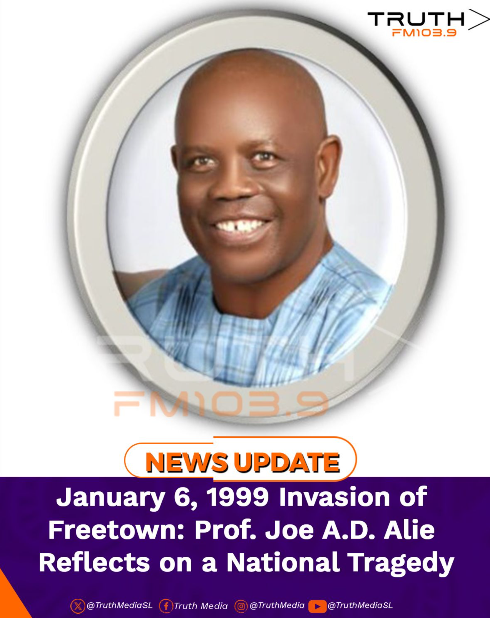
Freetown, 6th January 2026– Twenty‑seven years after the January 6, 1999, invasion of Freetown, the event remains one of the most harrowing episodes in Sierra Leone’s civil war. In a detailed account published on January 6, 2026, historian Prof. Joe A.D. Alie revisits the strategy, atrocities, and consequences of that day, underscoring its enduring impact on the nation’s collective memory.
Prof. Alie describes the invasion not as a sudden assault but as a carefully planned campaign of terror. Rebel forces of the Revolutionary United Front (RUF) and Armed Forces Revolutionary Council (AFRC) stored weapons in cemeteries and abandoned buildings across the city, and in a chilling tactic, forced women to march as human shields at the front of their columns. This strategy, he notes, exploited rules of engagement and left ECOMOG peacekeepers and government forces struggling to respond.
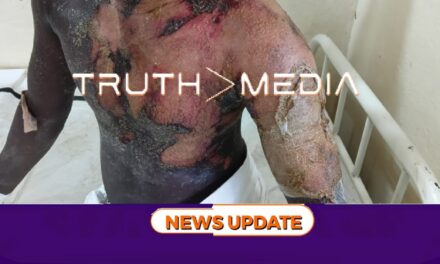
According to Prof. Alie’s research, the invasion claimed between 5,000 and 6,000 civilian lives, with thousands more injured, raped, abducted, or displaced. He highlights the disproportionate suffering of women, who endured sexual violence and were exposed to frontline danger. The destruction of homes, schools, clinics, and places of worship left two‑thirds of Freetown’s population displaced, creating a humanitarian crisis that crippled already fragile institutions.
Prof. Alie argues that January 6 marked the collapse of any remaining legitimacy of the RUF. “Any claims of fighting for justice or reform were forever discredited,” he writes, noting that the brutality galvanized both domestic and international calls for peace. The invasion directly accelerated the Lomé Peace Agreement of July 1999 and paved the way for expanded UN involvement and later British intervention.
The atrocities of January 6 also shaped Sierra Leone’s post‑war justice mechanisms. Prof. Alie points out that the Truth and Reconciliation Commission and the Special Court for Sierra Leone placed the events at the centre of their work, reinforcing the principle that amnesty could not erase accountability for mass atrocities.
In his conclusion, Prof. Alie emphasizes that the invasion was more than a military episode, it was a national trauma that ignited efforts toward peace, justice, and renewal. He frames it as a cautionary legacy that continues to influence Sierra Leone’s governance, peacebuilding, and education, reminding the nation of its commitment to “Never Again.”
READ FULL DOCUMENT HERE
THE JANUARY 6 INVATION OF FREETOWN-https://truthmedia.sl/wp-content/uploads/2026/01/THE-JANUARY-6-INVATION-OF-FREETOWN.pdf