Freetown, 9th December 2025 – A decade-long review of Sierra Leone’s governance indicators reveals a troubling stagnation in the country’s fight against corruption, despite notable improvements in transparency.
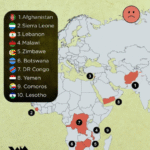
According to a 2025 report by Corruption Risk www.corruptionrisk.org an international governance monitoring platform developed through a collaboration between the European Research Centre for Anti-Corruption and State-Building and the Anti-Corruption & Governance Center at the Center for International Private Enterprise, Sierra Leone scored 4.23 out of 10 for integrity and 11.5 out of 20 for transparency, placing it 95th out of 119 countries on integrity and 16th out of 143 on transparency.
Regionally, the country ranks 15th out of 31 for integrity and 4th out of 31 for transparency, making it one of the most transparent nations in Sub-Saharan Africa. However, the overall trend remains stationary, with little progress in curbing corruption over the past ten years.
In terms of transparency Sierra Leone has made strides in publishing detailed information on international aid and mining concessions. Yet, critical aspects of administrative transparency remain weak. The absence of publicly accessible data on land ownership, commercial registries, and building permits, especially in the capital, continues to fuel discretionary decision-making and unregulated resource flows.
The report indicates that corruption thrives when opportunities such as opaque public finance and weak regulation outweigh constraints, like judicial enforcement and civic oversight. The country’s budget transparency score improved from 5.49 in 2013 to 6.99 in 2023, signaling better disclosure of public spending. But other key constraints have deteriorated:
Judicial independence fell from 3.75 to 2.67, raising concerns about the impartiality of legal institutions. Press freedom declined from 7.63 to 6.63, limiting the media’s watchdog role. E-citizenship, which reflects digital civic engagement, remains low at 1.81, barely up from 1.76 a decade ago. Online services saw modest growth from 2.53 to 3.52, but still lag behind global standards.
Sierra Leone’s broader development indicators underscore the urgency of reform. With a population of 8.64 million, a GNI per capita of USD 873, and a Human Development Index of 0.47, the country remains in the low-income bracket. Urbanization stands at 45%, and life expectancy has risen to 62 years, reflecting gradual health improvements.
To effectively control corruption, Sierra Leone must strike a better balance between enabling and disabling conditions. That means strengthening judicial independence, protecting press freedom, and expanding digital access for citizens.
Without these constraints, transparency alone may not be enough to prevent misuse of public resources.