By Kelfala Kargbo
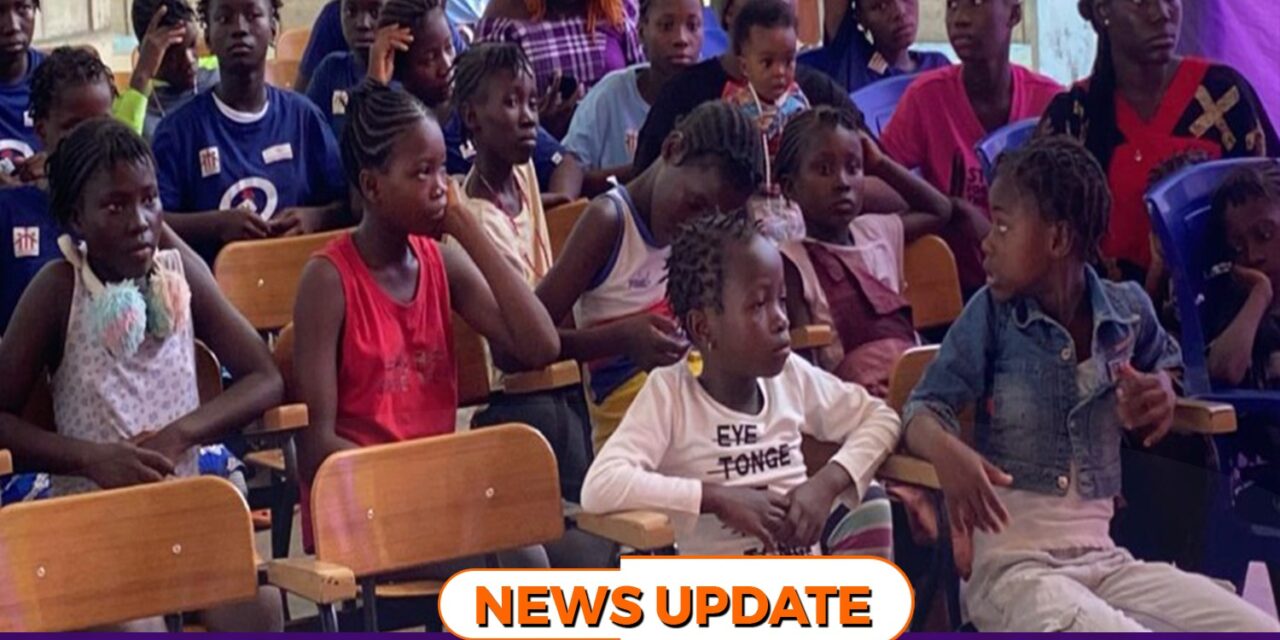
Freetown, 13th April 2026 — Why do thousands of Sierra Leonean children end up on the streets? Is it personal choice, broken homes, poverty, or systemic failure? The answer, as the lived experiences of children reveal, is a painful mix of all these factors, compounded by weak family structures and limited government support.
Hawa Favour Tholley was just 13 years old when she found herself on the streets of Freetown. Her family, struggling to survive, relocated to Tombo in the Western Rural District. “To even get food was difficult. I had to go into prostitution,” she recalled.
Hawa lived with six other children in a cramped shelter, describing it as “survival of the fittest.” Nights were filled with tears, days with hunger, and no one to care. “Life was rubbish and terrible for me. I used to cry every night,” she said.
Her turning point came when Don Bosco Fambul, a Catholic charity, reached out during a street outreach program. Taken into their home, Hawa received therapy, shelter, and education. “Don Bosco has taught me how to take care of myself. They gave me the chance to go to school and learn skills,” she said. Today, she dreams of becoming a lawyer to advocate for children still trapped in street life.
Hawa’s story is one of rare rescue. According to the Ministry of Gender and Children’s Affairs, over 20,000 children currently live on Sierra Leone’s streets, making them the most vulnerable group in the country. Globally, millions of children face similar situations, exposed to violence, exploitation, and neglect.
Humanitarian workers like James Tyrell, CEO of Laughter Africa, warn that street children are at constant risk of sexual exploitation, teenage pregnancy, stigma, and even death. “Since I started volunteering, I’ve known about 30 children in street situations who have died,” he said.
One driver of the crisis is informal fostering, locally known as “men pikin.” Children are often brought from rural areas to Freetown with promises of education, only to be subjected to child labor and denied schooling.
The government has introduced frameworks such as the National Strategy for Addressing Issues of Children in Street Situations (NSAICSS) 2022–2024 and the Child Rights Act 2025, focusing on protection, family tracing, and reintegration. Rehabilitation centers exist at Hastings, Gondama, and Daru, but NGOs remain the backbone of support.
Father Peter Konteh, Executive Director of Don Bosco Fambul, expressed frustration at the lack of government engagement. “Support towards our work is little or nothing. Ministers of Gender and Social Welfare have never visited our site despite multiple calls,” he told an ECOWAS delegation.
Street children are not unique to Sierra Leone. Across West Africa, exploitation and neglect are widespread. Recognizing this, the ECOWAS Parliament recently conducted a fact‑finding mission in Freetown. Their report highlighted grim realities: outdated loitering laws, systemic abuse, and government failure to take responsibility.
Key recommendations included reviewing loitering laws, prioritizing government-led safeguarding, and providing aid to NGOs that support children.
The plight of Sierra Leone’s street children is a national tragedy with regional echoes. While organizations like Don Bosco Fambul and Laughter Africa provide lifelines, the scale of the crisis demands stronger government action and legislative reform.
For Hawa, rescue meant a second chance. For thousands of others, the streets remain a daily battle for survival. Their future depends not only on charity but on lawmakers and leaders willing to turn promises into protection.