By Nafisatu Olayinka Deen
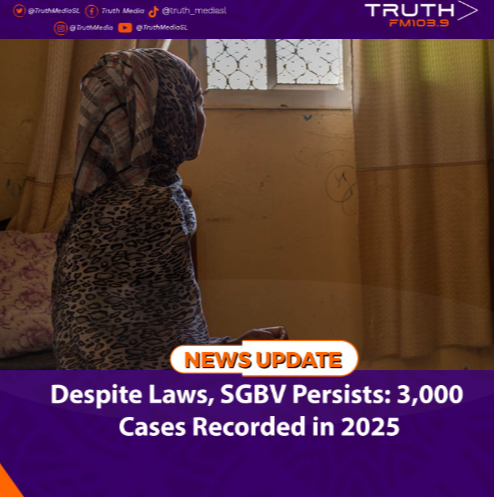
Freetown, 7th April 2026- The Sexual Gender-Based Violence (SGBV) Incident Report 2025 by Rainbo Initiative paints a grim picture: 3,055 cases nationwide. Of these, 2,723 were sexual assaults, 330 physical assaults, 514 pregnancies linked to abuse, and 2,179 sexually transmitted infections (STIs). Survivors were overwhelmingly women and girls, 99% of cases (3,030).
The Truth and Reconciliation Commission had long warned that women and girls were “deliberate targets of sexual violence and rape by all armed groups during the conflict.” Its findings documented systematic abuse: torture, rape, sexual slavery, trafficking, abductions, forced pregnancy, and enslavement. The Commission recommended stronger laws to protect women and girls, yet decades later, the violence persists.
Despite frameworks like the Sexual Offences Act, Rainbo Initiative’s data underscores the prevalence of abuse. The youngest survivor in 2025 was a six-month-old baby. In another shocking case, a 58-year-old woman was reportedly gang-raped by armed men during a community dispute.
Speaking to Truth Media, Mariama Mercy Kamara, Rainbo Initiative’s Partnership and Strategic Support Coordinator, said patriarchal norms and “negative masculinity” fuel the persistence of SGBV. She urged survivors to speak out: “We provide free medical care, psychosocial support, and other essential assistance to help survivors heal and rebuild their lives.”
The 2019 Sierra Leone Demographic and Health Survey (SLDHS) already revealed the scale of the problem: 61% of women aged 15–49 had experienced physical violence, while 7.4% reported sexual violence. Alarmingly, 61% of married women reported spousal violence.
These figures show that SGBV is not isolated but systemic, woven into the daily lives of women and girls across Sierra Leone.
The persistence of SGBV, despite laws and frameworks, is a national crisis. It demands urgent attention, stronger enforcement, and cultural change to protect the most vulnerable.
This story is brought to you with support from the Africa Transitional Justice Legacy Fund (ATJLF) through the Media Reform Coordinating Group (MRCG), under the project ‘Engaging Media and Communities to Change the Narrative on Transitional Justice Issues in Sierra Leone.’